

The Supreme Court is facing a legitimacy crisis that is both unprecedented in its intensity and deeply rooted in a historical pattern of post-confirmation backlash. The current moment is defined by a steep, sustained decline in public favor and a record partisan divide, posing a material risk to the Court's institutional function.
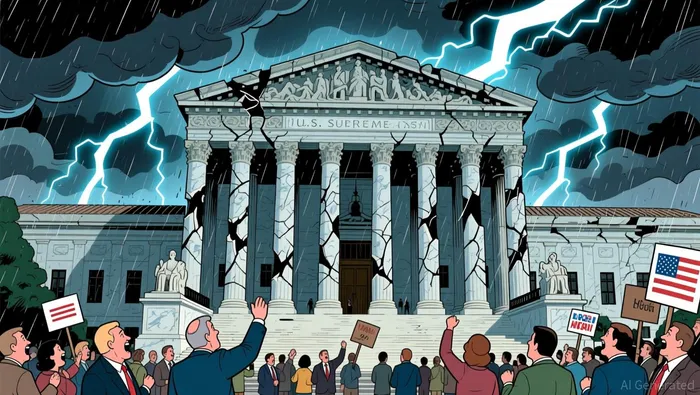
Public perception has cratered. In August 2025, a Pew Research Center survey found the court's favorable rating at 48%, a 22-point drop from the 70% level seen just five years earlier. This figure represents a three-decade low. The decline followed the contentious confirmation of Justice Amy Coney Barrett and has persisted amid a series of ethics scandals. The situation is mirrored in Gallup data, which recorded the court's approval rating at its lowest point since 2000. The erosion is not just about numbers; it's about perception. A record 43% of Americans now describe the Supreme Court as being "too conservative", the highest level in Gallup's trend.
This pattern of backlash is not new. The Court has weathered political storms before, most notably after landmark rulings. The 2012 Affordable Care Act ruling sparked intense scrutiny and criticism, particularly of Chief Justice John Roberts for his pivotal vote. That episode established a precedent for how contentious decisions can trigger a wave of political attacks and damage public trust. The current crisis echoes that pattern but exceeds it in scale and duration. The record partisan gap in perception-where only 26% of Democrats view the court favorably-shows the institution is now a deeply polarized political battleground, not just a legal one.
The bottom line is that the Court's legitimacy is under direct assault from the highest levels of government. Chief Justice Roberts himself has recently called for an end to personal attacks on judges, a move that underscores the severity of the current environment. When the institution's own leader feels compelled to defend its integrity, it signals a crisis that goes beyond mere polling numbers. The historical pattern of post-ruling backlash has now merged with a sustained, politically driven campaign to delegitimize the Court, creating a vulnerability that could undermine its ability to function as a neutral arbiter.
Mechanisms of Crisis: The Shadow Docket and Political Pressure
The Court's legitimacy crisis is being fueled by specific mechanisms that amplify political pressure and erode transparency. One of the most potent tools has been the shadow docket, a fast-track process for emergency applications. In the past year, the Court has considered more than 30 such applications from the Trump administration and ruled in its favor 80 percent of the time. This high rate of success, often without oral arguments or detailed reasoning, has drawn criticism for creating a perception of a "secret tribunal." The Court's obligation to explain its reasoning, especially on cases involving fundamental rights and democratic governance, is seen as compromised by this lack of transparency.
The stakes of these shadow docket rulings are immense. They have allowed the administration to conduct immigration stops based on ethnicity, deport non-citizens to countries with no connection, and fire thousands of civil servants-all actions previously blocked by lower courts. In two landmark cases, the Court used this expedited process to effectively overrule a 1935 precedent that limits presidential removal of agency heads, advancing new legal principles with minimal scrutiny. This expansion of presidential power through a backdoor process fuels the very perception of politicization the institution is meant to avoid.
The internal tension within the Court is now public. Chief Justice Roberts himself has recently called for an end to personal attacks on judges, a rare public rebuke that highlights the severity of the external assault. "Personally directed hostility is dangerous," he stated, a remark that came just a day after President Trump posted on Truth Social calling the Court a "weaponized and unjust Political Organization." This direct clash between the Court's leader and the sitting president underscores the vulnerability of the institution. Roberts' "umpire philosophy" of institutional neutrality is being tested by a political environment where the Court's own members are labeled "disloyal" and "unpatriotic." When the head of the judiciary feels compelled to defend the institution's integrity against the highest office, it signals a deep fracture in perceived legitimacy. The shadow docket, in this context, is not just a procedural tool but a flashpoint that concentrates political pressure and risks further delegitimizing the Court's role.
Historical Precedent and the Path Forward
The current legitimacy crisis is a test of the Court's durability against a historical backdrop of political backlash. The pattern is clear: landmark rulings invite scrutiny, and the Court's institutional survival depends on perceived impartiality. The 2012 Affordable Care Act ruling established that precedent, with Chief Justice Roberts facing intense criticism for his pivotal vote. That episode was a political storm, but the current environment is a full-blown confrontation. The parallel is stark: then, the Court was attacked for a liberal outcome; now, it is labeled a "weaponized and unjust Political Organization" by the sitting president for a conservative one. This direct, personal assault from the highest office is a new and dangerous escalation.
Public support for structural reform is at a record high, offering a potential path forward. A Pew Research Center poll found 69% of Americans favor setting a specific number of years for Supreme Court justices, a figure that has consistently been in the high 60s to low 80s in recent years. This overwhelming public mandate for term limits suggests a deep-seated demand for change that the Court's current leadership has not addressed. The Court's own recent alignment with the administration on emergency matters, however, may be accelerating the crisis. By ruling in favor of the Trump administration 80 percent of the time on shadow docket applications last year, the Court has appeared to act as a rubber stamp for executive power. This expansion of presidential authority through a backdoor process fuels the very perception of politicization it is meant to avoid.
The bottom line is that the Court's survival hinges on its ability to be seen as neutral. Its recent actions, particularly on the shadow docket, risk confirming the worst fears of its critics. The historical precedent of post-ruling backlash has now merged with a sustained political campaign to delegitimize the institution. With public support for reform at record levels and a sitting president openly attacking the Court's legitimacy, the institution faces a critical juncture. It can either adapt to restore perceived impartiality or continue down a path that may lead to further institutional decay.