

The Beijing summit produced preliminary frameworks, not finalized contracts. That distinction matters. What's confirmed: a $30 billion Board of Trade to identify tariff reductions on non-sensitive goods, and "double-digit billions" in annual agricultural purchases over three years. Everything else is context or speculation.
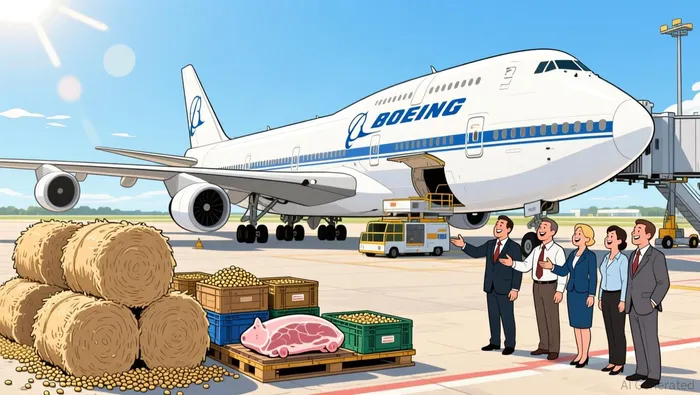
U.S. Trade Representative Jamieson Greer stated clearly that China agreed to buy "double-digit billions" worth of U.S. agricultural products annually over the next three years. That's $10 billion plus, per year, in aggregate-not just soybeans, but pork, dairy, beef, and specialty crops broadening beyond traditional row crops. The existing 25 million metric ton per year soybean deal from last October remains in place through 2028 as the foundation.
The $30 billion Board of Trade is a mechanism, not a commitment. Treasury Secretary Scott Bessent proposed it to identify tariff reductions worth around $30 billion on non-strategic goods-fireworks, low-end consumer items "that are going to keep coming from China no matter what" examples he gave. China signaled interest in the concept and in purchasing additional U.S. goods like LNG and crude oil Beijing's counter-commitment. But the board itself hasn't been established, and no specific product lists are locked in.
China's commerce ministry put it plainly: the agreements are "preliminary" and will be "finalised as soon as possible" following the summit. That language is deliberate. The 10% additional tariff on Chinese farm imports remains after last year's tit-for-tat rounds, and no specific tariff reduction schedules have been published.
The setup is clear: frameworks exist, numbers are floated, but nothing is signed. The market should treat this as a positive signal, not a completed transaction.
What This Means for Valuation: The Event-Driven Setup
This is a tactical positive, not a fundamental re-rating. The frameworks announced in Beijing create clear near-term upside for specific sectors-but the preliminary nature of the agreements and China's spotty follow-through history keep the execution risk elevated enough to limit deeper valuation expansion.
The ag sector gets the most direct lift. U.S. Trade Representative Jamieson Greer confirmed China agreed to purchase more than $10 billion in U.S. agricultural products annually over the next three years, building on the existing 25 million metric ton soybean deal through 2028. That's double-digit billions per year, per Greer's language, spanning pork, dairy, beef, and specialty crops broadening beyond traditional row crops. Given that China-U.S. farm trade collapsed 65.7% YoY to $8.4 billion in 2025 per USDA data, even partial fulfillment represents meaningful volume recovery. But the commerce ministry called these agreements "preliminary" following the summit-and questions about Chinese follow-through persist among industry observers cautioning about fulfillment.
Boeing gets a specific catalyst: President Trump stated Xi Jinping agreed to order 200 Boeing airplanes. That's the most concrete large-ticket item in the deal. If realized, it represents multi-year revenue visibility for Boeing's commercial airplane segment. But again-this was announced at a banquet, not signed in a contract. Historical precedents suggest these announcements often precede negotiations.
Energy gets demand-side upside. Treasury Secretary Scott Bessent said Beijing signaled interest in purchasing U.S. LNG and crude oil, with production ramp-up discussed. This is demand-language, not commitment-language. The $30 billion Board of Trade mechanism could unlock tariff relief on non-strategic goods worth around $30 billion-but the board hasn't been established, and no product lists are finalized. For context, List 4a tariffs covered $120 billion in goods taxed at 7.5% in 2020-so the potential relief is meaningful but targeted at low-end consumer items fireworks and similar goods.
The risk/reward setup is clear: ag commodities, aerospace, and energy names with China exposure get a near-term tactical bid. But the 10% additional tariff on Chinese farm imports remains in place after last year's tit-for-tat rounds, and no specific tariff reduction schedules have been published. The preliminary language from China's commerce ministry is deliberate-these frameworks require finalization. For investors, that means trading the catalyst, not building a thesis on it. The upside is real but contained; the downside is execution failure or delay, which has been the pattern in prior U.S.-China trade deals.
Catalysts and Risks: What Moves the Market Next
The market will now watch for finalization details over the next 2-4 weeks-and any delay or vagueness will test the rally. China's commerce ministry called the agreements "preliminary" and said they would be "finalised as soon as possible" following the summit. That language is the guardrail: nothing is locked in until product lists, volumes, and timelines are published.
The numbers that matter are stark. China's farm imports from the U.S. still face an additional 10% levy after last year's tit-for-tat tariffs, and trade fell 65.7% year-on-year to $8.4 billion in 2025 per USDA data. Even if China fulfills the "double-digit billions" commitment U.S. Trade Representative Jamieson Greer announced over the next three years, recovery to pre-tariff volumes requires more than symbolic purchases-it requires tariff reductions that haven't been specified. Market watchers expect a 10% cut in soybean tariffs, which could allow private Chinese crushers to resume purchases that were largely sidelined. But that remains an expectation, not a commitment.
Chinese follow-through questions are the key risk. Industry observers caution that questions remain about how fully China will follow through-a sober view given the pattern of prior U.S.-China trade deals where announcements outpaced execution. The preliminary status applies to everything: the $30 billion Board of Trade mechanism hasn't been established, no product lists are finalized, and the $30 billion figure represents potential tariff reductions on non-strategic goods, not a purchase commitment the contours remain sketchy.
Political headwinds add another layer. U.S. lawmakers are already warning against opening the vehicle sector to Chinese competition as talks expand, suggesting that even if China offers purchase commitments in ag and energy, reciprocal market access in sensitive sectors faces resistance in Congress.
The tactical setup is clear: ag commodities, aerospace, and energy names with China exposure can ride the catalyst bid while the finalization window remains open. But the risk/reward shifts quickly if details drag into summer or if the 10% tariff remains untouched. For now, trade the catalyst-but keep the exit strategy visible.