

China's CSI Rare Earth Index plunged 3% today, a sharp reversal that underscores how quickly market sentiment can pivot on geopolitical headlines. The move transforms what was a premarket surge into a full-scale selloff, marking rare earths as a direct proxy for US-China relations.
The catalyst is clear: the Trump-Xi summit in Beijing failed to deliver a clear breakthrough, leaving the Strait of Hormuz standoff unresolved and energy shipping routes firmly in the crosshairs. Investors are treating rare earths as a canary in the coal mine for supply chain risk-when tensions rise, the index drops.
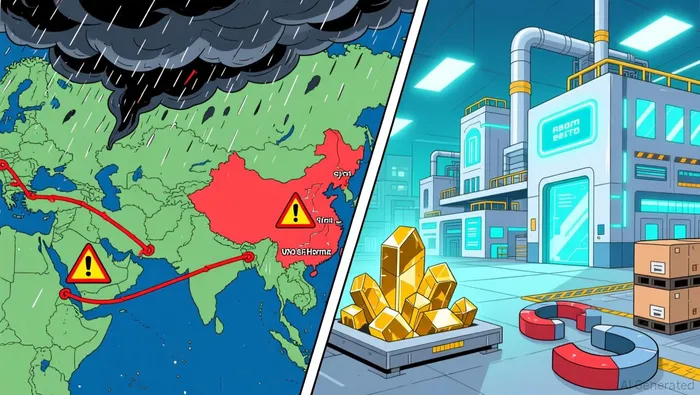
What's notable is how this plays across borders. U.S. rare earth firms fell Tuesday after surging premarket, mirroring the Chinese index's volatility. The same trade tension narrative that crushed Chinese rare earths also hammered American counterparts, showing this is a systemic risk play rather than a region-specific story.
For traders watching capital flows, the pattern is telling: rare earths are becoming a trending topic tied directly to headline risk. Every bump in US-China relations now carries an immediate ticker impact.
Why Rare Earths Matter Now: The Supply Chain Play
The 3% plunge in China's CSI Rare Earth Index isn't just a commodity wobble-it's a signal flare for capital flows chasing the de-risking trade. Here's why this sector has become a trending topic: China controls roughly 85% of global processing capacity for rare earth materials, making any disruption a global supply chain emergency. When the Trump-Xi summit failed to deliver a clear breakthrough on the Strait of Hormuz, investors immediately flagged rare earths as collateral damage-energy shipping routes and rare earth-dependent manufacturing are now locked in the same geopolitical crosshairs.
The market is treating this as a structural play, not a temporary dip. USA Rare Earth's stock up 114% so far this year tells the story: investors are front-running the de-risking narrative, betting that Washington's push to build a mine-to-magnet supply chain outside China will drive massive capital deployment. Analysts project $3.2 billion in sales by 2030 for companies building alternative capacity-a secular tailwind that dwarfs quarterly noise.
But the macro backdrop is amplifying the volatility. The U.S. 30-year Treasury yield hitting its highest level since 2007 signals bond markets are pricing in sticky inflation and tighter financial conditions. Oil prices rose alongside the rare earth selloff, reinforcing the connection: energy shocks and supply chain risks are converging. For capital flows, this creates a bifurcation-commodity-sensitive names get hammered on yield spikes, but strategic materials with domestic supply chain narratives attract defensive buying.
The takeaway for traders: rare earths have become a proxy for China tension intensity. Every headline about the Strait of Hormuz, every bump in bond yields, every shift in Fed rate cut expectations now ripples through this sector. The 85% concentration figure isn't just a statistic-it's the reason this ticker matters. When the market searches "rare earths" or "China supply chain," the answer is no longer theoretical. It's a trending topic with immediate capital implications.
Catalysts and What to Watch
The CSI Rare Earth Index is now a leading indicator for China tension sentiment-traders should treat every headline as a potential signal flare. The index's 3% plunge today reflects the market's immediate reaction to the Trump-Xi summit's ambiguous outcome failed to deliver a clear breakthrough. That same summit concluded with both sides agreeing the Strait of Hormuz must remain open U.S. and China agreed that the Strait of Hormuz must remain open-but the lack of a concrete deal left risk premiums intact.
Here's what to monitor:
Summit and trade deal specifics. Any clear breakthrough on rare earth export controls or broader trade terms could reverse the selloff rapidly. Conversely, new tariff threats or further summit failures would likely trigger another leg down. The market is treating this as a binary outcome-either de-risking accelerates, or tensions ease and capital flows out of defensive positioning.
US rare earth stocks as capital flow signals. USA Rare Earth's stock is up 114% year-to-date, with analysts projecting $3.2 billion in sales by 2030 as the US builds alternative supply chains. This isn't just a commodity play-it's a proxy for how much capital is flowing into the de-risking trade. Watch for continued strength in names like USA Rare Earth as a signal that investors are doubling down on the alternative supply chain narrative, even as Chinese indices wobble.
The macro backdrop amplifies everything. The 30-year Treasury yield at its highest since 2007 U.S. 30-year Treasury yield rose to its highest level since 2007 means bond markets are pricing in sticky inflation and tighter financial conditions. This creates a challenging environment for commodity-sensitive names-but strategic materials with domestic supply chain narratives are attracting defensive buying. The tension between yield pressure and strategic positioning is what makes this sector so volatile.
For traders, the setup is clear: rare earths have become a trending topic tied directly to headline risk. Every search for "China rare earth export" or "US-China trade deal" now carries immediate ticker impact. The key is watching for the pivot point-either a clear diplomatic breakthrough that eases supply chain fears, or a further escalation that locks in the de-risking trade as the dominant narrative.