

Iran's Foreign Minister Abbas Araghchi is in Beijing for talks, marking his first visit to China since U.S. and Israeli strikes triggered the worst global oil supply shock in decades. This meeting occurs just days before a high-profile summit between U.S. President Donald Trump and Chinese President Xi Jinping, raising the stakes for China's stance. The visit underscores Iran's urgent need for diplomatic cover and economic lifelines, while positioning Beijing as a potential mediator in a conflict that has choked off energy flows through the Strait of Hormuz.
China's response has been a direct act of defiance. The government has ordered its companies to ignore U.S. sanctions on private refiners linked to the Iranian oil trade, an unprecedented move that threatens to trap its vast banking sector in the crossfire. This directive, which targets heavyweight processors like Hengli Petrochemical, signals a far more aggressive stance than Beijing's usual rhetoric against unilateral sanctions. The timing is critical, coming as Washington pressures allies to help reopen the strait and faces a vacuum in global alliances.
The core question is whether this is a coordinated effort to defy U.S. power, and if China can manage the domestic economic and financial risks. For years, Beijing has quietly allowed its largest firms to comply with U.S. sanctions to preserve access to the American financial system. Saturday's announcement, however, represents a pivot to a blocking measure introduced in 2021, aimed at protecting its firms from what it calls the "long-arm jurisdiction" of the U.S. This escalation is part of a broader strategy to expand China's arsenal of economic weapons, seen also in recent moves to block foreign tech deals. Yet the act of defiance risks severe blowback, testing the resilience of both the U.S. sanctions system and China's own economic stability.
The Trade Engine: Oil Flows and Economic Incentives
The Iran-China oil trade is a massive, if fragile, engine. In March, Chinese independent refiners, known as 'teapots,' imported a record 1.8 million barrels per day of Iranian oil, accounting for roughly 90% of Iran's shipments. This volume is a direct response to a powerful economic incentive: discounted crude. Yet the trade is now showing clear signs of strain, as the very discount that fuels it is being eroded by a sharp squeeze on domestic refining margins.
The core driver remains the price. Iranian oil has long been a bargain, but recent data shows the discount is fading. Traders note that Iranian Light was last assessed at parity to a small premium to benchmark ICE Brent, a flip from its previous discount. This shift directly pressures the refiners who rely on the spread between cheap crude and their refined products to make a profit. Analysts estimate gross domestic processing margins at minus 530 yuan ($77.50) per metric ton, a one-year low. When refining becomes unprofitable, buying slows.
This slowdown is already visible. Despite U.S. pressure, including sanctions on major buyer Hengli Petrochemical, Chinese teapots continue importing Iranian oil despite fresh U.S. pressure, although buying is slowing due to worsening domestic processing margins. The economic logic is straightforward: if you can't make money refining, you stop buying. This creates a vulnerability for Iran, which depends almost entirely on this market.
The broader Chinese economic context adds another layer of uncertainty. The trade's resilience is tested against a backdrop of cooling external demand. China's exports grew only 2.5% in March from a year ago, a sharp deceleration from earlier in the year. Economists link this slowdown to uncertainties from the Iran war and its impact on energy prices and global demand. In other words, the very conflict that is driving discounted oil to China is also dampening the global demand for Chinese goods, potentially reducing the fuel needs of its own manufacturing base.
The setup is a classic tension between a powerful short-term incentive and mounting structural pressures. The teapots are buying now because the oil is cheap and Beijing is encouraging them, but the trade's long-term health depends on whether those margins can improve. For China, the trade offers a lifeline to a key ally and a source of discounted energy. For the refiners, it is a high-stakes gamble on a volatile spread. The coming months will test which force proves stronger.
The Sanctions Battle: Levers and Limits
The U.S. is tightening its sanctions grip, but the game has changed. Last week, the Department of State sanctioned Qingdao Haiye Oil Terminal Co., Ltd., a key Chinese terminal operator that has imported tens of millions of barrels of Iranian crude. This move targets the physical infrastructure enabling the trade, aiming to choke off the flow. Yet Beijing's response-a directive for companies to ignore U.S. sanctions-has created a clear binary choice. The U.S. now faces a strategic dilemma: either extend secondary sanctions to major Chinese state-owned entities, risking a deeper rupture, or accept that its pressure is being systematically blocked.
The U.S. also holds a powerful operational lever: a blockade on Iranian shipping that began on April 13. This is the most direct threat to future deliveries, as it physically restricts tankers from moving oil. If sustained, it will begin to impact shipments to China in the coming months, regardless of Beijing's defiance. This creates a race against time for the trade, testing whether the current flow can be maintained before the blockade takes full effect.
China, for its part, is deploying a new legal tool. The blocking measure introduced in 2021, which Beijing now instructs companies to use, is designed to protect its firms from what it calls the "long-arm jurisdiction" of U.S. law. This is a significant escalation from past quiet compliance, as it forces Chinese banks and companies into a direct conflict with American financial rules. The limit of this approach is clear: it risks trapping China's own vast banking sector in the crossfire, a vulnerability the U.S. can exploit.
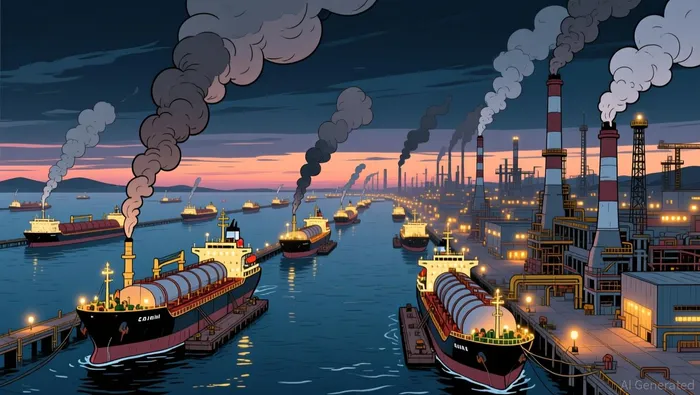
The strategic levers are now in direct tension. The U.S. uses sanctions to disrupt Iran's revenue and pressure allies, while China uses defiance to protect its economic lifeline and assert its own legal sovereignty. The limits of each are equally apparent. Washington's power is constrained by its need for global cooperation, which is fraying. Beijing's defiance carries the heavy cost of potential financial isolation. The coming weeks will reveal which side's leverage proves more durable.
Catalysts and Watchpoints
The coming weeks will test the durability of China's defiant stance. For investors and policymakers, the key is to monitor a few clear, near-term signals. The first is the physical flow of oil. The U.S. blockade on Iranian shipping, effective since April 13, is the most direct threat. Watch for any disruption in the volume of Iranian oil arriving at Chinese ports in May and June. The trade's resilience hinges on whether tankers can still navigate to Shandong's teapot hubs, as recent discharges show they are still arriving. A sustained drop in these arrivals would validate the blockade's impact and pressure Beijing's defiance.
Second, watch for a U.S. escalation in its sanctions. The recent targeting of Qingdao Haiye Oil Terminal Co., Ltd. shows Washington is hitting infrastructure. The critical next step would be an extension of secondary sanctions to Chinese state-owned enterprises involved in the trade. Such a move would force a deeper, more costly rupture with Beijing's economic system, testing the limits of China's blocking measure.
Finally, track the broader economic fallout. The Iran war's impact on global demand is already visible in China's export data. The 2.5% export growth in March marked a sharp deceleration. A further slowdown in the coming quarters would signal deeper damage to global demand, undermining the economic rationale for the trade. Conversely, a rebound driven by demand for green tech and semiconductors could provide a counterweight.
The bottom line is that the trade's survival depends on a fragile balance. It requires continued oil flows, a lack of severe U.S. retaliation, and a global economy that can still absorb Chinese goods. These three watchpoints will show which side's leverage holds.