

The United States Senate Banking Committee advanced the CLARITY Act on May 14, marking a significant procedural milestone for digital asset regulation. The bill passed with a 15-9 vote, securing all Republicans and two Democrats, Ruben Gallego and Angela Alsobrooks. This move sends the legislation to the full Senate for further consideration and a floor vote.
The legislation aims to establish a federal definition of digital assets and clarify regulatory jurisdiction between the Securities and Exchange Commission and the Commodity Futures Trading Commission. Proponents argue that a clear federal framework will reduce compliance costs and encourage institutional participation in the crypto market.
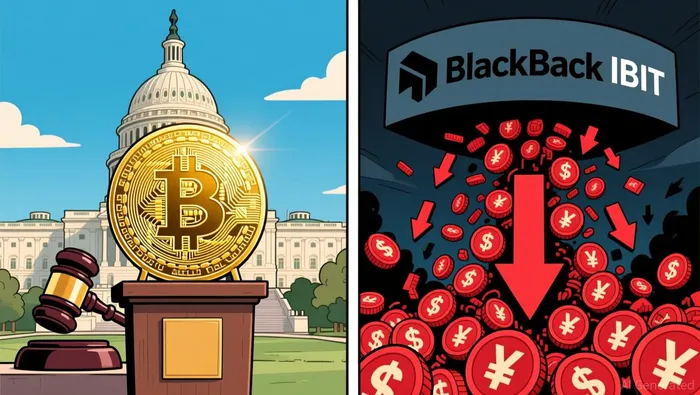
Despite the legislative progress, market reaction was muted and selective. Bitcoin ETF outflows reached $648.6 million shortly after the committee vote, suggesting that regulatory clarity hasn't translated into sustained institutional buying. The divergence between policy advancement and capital flight highlights the dominant influence of macroeconomic factors on investor sentiment.
Why Is the Senate Vote Delayed?
The full Senate vote on the CLARITY Act is expected to occur within 30 days of its advancement by the Banking Committee. However, June schedule increasingly crowded with competing legislative priorities. This congestion creates realistic concerns about the Senate's capacity to process multiple major bills simultaneously within a tight timeframe.
The bill is now competing for floor time with a budget reconciliation package, the reauthorization of the Foreign Intelligence Surveillance Act, and a housing bill that recently passed the House of Representatives. Given these scheduling constraints, the CLARITY Act could be pushed back to July.
A delay in the Senate vote extends the period of regulatory ambiguity for the digital asset industry. While the bill remains a priority for crypto stakeholders, its path through the Senate is now subject to the unpredictable nature of legislative scheduling. The full Senate vote will require a sixty-vote threshold to advance past procedural debate.
How Did Markets React to the Policy Win?
Bitcoin ETF demand weakened significantly in the days following the committee vote. Farside data shows that US spot Bitcoin ETF products posted $648.6 million in net outflows on May 18 alone. BlackRock's IBIT accounted for $448.4 million of that exit, reflecting a sharp reversal in institutional flows.
CoinShares reported broader digital asset investment product outflows of $1.07 billion for the week, driven largely by $982 million in Bitcoin withdrawals. This marked the first negative week in seven and the third-largest weekly outflow of 2026. The outflow data undercuts the narrative that the CLARITY Act would immediately trigger fresh institutional demand.
While Bitcoin briefly rallied above $81,000 following the vote, the price retreated to approximately $77,200 by May 21. This dynamic suggests the post-CLARITY move is less a rejection of the bill and more a stress test for Bitcoin's ETF-era market structure. The policy signal improved the long-term runway, but ETF allocators needed a stronger reason to add exposure during a risk-off week.
What Are the Macro Headwinds?
Macro factors, particularly sticky inflation data and a hawkish Federal Reserve outlook, are currently overriding positive policy signals. The April Consumer Price Index release showed consumer prices rising 0.6% in April and 3.8% year-over-year, with energy prices surging.
The Federal Open Market Committee Minutes for the April meeting confirmed a hawkish tone. The majority of Fed officials warned that interest rates may need to rise if inflation persists above the 2% target. In high-interest-rate environments, liquidity declines and markets shift toward safer, yield-bearing assets, which typically weighs on Bitcoin.
Technical indicators reflect this subdued momentum. The Coinbase Bitcoin Price Premium Index has remained negative throughout the May rally, confirming that US investor demand has not re-engaged at scale. The Relative Strength Index sits at 48, while the Moving Average Convergence Divergence remains below zero.
Bitcoin is consolidating near $77,800, constrained by resistance at the 200-day Exponential Moving Average around $81,708. Downside support is clustered at the 50-day and 100-day EMAs, with the 38.2% Fibonacci level near $74,487 as the next major floor. The combination of weak spot demand and cautious futures positioning is historically more consistent with renewed price weakness than stable consolidation.
The clearest evidence of conditional demand comes from the ETF channel. If outflows continue, sustained selling would show that legal clarity has yet to translate into fresh spot demand. The CLARITY milestone remains a long-term industry positive but a poor short-term shield for the Bitcoin price.