

A new operational squeeze is tightening around cobalt production in the Democratic Republic of Congo. Beyond the well-known export quotas, a secondary disruption in essential mining chemicals is now forcing producers to cut back, threatening to deepen a physical shortage just as strategic stockpiling tightens global availability.
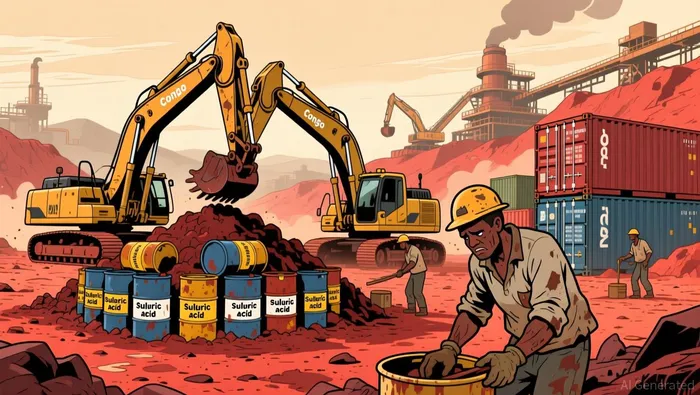
The immediate pressure is on the chemical supply chain. This month, orders for key leaching chemicals like sulfuric acid and sodium metabisulfite (SMBS) have been cancelled or withdrawn by suppliers. One source detailed a 2,000-metric-ton SMBS order cancelled outright and another 1,800-ton shipment withdrawn after contracts were signed. This turmoil is directly linked to the wider Middle East conflict, as shipping disruptions from the Iran war have hit these chemical supplies. The result is a scramble by miners to stretch existing stocks and consider output reductions.
This chemical crunch compounds an already strained situation. The DRC's cobalt output has already plunged, with the country shipping only about 48,800 metric tons in the first quarter of this year. That's a sharp drop from roughly 123,000 tons in the same period last year, when exports were frontloaded before a four-month freeze. Now, with miners cutting chemical use to conserve dwindling supplies, the risk of further production cuts is rising.
The setup is now a classic supply-demand tug-of-war. On one side, the DRC government is actively building a strategic reserve, authorising ARECOMS to acquire and hold strategic minerals and reserving 10% of national cobalt export volumes for state use. On the other, operational constraints from chemical shortages are threatening to reduce the physical flow of cobalt from the mines. This combination of policy-driven stockpiling and on-the-ground production cuts creates a clear risk of near-term physical tightness in the market.
The Strategic Shift: State Control and Market Tightening
The DRC's new strategic reserve is a deliberate move to tighten supply and assert state control, adding a powerful new tool to its existing policy arsenal. The government has formally established this reserve, authorising its markets regulator, ARECOMS, to acquire, hold and market strategic minerals. This decree, adopted in early April, gives the state a direct vehicle for managing unused export quotas and intervening in global cobalt flows.
The mechanism is a direct supply reduction. Under the new framework, 10% of national cobalt export volumes are reserved for strategic use by the state. For 2026, that translates to a fixed volume of 9,600 metric tons. This isn't just a future option; it's an immediate reduction in the available commercial supply. The policy also includes a strong enforcement clause: any export quota volumes not shipped by strict deadlines are automatically transferred to the government's reserve, effectively penalising slow-moving producers.
This strategic move follows a clear pattern of deliberate supply cuts. It comes on top of a quota regime that has already slashed Q1 exports by over 60% compared to the front-loaded shipments of the prior year. The result has been a steep drop in physical flow, with the DRC shipping only about 48,800 metric tons in the first quarter this year. The new reserve policy is the next logical step in a multi-pronged effort to rebalance the market, complementing the quota system by creating a permanent state-owned stockpile that can be drawn upon or released to influence prices.
Viewed together, these actions show a state increasingly willing to use every lever at its disposal. The strategic reserve gives the DRC a new layer of control, allowing it to manage its quota volumes and potentially intervene in the market to maintain price stability or strengthen its economic sovereignty. For the global cobalt market, this means a more predictable but also more constrained supply chain, where a significant portion of output is now subject to state planning and potential withholding.
Demand Drivers and the Structural Tension
The market's current flat price masks a growing tension between powerful demand growth and a supply chain still digesting past oversupply. On one side, the structural case for cobalt is strengthening. Demand for EV batteries alone is projected to rise by 60% by 2026, intensifying pressure on mining regions. This growth is not isolated; it's part of a broader industrial base that includes consumer electronics like laptops and smartphones, as well as aerospace applications. This diversification provides a more stable demand floor, but it also means the metal is being pulled in multiple directions at once.
Yet, the market entered this year with a legacy of excess. Supply growth from the previous two years left the system with surplus material, and that earlier imbalance still shapes inventories and trade behavior. In this context, the recent price action is telling. While cobalt has rallied over 67% from a year ago, it has traded flat at around $56,290 per ton over the past month. This stability suggests that the market is in a holding pattern, where strong growth drivers are being met by a supply response that is just keeping pace.
The real pressure is building beneath the surface. The flat price indicates a market that is not yet in physical shortage, but it is also not in a position to absorb new disruptions easily. The chemical supply crunch in the DRC and the new strategic reserve policy are now acting as external shocks that could quickly tip the balance. For now, the oversupply structure is providing a buffer, but it is a fragile one. The combination of a 60% surge in EV demand and a constrained physical flow from the DRC means the market's equilibrium is shifting. The flat price is likely a temporary calm before a potential storm, as the structural demand growth meets the newly tightened supply controls.
Catalysts and Risks: The Path to Tightness
The market now stands at a critical juncture. The path forward hinges on a few near-term events that will determine whether the supply crunch materializes or is absorbed by existing buffers. The first tangible sign will be official output cuts. Miners are already cutting chemical use and considering reductions, but the next step is a formal announcement from major producers like CMOC, Glencore, or Eurasian Resources Group. Any such declaration would be the clearest signal that the chemical shortage is forcing a physical reduction in cobalt flow, directly tightening the market.
Simultaneously, the world will watch the DRC's strategic reserve for its first market sale. The government has established this vehicle to manage unused export quotas, reserving 10% of national volumes for state use. The first sale from this reserve would be a direct, state-led injection of supply into the market, but it would also signal the government's new power to manage flow. More importantly, it would show whether the reserve is being used to stabilize prices or, conversely, to withhold supply and amplify tightness.
The key risk is that these two pressures combine. Chemical disruptions are threatening to cut production, while the new quota policy and strategic reserve are actively reducing the available commercial supply. If output cuts materialize alongside the state's planned withholding of 9,600 tons, the physical shortage could accelerate. This would likely trigger a price rally that current flat prices do not reflect, as the market's fragile buffer of excess inventory is consumed.
The setup points to a potential inflection. The market's calm is built on the legacy of oversupply, but that buffer is being eroded by policy and operational shocks. The path to tightness is now clear: monitor for official production cuts, watch for the strategic reserve's first sale, and brace for the risk that these catalysts converge. When they do, the flat price will likely be the last calm before a more volatile move.