

The core financial driver of Q1 2026 was a severe, multi-quarter decline in trading volume. Coinbase's transaction revenue slumped about 40% to $756 million from a year earlier, a direct hit from a crypto-driven market volatility that sapped exchange activity. This revenue miss, which also fell short of estimates, triggered an immediate stock price reaction, with shares down about 4% in extended trading on the results day.
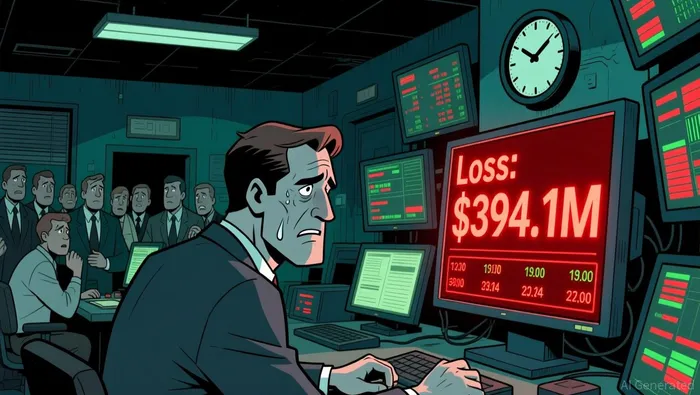
The collapse in transaction revenue flowed directly into the bottom line, causing a dramatic net loss swing. The company reported a net loss of $394.1 million, compared to a profit of $65.6 million a year earlier. This negative swing was driven by two components: a widening operational loss from the volume collapse and a $482.4 million decline in the value of crypto assets held for investment.
The bottom line is that the volume crisis has a clear and immediate price impact. The 40% year-over-year drop in transaction revenue is not an abstract metric; it is the primary reason for the second consecutive quarter of losses and the sharp stock selloff that followed.
The AWS Vulnerability: A Systemic Liquidity Risk
Recent operational disruptions are not isolated incidents but a recurring vulnerability that directly threatens liquidity and user trust. In early May, a data center in Northern Virginia overheated, forcing Coinbase to degrade services and temporarily disable trading. This followed a major regional AWS outage in October 2025 that left users unable to log in or trade for over three hours. These are not minor glitches; they are systemic risks tied to a single cloud provider.
The financial cost is measured in lost opportunity during volatile price events. When trading services fail, users cannot execute orders, creating direct revenue leakage. More critically, these outages during high-volatility periods-precisely when trading volume should be highest-can erode user confidence. The risk is that customers, especially retail traders, may perceive the platform as unreliable and migrate to alternatives during critical market moves.
This creates a dangerous feedback loop. The volume collapse already hurting Coinbase's revenue is exacerbated by infrastructure failures that prevent the platform from capturing demand. As one analysis notes, extreme spikes in trading volume can cause old system architectures to lag or shut down. If the platform cannot handle its own traffic, it loses its core function as a liquidity conduit, further undermining its business model.
Catalysts and Risks: Volume Recovery vs. Structural Headwinds
The primary catalyst for a turnaround is a rebound in crypto prices and trading volumes. The current subdued activity stems from waning momentum in crypto prices, tighter financial conditions and lingering macroeconomic uncertainty. A sustained price rally, particularly if it breaks the recent risk-off trend, is the most direct path to restoring transaction revenue. The market has shown some resilience, with Bitcoin rising 12% in March alone, but the first quarter still saw a 22% decline. Until that broader market shift reverses, the cyclical headwind remains.
The key risk is that Coinbase's diversification efforts have not yet offset the core trading revenue decline. The company is pushing an "everything exchange" vision to build a subscription and services business, but this non-transaction revenue is still too small to counter the cyclicality of spot trading. The recent job cuts, which targeted about 14% of the workforce, underscore that investors are waiting for concrete evidence that these new streams can generate profits when trading dries up. Without that progress, the business remains vulnerable to the next crypto downturn.
Recurring operational dependency on a single cloud provider adds a persistent structural risk. The recent AWS outage is a stark reminder that the platform's reliability is tied to centralized infrastructure, creating a single point of failure. This vulnerability is not a one-time glitch but a systemic weakness that could further erode user trust and liquidity during critical market events. For a business built on constant access and execution, this dependency is a fundamental friction that could hinder its ability to capture demand when it returns.