

The competitor headline says the CEO became a major shareholder after an inheritance shift. That's almost the wrong story.
Token Corporation - a Japanese rental-housing builder with about ¥146 billion in market value - lost two of its controlling family figures in a span of six weeks. Chairman Minoru Souda died on July 24, 2025. Major shareholder Naoto Tada died on June 24, 2025. In both cases, shares passed through inheritance. By the time the disclosures landed in May 2026, Tada had been removed from the major shareholder list entirely. His heirs apparently didn't hold enough to cross the 5% reporting threshold anymore.
Now here's the thing the headline skips. Between those two deaths and today, the company repurchased 17.43% of its own shares - 2.34 million shares for ¥29.6 billion - in a single tender offer that closed in December 2025. That's one of the largest buybacks relative to company size I've seen from any Japanese mid-cap. You don't spend nearly ¥30 billion to shrink the company unless you intend to concentrate whatever's left.
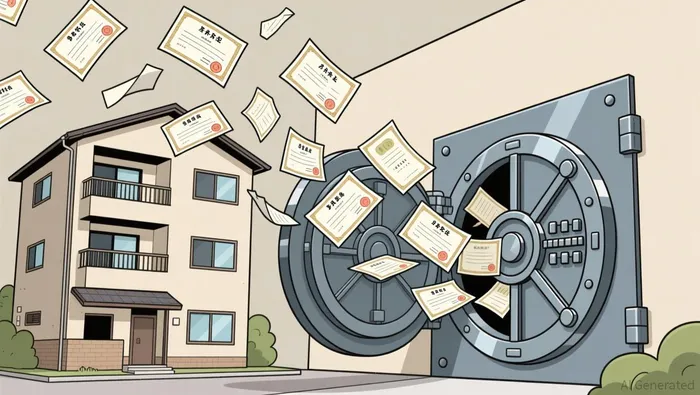
The way to consolidate control is not to inherit. Inheritance fragments. It scatters shares among heirs who may want liquidity, may want nothing to do with it, may sell immediately. The way to consolidate control is to buy back 17% of the float while everyone is still processing the funerals.
The CEO, Yoshitake Souda - himself a founder and likely a descendant of the original Souda family that built this business - benefits from both events, but through very different mechanics. From the inheritance side, unclear. The filing doesn't tell us who received Tada's shares or how many. From the buyback side, unambiguous. Every share that the company removes from the market makes the remaining shares of insiders and long-term holders relatively more powerful. If Souda holds shares, his effective ownership percentage goes up whether or not he bought a single one.
Most people think inheritance consolidation is a governance upgrade - the messy external shareholders disappear, the controlling family takes charge, alignment improves. But look at the actual sequence. Two major shareholders die in six weeks. Their shares fragment and drop below the reporting threshold. Then the company executes a buyback so large it swallows roughly one in six outstanding shares. The result: the pre-buyback outside holders get diluted down. The insiders don't have to spend their own money to gain relative weight.
That's not the same as a straightforward "founder consolidating control." It's a specific flavor of it. The company's treasury is doing the heavy lifting. So the real question is: is this good governance or creative governance? If the buyback was priced fairly - and the company announced it at the then-current market price - then existing shareholders should be indifferent between holding the stock and receiving cash on their proportional share. In practice, tender offers often carry a small premium, which is supposed to make all shareholders whole. I couldn't find the exact premium on this offer. That's a data gap worth noting.
There's another layer. Token's business is inherently steady-state. It builds rental apartments on behalf of landowners, then manages the real estate leases. The model is construction plus rental income - not a high-growth engine that demands massive reinvestment. ¥30 billion for a ¥146 billion company is roughly a 20% payout. If the business doesn't have a clear use for that much capital, returning it or using it to shrink the share count is a rational move. The problem is distinguishing between "we genuinely don't need this cash" and "we're using corporate resources to achieve a private governance outcome."
I suspect both are true to some degree. The business is mature enough that capital discipline matters. And the timing is close enough to the succession events that governance consolidation is at least a secondary motive. The two aren't mutually exclusive.
The counterargument is simple: buybacks benefit all remaining shareholders proportionally. If the stock price reflects a fair valuation, everyone wins equally. That's true mathematically. But it's not true if the buyback's hidden purpose is to give insiders a larger voting bloc without them paying full price out of their own pocket. The cost comes from the company's balance sheet - which belongs to everyone - while the relative control gain accrues to whoever already held.
The stock sits around ¥14,010 per share. The largest single shareholder now is UH Partners 2 at roughly 9.88%. No one individual crosses the traditional "controlling shareholder" threshold of 33% or even 50%. That means this is a dispersed-ownership company wearing a family-control costume. The governance risk is the usual one for that structure: if the family wants to do something that hurts minority holders, there's no single shareholder large enough to stop them, but the family's combined influence through boards and relationships may be more than the cap table suggests.
What would weaken this view? Evidence that the buyback was priced with a generous premium to all tendering shareholders, that the family sold into the offer rather than holding, or that board governance mechanisms are genuinely independent of the Souda family. I don't have that evidence.
The test for investors is simple. Watch the next capital allocation decision. If Token continues to treat excess cash as a tool for share reduction, the story is: mature business, disciplined capital returns, concentrated ownership. Fair enough. If the company starts making acquisition bids or growth investments that don't clearly serve the rental-housing core, then the buyback was probably about consolidating a war chest for a family-led agenda that the market didn't consent to. Watch what they do with the next ¥30 billion they generate. That will tell you which story was real.