

The University of Michigan's consumer sentiment index plunged to 44.8 in May - the lowest reading in 74 years. Down 21% from just three months ago. A straight-line fall through the floor.
The immediate reflex from commentators: blame the political divide. Sure, the partisan gap is grotesque. Republican sentiment sits near 90 while Democratic sentiment hovers around 32. The gap between them is roughly 60 points. That's real. It's been widening since 2017. The Fed is arguably setting policy off "a partisan mood ring."
But if you're trying to trade this, the political diagnosis misses the actual setup. The partisan gap isn't the story - the extremity of the overall reading is. And that's where the contrarian alarm fires.
The Contrarian Disconnect: Sentiment at a Wall Street-ignoring Low While the Market Prints New Highs
Here's the number that matters: the S&P 500 is trading near 7,473, within striking distance of all-time highs. The market is not pricing in a recession. It's not even pricing in a slowdown. Meanwhile, the household that's supposed to drive 70% of U.S. economic activity is reporting the most pessimistic mood in three-quarters of a century.
Consumer spending accounts for roughly 70% of all U.S. economic activity. The numbers - retail sales, personal consumption - are still holding. S&P Global forecasts real consumer spending growth of 2.1% in 2026. That's not a collapse. That's not even a sharp deceleration. But the sentiment index says it's the worst economy consumers have felt since the 1950s.
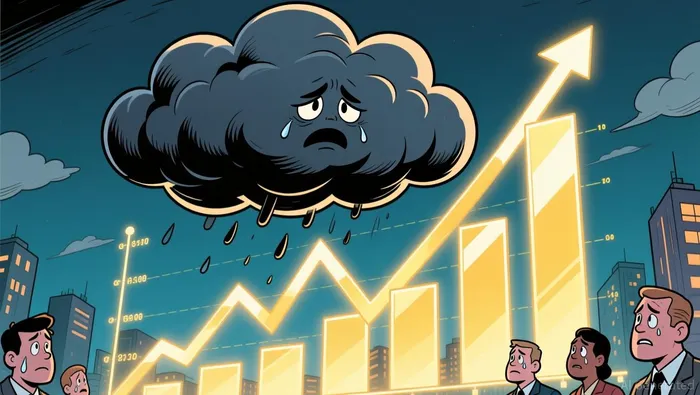
That disconnection between feeling and doing is precisely where the contrarian setup lives. Sentiment is forward-looking noise; spending data is backward-looking reality. When the two diverge this hard, one of them is wrong. Historically, it's the sentiment.
What History Says About Sentiment Floors
Let me be direct about the data. The average one-year S&P 500 return following a consumer sentiment low is approximately 25%. I've seen this stat across multiple historical backtests. It's not a guarantee - every cycle is different - but the mechanical relationship is clear: when consumers are this pessimistic, forward market returns tend to be strong.
Why? Because sentiment extremes are contrarian signals by definition. When everyone agrees that the economy is terrible, the bad news is no longer a surprise. It's already in the consumer's head, which means it's arguably already priced into any sector-specific selloffs that sentiment-driven panic has produced.
The drivers behind this reading - tariffs pushing up prices, Iran tensions, stubborn inflation on essentials - are real pressures. They're also largely known. Markets hate uncertainty, not bad news. Once the bad news becomes the baseline narrative, the path of least resistance tends to move higher, not lower.
The Partisan Filter: A Feature, Not a Bug
This is where the political framing gets interesting from a contrarian perspective. Yes, Democrats are tanking the aggregate number. Yes, Republicans who like the president are sitting at 90. But the Michigan index weights all households together. So the Democratic drag is pulling the composite into contrarian territory precisely because a large bloc of consumers is irrationally pessimistic about an economy that hasn't actually broken.
In other words, the partisan gap is what makes the index more useful, not less. If everyone agreed and the index settled at some middling 55, there'd be no signal. The extremity is the signal. The polarization is what pushes the reading off the charts.
I don't ignore the Democratic reading. Consumer pain on prices is real for households that are politically disconnected from the administration driving policy. Tariffs and their downstream cost increases don't care about your vote. But the question for investors isn't whether one party feels worse - it's whether the aggregate reading tells you anything actionable about stocks.
The Actionable Layer
Here's my read. The tape is telling us two things simultaneously: (1) household sentiment has hit a floor that historically precedes strong equity returns, and (2) the broader market hasn't punished the pessimism yet. That combination - extreme fear meeting an unbroken market trend - is the kind of setup that rewards patience, not panic.
I'm not suggesting you buy the S&P 500 on the sentiment index alone. But if you're already building a shopping list of high-quality growth stocks that have been battered, the macro backdrop is arguably favorable. The risk regime right now isn't defined by the economy the consumers feel - it's defined by a market that hasn't broken despite the worst sentiment reading in decades.
When sentiment extremes converge with intact fundamentals, the contrarian edge is usually on the buy side. The question isn't whether consumers will eventually feel better - they usually do. The question is whether you'll still be positioned to benefit when they do.
I would reassess this thesis if consumer spending data starts confirming what sentiment already predicts - a sustained, material pullback in household consumption that pushes actual growth into contraction territory. Until then, the disconnect between the worst-feeling economy in 74 years and a market near all-time highs is arguably the most underappreciated setup on the table.
Don't let the doomsday narrative talk you out of it.