

Consumer sentiment has hit the lowest level in the University of Michigan survey's history. April retail sales rose 0.5%. The S&P 500 and Nasdaq hit record highs in May. The headline and the reality are telling different stories - and the gap is the whole point.
What more do you need to see before the doomsday narrative cracks?
The University of Michigan's consumer sentiment index fell to 44.8 in May - down from an already-record 47.6 in April and the worst reading in data going back to 1952. The preliminary print on May 8 had already flashed 48.2. The final came in even worse.
Here's what's not making the same headlines: the consumer who feels the worst is still spending.
The headline number is real. The conclusion is premature.
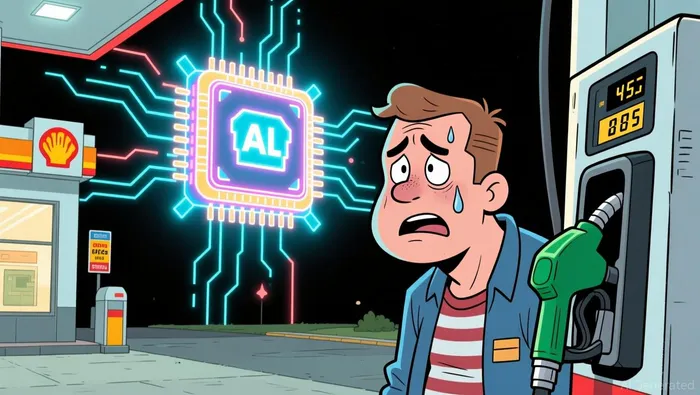
The drivers behind the collapse are not structural economic failure. They are cost-of-living shock. Surging gasoline prices linked to Middle East tensions, rising inflation expectations, and tariff-related pricing anxiety hit the survey all at once. Consumers of all income levels feel it. That's the primary driver.
The secondary amplifier is political. It's true that Democratic sentiment tracks lower than Republican sentiment during Trump's presidency - UMich researchers have documented the partisan gap as the largest in the index's history. Republicans spend out of confidence; Democrats spend out of fear that things will get worse. That's the pattern.
But here's the critical point: feeling bad about gas prices and the political climate is not the same as cutting your spending. And the data says the consumer isn't cutting.
Spending hasn't followed sentiment - and that matters
April retail sales rose 0.5% month-over-month to $757.1 billion, in line with forecasts. The February-through-April period saw total sales up 4.4% year-over-year. That's not a consumer in retreat. That's a consumer who is frustrated but functional.
The relationship between sentiment and spending has weakened over the past year. McKinsey's State of the Consumer report from mid-2025 noted this explicitly: consumers feel worse but keep buying. The Fed's own research tracks verified retail purchases against sentiment and finds the same disconnect.
Why does this matter for investors? Because sentiment surveys are backward-looking mood rings. They capture yesterday's frustration. Spending data is the actual behavior that hits earnings. If the consumer keeps buying, consumer-facing companies don't collapse - even if the sentiment headline says doom.
Meanwhile, the market has moved in the opposite direction
While sentiment sank to 44.8, the S&P 500 gained 8% in 2026 and the Nasdaq rallied 13%. Both hit record highs in early May, fueled by AI-driven earnings optimism in tech and semiconductors. Michael Burry even compared the current setup to the final months of the 1999-2000 bubble.
That's the real tension. On one side, a consumer survey at its worst reading since 1952. On the other, a stock market hitting all-time highs. The market isn't pricing in a consumer collapse - and maybe it shouldn't.
So what do you do?
The political narrative - that this is primarily about Democrats disliking Trump - is real but incomplete. It explains part of the survey mechanics, not the portfolio implication. The portfolio implication comes from what the consumer actually does, not what they say they feel.
Here's the risk-managed way to think about it:
Growth stocks insulated from consumer spending - AI infrastructure, enterprise software, cloud platforms - are the clear beneficiary of this setup. Their revenue doesn't depend on whether the consumer feels good at the gas pump. The market knows this, which is why the Nasdaq is running. The contrarian edge here is patience, not panic: don't chase record highs, but don't fade the trend on sentiment headlines either.
Consumer-facing names deserve caution until the May retail sales data (scheduled for June 17) confirms the holdup continues. If spending cools alongside sentiment, the disconnect narrows and consumer stocks get punished. That's the risk trigger I'd watch.
The sentiment floor argument has merit. When a gauge hits its absolute worst reading in 74 years of data, the mechanical floor is in place. It can't go meaningfully lower. If the consumer continues spending through this, and if gas prices stabilize or ebb, sentiment can re-rate sharply without requiring any fundamental improvement. That's the contrarian asymmetry: the downside on the gauge is capped, the upside is open.
The bottom line
Consumer sentiment is at a record low. The consumer hasn't stopped spending. The market hasn't sold off. The political narrative explains part of the survey but not the economic reality.
I'm not calling a recession based on a mood ring. I'm watching what the consumer actually buys, not what they say they feel. Until spending data breaks the pattern, the sentiment headline is noise - and noise creates positioning opportunities if you know which stocks earn their place and which don't.
I would reassess if the June 17 retail sales print shows a meaningful break below trend, or if gasoline prices continue climbing in a way that actually forces substitution away from discretionary spending. Until then: stay positioned in quality growth that doesn't need the consumer to feel happy, and avoid catching falling consumer-facing names on sentiment headlines alone.