

Copper prices have pulled back, trading around $5.85 per pound earlier this month. This marks a clear reversal from a recent rally that pushed the metal to a one-month high, driven by renewed hopes for a US-Iran ceasefire. The immediate catalyst for the correction is a shift in market focus. As diplomatic talks gained traction, the premium for geopolitical risk began to unwind. With tensions in the Strait of Hormuz easing, the fear of a supply disruption to global trade has diminished, removing a key support for prices.
The dip reflects a return to more fundamental concerns. Market sentiment is now pivoting toward a softer industrial demand outlook as global economic activity shows signs of slowing. This creates a tension between the temporary relief from geopolitical fears and the underlying physical market tightness. The correction is likely a pause, not a permanent shift. The metal's fundamental balance remains under structural pressure from multiple fronts.
On one side, supply chain costs are firming, with major producers citing higher fuel and input costs. On the other, demand from China, the world's largest consumer, has been robust, evidenced by a sharp rise in the Yangshan copper premium. Even as prices fell on geopolitical relief, the physical market showed strength. This disconnect between price and physical fundamentals suggests the recent drop is more about sentiment than a change in the core supply-demand equation. The market is digesting a temporary risk premium, leaving the underlying tightness intact.
The Core Commodity Balance: Surplus vs. Deficit Forecasts
The market's fundamental story is now one of structural tightening. For years, analysts expected a surplus to cushion the market. That comfort has vanished. The International Copper Study Group has reversed course, now officially forecasting a 150,000 metric ton copper deficit for 2026. This is a sharp pivot from previous surplus expectations and marks the market's first structural shortage since 2009. Wall Street's models point to an even steeper reality, with J.P. Morgan projecting a 330,000 metric ton shortfall, heavily driven by the massive material demands of new hyperscale data centers.
This deepening deficit is a product of two forces colliding. On one side, demand is accelerating from novel, power-hungry sources. J.P. Morgan estimates data centers alone will siphon approximately 475,000 metric tons of copper in 2026, with each new AI facility requiring up to 50,000 tons. On the other, supply continues to stumble. Global production is struggling to keep pace, weighed down by prolonged mine closures and downgraded output guidance from major operations in Chile. The Grasberg Block Cave remains shuttered, and Anglo American's recent guidance cuts underscore the difficulty of replacing lost tonnage.
Yet, a near-term anomaly exists. Despite these clear structural pressures, a build-up of US copper inventories due to tariff uncertainty has occurred. This creates a temporary disconnect between the long-term deficit outlook and near-term physical flows. The inventory build is a reaction to short-term trade policy risks, not a sign of oversupply. It highlights how geopolitical and trade factors can create localized imbalances even as the global market tightens.
The bottom line is that the market is shifting from a surplus to a deficit regime. While the 150,000-ton to 330,000-ton shortfall represents a small percentage of the global market, commodity pricing is dictated by the margins. In a physical market with inelastic demand, the "marginal ton" of supply determines the price for the entire system. This structural deficit, now baked into forecasts, is the real driver behind copper's historic highs and the underlying pressure that will persist even if prices dip on geopolitical relief.
Demand Drivers and Supply Constraints
The balance of the copper market is being shaped by a clear divergence between near-term weakness and powerful long-term trends. On one side, a notable demand slowdown is emerging. Chinese refined copper demand fell an estimated 8% year-on-year in the fourth quarter of 2025, as the boost from stimulus policies and tariff-related front-loading at the start of the year has waned. This near-term softness provides a headwind, creating a temporary gap between the robust physical demand seen earlier and the more subdued headline numbers now.
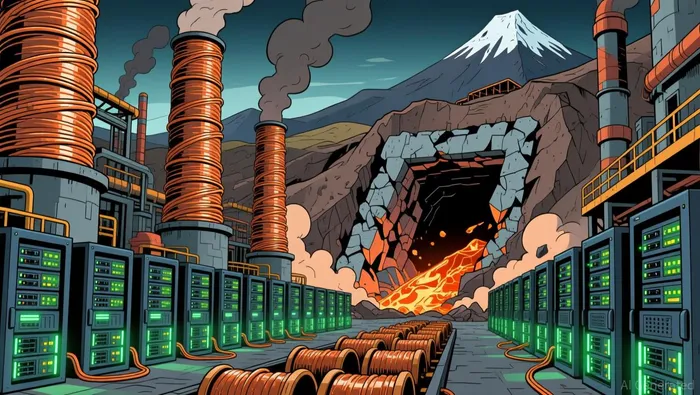
Yet, this dip is overshadowed by persistent and growing supply constraints. Global production is struggling to keep pace, weighed down by prolonged mine closures and downgraded output guidance from major operations. The Grasberg Block Cave remains shuttered under force majeure, and Anglo American's recent guidance cuts for its Chile operations underscore the difficulty of replacing lost tonnage. These operational failures are a key reason why the market is now forecast to move from surplus to deficit.
The long-term structural tailwind, however, is a powerful and accelerating trend. The anticipated demand surge from electrification and AI infrastructure is a fundamental driver that will persist beyond any near-term cyclical dip. J.P. Morgan estimates data centers alone will siphon approximately 475,000 metric tons of copper in 2026, with each new AI facility requiring up to 50,000 tons. This highly concentrated, novel source of demand is a major force pulling the market toward a deficit. As the International Copper Study Group notes, the market is now on track for its first structural shortage since 2009.
Viewed another way, the current situation is a clash between a fading stimulus-driven demand wave and an incoming tsunami of structural demand. The 8% drop in Chinese demand is a real, near-term pressure point. But it is occurring against a backdrop where supply is faltering and new, massive demand centers are coming online. This dynamic sets the stage for a market where price volatility may persist, but the underlying balance is tightening.
Catalysts and Risks: What to Watch
The current price dip is a pause, not a trend. The market's direction hinges on a few key events and data points that will reveal whether the underlying physical tightness is being tested or reinforced.
First, watch the weekly Chinese refined copper inventory data. This is the most immediate signal of physical demand strength. The recent 78,700-ton weekly drawdown was the largest in a year and helped spark a rally. Sustained drawdowns would confirm robust end-demand, providing a floor for prices even if sentiment wavers. Conversely, a reversal to builds would signal the near-term slowdown is more than a seasonal blip.
Second, monitor the progress of US-Iran diplomatic talks. The recent ceasefire is fragile, set to expire on April 21. Any breakdown could quickly reignite the geopolitical risk premium that has been unwinding. As seen earlier, copper prices jumped to a one-month high on mere hopes for dialogue. A return to tension would likely send prices sharply higher, testing the recent correction. The market is highly sensitive to these developments.
Finally, track official supply forecasts for any revisions. The projected 2026 deficit is a key structural driver. The International Copper Study Group's forecast of a 150,000-metric-ton deficit and J.P. Morgan's deeper shortfall are based on current data. Any new guidance from major producers like Anglo American or Codelco that confirms supply constraints are worsening would solidify the bearish supply outlook. Conversely, a surprise upgrade in production forecasts could challenge the deficit thesis.
The bottom line is that the market is balancing multiple forces. The near-term catalysts are geopolitical and inventory flows, which can drive volatility. The long-term risk is that the structural deficit, driven by AI and faltering supply, remains intact. Watching these three points will show whether the dip is a buying opportunity or a warning sign.