

The Cosmos ecosystem is facing a potential structural overhaul as a governance proposal aims to merge the Osmosis decentralized exchange with the Cosmos Hub. This strategic move would convert circulating OSMO tokens into ATOM over a six-month period to consolidate security and liquidity under a single governance framework according to reports.
Concurrently, the protocol has introduced an automated token burn mechanism funded by DEX trading fees to reduce the circulating supply as detailed. These developments coincide with positive derivatives data, as ATOM price action shows bullish divergence and rising open interest suggesting renewed capital inflows according to market analysis.
Technical indicators place the asset above key moving averages, with traders positioning for a potential breakout toward $2.40 if resistance levels are breached as technical analysis indicates. The convergence of fundamental governance changes and market sentiment has created a volatile but potentially lucrative environment for investors.
Implement a long-only strategy for ATOM over the past 2 years. Entry: price closes above the 200-day SMA and RSI(14) > 50. Exit: price closes below the 200-day SMA, or after 20 trading days, or TP +8%, SL -4%.
How Would a Merger Between Osmosis and Cosmos Hub Restructure the Ecosystem?
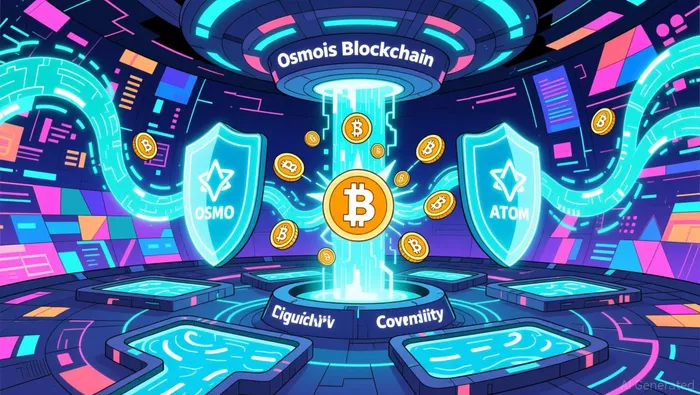
A proposed governance initiative seeks to merge the sovereign Osmosis blockchain with the central Cosmos Hub, fundamentally altering the network's architecture as outlined. Under the plan, the majority of circulating OSMO tokens would be converted into ATOM at a fixed exchange ratio of approximately 0.0355 ATOM for every 1.998 OSMO tokens according to the proposal.
This conversion is scheduled to occur over a six-month timeline if the proposal receives approval from the community as planned. The primary objective is to unify liquidity, governance, and security operations around the Cosmos Hub, effectively reducing the fragmentation that currently exists across the interchain landscape as reported.
Proponents argue that this consolidation would significantly enhance the network's security model by pooling resources from one of the most influential decentralized applications within the Cosmos ecosystem according to analysis. However, the merger represents a massive shift in the current sovereign structure of Osmosis, which has operated as a distinct chain since its inception as noted.
The potential outcome of this proposal remains uncertain and depends entirely on the final vote of ATOM and OSMO token holders according to projections. The success of such a merger would redefine the relationship between the Hub and its connected zones, potentially altering the incentive structures for validators and liquidity providers as suggested.
What Impact Does the New Token Burn Mechanism Have on ATOM and OSMO Supply Dynamics?
The Osmosis protocol has implemented a new automated token burn mechanism designed to remove OSMO tokens from circulation as explained. This program is primarily funded by redirecting a portion of DEX trading fees that were previously distributed entirely to liquidity providers according to protocol details.
By allocating fees toward burning rather than distribution, the protocol creates a feedback loop where increased trading activity directly results in a higher volume of tokens being destroyed as the mechanism works. This deflationary pressure aims to reduce the total circulating supply over time, potentially increasing scarcity if demand remains constant or grows according to supply analysis.
The mechanism is integrated into the core protocol logic, ensuring that the burn occurs automatically without requiring additional governance intervention for each transaction as designed. This structural change marks a significant evolution in the tokenomics of the Osmosis platform, moving away from purely inflationary or neutral models as observed.
While the immediate impact on the broader ATOM price is indirect, the shift in OSMO dynamics could influence the overall health and attractiveness of the Cosmos ecosystem as analysis suggests. Investors will need to monitor how the burn rate evolves relative to trading volumes to assess the long-term efficacy of this supply management strategy according to market commentary.
What Do Derivatives Data and Technical Indicators Signal for the Near-Term ATOM Price Trajectory?
Derivatives data indicates a bullish bias for ATOM, with Open Interest surging to $137.25 million, a notable increase from $125 million earlier in the month as reported. This rise in Open Interest suggests that new capital is entering the market and that traders are increasing their exposure to the asset according to data.
Funding rates have flipped positive to approximately 0.0093%, indicating that long positions are paying short positions, a historical precursor to significant price gains as technical analysis shows. The current low funding rate environment supports sustained upward pressure without the excessive speculation that often leads to sharp corrections according to market context.
Technically, ATOM is trading above its 20-day moving average at $1.80 and has built strength by finding buyers at higher lows during pullbacks as technical indicators show. The RSI is positioned in neutral to bullish territory, while the MACD histogram is strengthening, hinting at improving momentum according to technical analysis.
Resistance is currently clustered near $1.93, with a daily close above this level potentially exposing targets at $2.39 and the 200-day EMA near $2.44 as predicted. Conversely, a breakdown below the $1.88 support level could trigger stop-losses and push the price toward the $1.81 range according to market analysis.
The broader market context, including Bitcoin's surge toward $77,500, provides a supportive tailwind for ATOM and other interchain ecosystem tokens as market data indicates. Traders are closely watching the $1.98 resistance level, which is seen as a critical threshold for confirming a sustained breakout from the recent downtrend according to technical analysis.
The strategic bull case relies on the asset breaking the $1.98 resistance within 48 hours to validate the current momentum as analysis suggests. If this level holds, the convergence of technical strength and fundamental governance news could drive further appreciation according to market commentary.