

The market's reaction was immediate and negative. On Sunday night, U.S. stock futures plunged after President Trump announced a decisive escalation. Dow Jones Industrial Average futures dropped by 411 points, or 0.9%, with broader indices following suit. This sharp sell-off signals the news was a surprise, a "sell the news" event following a week of optimism.
The core event was a more aggressive move than a simple port blockade. Trump declared "Effective immediately, the United States Navy... will begin the process of BLOCKADING any and all Ships trying to enter, or leave, the Strait of Hormuz". This unilateral naval blockade directly threatens the flow of an estimated 30% of the world's seaborne-traded crude oil. The move came after peace talks in Islamabad ended without a deal, reigniting fears of a prolonged conflict.
The setup for today's stock moves is clear. The initial futures drop reflects a reset in risk appetite, pricing in a higher probability of a direct confrontation that could disrupt global energy markets. For the specific stocks in focus, this blockade announcement likely amplifies existing sector-specific vulnerabilities, setting the stage for further volatility as traders reassess the new geopolitical reality.
The Expectation Gap: Resetting War and Market Pricing
The market's initial reaction was a textbook "sell the news" event. The blockade announcement directly contradicted a week of bullish expectations, resetting the forward view from a swift conclusion to a prolonged conflict. Yet the partial recovery on Monday reveals a more nuanced expectation gap. Traders are treating this as a tactical escalation, not an existential threat to the global economy, but the underlying tension between the new reality and the old narrative remains wide.
Earlier in the week, the market had fully priced in a potential end to the war. President Donald Trump said the U.S. would end its military campaign in Iran in two to three weeks, a promise that triggered a powerful risk-on rally. The S&P 500 gained 2.9%, its strongest single-day move in over a decade, as investors bet on reduced geopolitical risk and its positive spillover to growth and technology stocks. That rally was the expectation priced in: a swift exit from the Middle East.
The blockade announcement shattered that narrative. It introduced a new, immediate threat to global energy flows, directly contradicting the two-to-three-week timeline. The initial futures plunge of over 400 points was the market's first reset, pricing in higher oil prices and a longer conflict. However, the partial recovery on Monday shows traders are not abandoning the risk-on trade entirely. Stock futures recouped some of the losses after the initial shock, suggesting they see this as a contained escalation rather than a fundamental breakdown in the macro setup. The expectation gap here is about duration and scope: the market is willing to accept a tougher standoff but not a full-scale war that would derail the economic recovery.
This dynamic is crucial for the stocks in focus. Their earlier gains were built on the expectation of a de-risked world. The blockade resets that baseline, introducing a new layer of uncertainty. For now, the partial recovery indicates the market consensus is leaning toward the blockade being a pressure point, not a terminal shock. But the gap between the old, optimistic view and the new, more tense reality creates a volatile setup. Any further escalation could close that gap with a vengeance, while a diplomatic breakthrough would likely trigger a powerful relief rally. The expectation game is far from over.
Stock-Specific Focus: Winners, Losers, and Priced-In Risks
The reset in expectations is playing out differently across the board. The initial "buy the rumor" rally for tech and growth stocks has reversed, while defense and energy names are stepping into the spotlight as the new geopolitical reality takes hold.
Marvell Technology (MRVL) is a prime example of a stock that rallied on the old narrative and now faces a reset. The company jumped nearly 13% on Tuesday when President Trump signaled a swift end to the war, a move that fueled a broad risk-on shift. Semiconductor stocks rallied on Tuesday, led by Marvel Technologies, with the iShares Semiconductor ETF gaining its sharpest rise in over a month. That rally was the market's bet on de-risked global growth and continued AI spending. The blockade announcement directly contradicts that timeline, introducing a new risk of prolonged conflict and higher oil prices. For MRVL, the expectation gap is clear: the stock's massive pop was priced in on a quick exit. The new reality of a naval blockade resets the forward view, making the earlier gains look like a classic "sell the news" event as traders reassess the duration of the conflict and its potential impact on global supply chains and consumer demand.
By contrast, AST SpaceMobile (ASTS) is getting hit from multiple angles, showing how macro headwinds can overwhelm sector-specific catalysts. The stock slumped 11% on Tuesday, its worst session in over a month. This move is driven by a combination of factors, but the new geopolitical tension is a key amplifier. AST's LEO satellites can beam 2G, 4G, and 5G cellular signals directly to mobile devices, a promising technology that has fueled a massive run. However, the stock is under pressure from a more competitive FCC landscape and a launch delay. The blockade and the specter of a prolonged conflict add another layer of risk, as capital flows toward perceived safe havens and investors become more selective. The expectation here is that the stock's speculative premium, built on growth and innovation, is being re-priced against a backdrop of higher geopolitical uncertainty.
The focus on CRML and PBM points to the clear winners in this new setup. These are not pure-play defense stocks, but the market is pricing in sustained demand for weapons and intelligence platforms. Lockheed Martin's stock, the world's largest defence contractor by revenue, hit a new all-time high on Monday, with Northrop Grumman and others following. The rally across the defense sector reflects a classic "buy the news" dynamic for a prolonged conflict. Analysts note that defense budgets, already earmarked for growth, now face even fewer hurdles. For stocks like CRML and PBM, the expectation gap has closed in their favor; the blockade and ongoing strikes confirm the demand thesis that was only a whisper before.
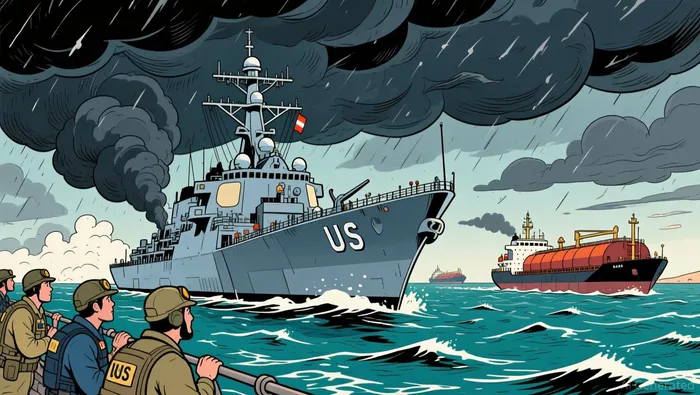
Energy majors are the other clear beneficiary, as the blockade directly threatens oil flows. The expectation is that higher oil prices are now priced in, creating a tailwind for exploration and production companies. The market is effectively betting that the conflict will disrupt supply, a scenario that benefits energy producers. The focus on these stocks is a direct translation of the new geopolitical reality into sector rotation. The expectation game has shifted: the winners are those positioned for a longer war and higher energy prices, while the losers are those whose earlier gains were built on the hope of a swift resolution.
Catalysts and Risks: What to Watch Next
The market's immediate relief from the 10-day ceasefire is a classic "buy the rumor" bounce, but it's a fragile one. The real test is whether this truce holds or merely buys time for a more dangerous escalation. Traders should watch for two near-term catalysts that will determine the blockade's fate.
The first is the ceasefire's expiration. The temporary truce between Israel and Lebanon, which began at 5 p.m. ET on Thursday, creates a narrow window for diplomacy. President Trump said the next round of in-person negotiations could occur "probably, maybe, next weekend". If talks fail to produce a substantive deal, the ceasefire's end could trigger a rapid return to hostilities, directly challenging the market's recent optimism. For stocks like ASTS and MRVL, which rallied on hopes of a swift resolution, a failed diplomatic push would likely trigger another sharp reversal.
The bigger risk is that the blockade escalates into a full closure of the Strait of Hormuz. Experts warn that even if the strait reopens, shipping could take 'months on end' to return to normal. Iran has already demonstrated its willingness to act, firing on tankers and closing the strait again as the ceasefire deadline looms. A full closure would be a definitive step toward a broader conflict, forcing a complete reset of risk models. This scenario would likely send oil prices soaring, directly impacting the stocks in focus.
That brings us to the critical price watch. The market needs to monitor oil prices for a clear signal of sustained disruption. Crude prices were last up at $107 a barrel during a previous spike. Sustained trading above that level would force a reassessment of inflation and growth expectations. For MRVL, higher oil prices could dampen consumer demand and pressure semiconductor spending. For defense stocks like CRML and PBM, the impact is more direct: a prolonged conflict would validate their demand thesis and likely support further gains. The expectation gap here is about duration. A spike above $107 would signal the blockade is not a temporary measure but the start of a drawn-out confrontation, closing the gap in favor of the risk-off trade and its beneficiaries.