

The Crypto Fear and Greed Index just hit 25 - its lowest reading in over a year and a half - and it's staying there. This isn't a flash crash or a weekend dip. We're looking at 46 consecutive days in Extreme Fear territory, the longest streak since the FTX collapse in November 2022. That's the kind of data point that separates real diamond hands from paper ones.
The numbers tell a brutal story. Yesterday the Index sat at 28, still in Fear mode. Last week it was at 49 - Neutral. That's a 49% collapse in market sentiment in just seven days. The algorithm behind the Index weighs volatility, market momentum, social media sentiment, and Bitcoin dominance. Every single signal is flashing red. Volatility is spiking. Volume is drying up. Twitter sentiment is bleak. Bitcoin dominance is creeping higher as investors flee alts for the "safe haven" - the classic fear playbook.
Bitcoin itself is trading around $80,000, down 22.79% year-over-year. The price one year ago was $103,777.74. That's the worst annual performance since the 2018 bear market. Q1 2026 just became the worst first quarter since then, too. The chart looks ugly. The narrative is broken. Retail is scrolling through red candles and checking their portfolio every ten minutes.
But here's the thing the panic-buying crowd misses: the institutional plumbing is fine. Spot Bitcoin ETF outflows have run for six straight days - $87 million in total. That's it. Compare that to the billions that flowed in during the 2024-2025 rally. Compare that to the actual exodus that followed FTX. Nobody's going bankrupt. No major firm is collapsing. The ETF structure is holding. The outflows are noise, not a structural exit.
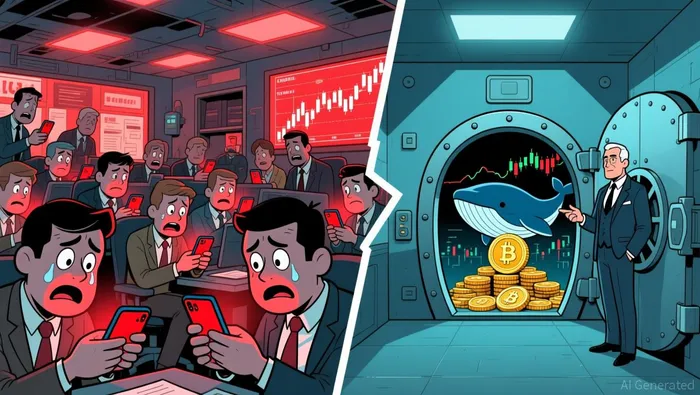
This is the setup. Forty-six days of extreme fear creates a psychological pressure cooker. Retail sells at the bottom because the narrative is broken. Whales? They're watching the same data and seeing something different: a market oversold, sentiment extreme, and liquidity waiting to be picked up. The question isn't whether this is a trap or a setup. The question is whether you're positioned to HODL through the fear or fold before the turn.
Whale Games vs Retail Panic: The Data Behind the Fear
While retail is selling in panic, the whales are doing something that should tell you everything you need to know about who's playing which side: they're accumulating. The whale-to-retail ratio just hit a 9-month high - the highest level since last September - and historical data shows this setup has preceded roughly 30% moves within 90 days according to Alphractal. That's not speculation. That's pattern recognition.
The signal gets clearer when you look at exchange flows. Whale exchange inflows have dropped to 0.52 - a reading that signals whales are sending less Bitcoin to exchanges, not more according to CryptoQuant. In plain English: they're not selling. They're holding. They're moving coins into cold storage. This is diamond hands behavior, not capitulation. The Average Spot Order Size confirms it - the majority of transactions since the start of the month have been whale-driven. The buying is coming from the addresses that control the liquidity.
And here's what makes this different from every other bear market in recent memory: there's been zero systemic collapse. No protocol blowups. No stablecoin depeg events. No exchange freezes. The FTX crash took down FTX. The 2022 bear market took down Terra, Celsius, Voyager. This selloff? It's been purely sentiment-driven. The plumbing works. The exchanges are operational. The stablecoins are pegged. You can't short what isn't broken.
That's why the institutional debate is so telling. Bernstein is calling this the "weakest bear case in history" - they're sitting on a $150K Bitcoin target, arguing the fundamentals never left. McGlone at Bloomberg is playing the bear, warning of scenarios down near $10K. One side sees a market without structural damage. The other side sees a market that's lost its narrative. The data on whale accumulation suggests Bernstein's reading is closer to what the big money is actually doing.
Retail is scrolling through red candles and checking their portfolio every ten minutes. Whales are watching the same data and seeing a market where the smart money is positioning for the next leg up. The whale-to-retail ratio doesn't lie. It never has. The question is whether you're listening to the panic or the pattern.
What This Means for Your Portfolio: HODL or Stack?
So you're staring at a 25 on the Crypto Fear and Greed Index and your portfolio is bleeding. That's the setup. Now let's talk about what you actually do with that information.
A reading of 25 isn't just "fear." It's bottom-quartile sentiment - the kind of number that shows up when retail is in full panic mode and fear-driven queries are spiking on Google. The index weights volatility, market momentum, social media sentiment, surveys, and Bitcoin dominance equally across five distinct factors. When every single signal is flashing red like this, you're not dealing with a normal correction. You're dealing with a market that has emotionally capitulated. That's the first data point.
But here's where you need to pause and diagnose: what's actually driving this fear? Not all fear is created equal. If this is primarily leverage flushouts - retail getting liquidated, leveraged positions getting wiped - that's different than macro headwinds crushing risk assets across the board, which is different again from genuine adoption setbacks like regulatory crackdowns or protocol failures. The current readout shows volatility and momentum dominating the score with 25% weight each. That screams leverage and price action, not structural adoption collapse. When the fear is mostly technical - price drops triggering more price drops - the underlying demand can actually remain intact. Whales know this. They're the ones picking up the fallen coins.
Now, the second data point: what happens when the index stays below 30 for an extended period? Historical patterns show this often precedes a consolidation phase, not continued downward spiraling. The market isn't necessarily building a floor - it's building a base. That's a crucial distinction. A floor implies you're at the bottom and ready to bounce. A base implies accumulation, range-bound trading, and the slow work of repositioning before the next move. This is where the 46-day streak becomes relevant. It's not just long - it's testing retail conviction. Most people fold before the base forms. That's why the whale-to-retail ratio matters. The smart money is positioning during the base-building, not after the bounce.
Here's the actionable take: if you're HODLing through this, you're treating it as a test of conviction, not a structural break. The data supports that reading. The index is in the bottom quartile, yes - but the drivers are mostly technical (leverage, momentum), not fundamental adoption collapse. Whales are accumulating. The ETF plumbing is fine. This looks more like a base-building consolidation than a new bear market leg.
If you're stacking, the play is the same: accumulate during the base, not after the bounce. The whale games section showed you where the smart money is moving. Follow that signal, not the panic. The index will eventually tick higher - it always does. The question is whether you're positioned to catch the next leg or chasing the one that already happened.
Catalysts and Scenarios: What Moves the Index Back Toward Greed
You've HODLed through the base-building. Now you need to know what actually flips the switch back to greed. The Index doesn't self-correct - it gets pushed. Here's what to watch.
The Milk Road index weights volatility and market momentum equally at 25% each across six different factors. That means any catalyst that stabilizes price action and restores buying volume will have outsized impact on the reading. But the real movers are the ones that change the narrative.
Institutional flows are your leading indicator. Spot Bitcoin ETF outflows have run for six straight days - $87 million total. That's noise, not structural exit. But watch for the flip side: when inflows turn positive and sustain for a week or more, that's the signal whales are using the ETF structure to accumulate. That's the first green light.
Regulatory news cycles matter more than fundamentals right now. A clear regulatory framework - whether from the SEC, EU, or major Asian jurisdiction - can shift sentiment faster than any technical breakout. Conversely, unexpected crackdowns or hostile rhetoric keep the fear alive. The market is hypersensitive to this right after the 46-day fear streak.
Macro liquidity conditions are the tide. When central banks signal rate cuts or quantitative easing, risk assets rally. Crypto doesn't exist in a vacuum. If macro stays tight, the fear lingers. If liquidity returns, the Index responds within days.
Whale wallet activity is the most underappreciated signal. You've seen the whale-to-retail ratio at a 9-month high. Watch for changes in that pattern. If whales start moving significant amounts to exchanges, that's a warning. If they continue cold-storing, the accumulation narrative holds.
Now, the risk scenario: if the Index dips below 20 and stays there, that's a different story. A reading below 20 would signal not just fear but potential structural distress - the kind that accompanies actual adoption setbacks, not just price drops. That's when you go defensive. That's when you question whether the narrative is broken beyond repair.
This is where the Bernstein vs McGlone debate matters. Bernstein's $150K target assumes the fundamentals never left - that this is purely sentiment-driven. McGlone's $10K warning assumes macro headwinds and structural issues could compound. The whale accumulation data supports Bernstein's reading. But if fear persists below 20, the McGlone scenario gains credibility.
Position accordingly. Watch the leading indicators. The Index will eventually tick higher - it always does. The question is whether you're positioned to catch the next leg or chasing the one that already happened.