

The Posidonia China Night gala in Athens was about high-level maritime cooperation between China and Greece. The actual story has nothing to do with diplomacy.
China's two largest maritime publicly traded companies are sitting on a valuation disconnect that the event's soft power framing makes easy to overlook. China CSSC Holdings (600150.SS) commands 68% of the global shipbuilding orderbook. COSCO SHIPPING Holdings (1919.HK) trades at 6.6x trailing earnings with a 7.4% dividend yield. The market treats both like cyclical commodities. The backlog says otherwise.
The narrative is diplomatic theater. The story is contracted revenue with margin expansion built in.
Here's the breakdown:
1. The orderbook dominance is locked, not aspirational.
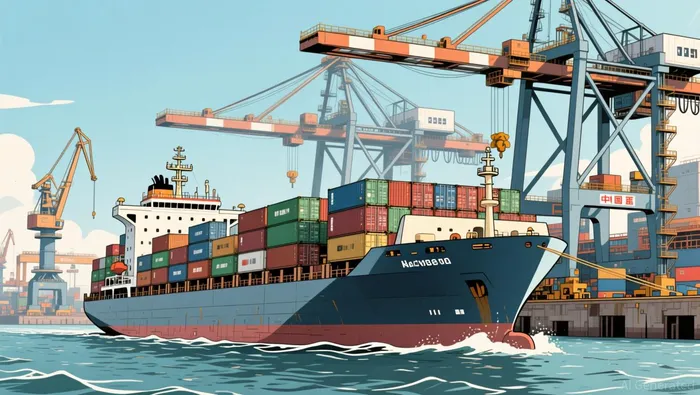
China holds 68% of the global shipbuilding orderbook. It accounted for over half of global output in 2025. The backlog doesn't just represent capacity - it represents contracted revenue at prices set years ago, before current steel and labor cost curves. CSSC's order backlog alone, as of mid-2025, was 333 vessels worth RMB 233.5 billion (roughly $32 billion), covering 2.5 to 4 years of production at core yards. These aren't hopes. They're signed contracts.
2. The margin expansion is a mechanical function of the backlog.
CSSC is targeting 2026 revenue above RMB 165 billion, with planned delivery of 168 vessels. Analysts expect margin expansion of 100–200 basis points as automation and standardization scale through the delivery pipeline. On a RMB 165 billion revenue base, even 100 basis points of margin improvement adds roughly RMB 1.65 billion to operating profit. The stock trades at only 22x trailing earnings - but those trailing earnings are from before this margin expansion hits. Forward P/E compresses as deliveries of higher-margin builds accelerate through 2026 and 2027.
3. COSCO's 6.6x P/E and 7.4% yield are a separate bargain on the operator side.
COSCO Shipping trades at 6.6x trailing EPS with TTM earnings of HK$2.29 per share and a 7.4% dividend yield. For context, a single-digit P/E on a shipping operator that controls one of the world's largest container fleets suggests the market has priced in a brutal freight rate collapse. The reality is more nuanced. Global trade volumes are expected to grow 2.5–3.5% in 2026, and while newbuild supply is rising, freight rates haven't broken down because of geopolitical routing disruptions that continue adding effective capacity demand. COSCO's Q1 2026 revenue held at HK$51.8 billion - in line with the prior year quarter. The 6.6x multiple with that dividend doesn't reflect a company in structural decline.
4. The catalyst is the delivery ramp itself.
This isn't a stock that needs a product launch or a regulatory change. The catalyst is mechanical: ships leave the yard, revenue books, margins expand, and earnings beat the trailing multiples the market is using as reference points. CSSC's 168-vessel 2026 delivery plan is the re-rating condition. Every quarter, the backlog converts into reported revenue at higher margins. The market hasn't caught up because it's still running on trailing data.
The risk.
A severe global slowdown that reduces cargo volumes below projections could pressure freight rates and force some charterers to renegotiate. China's shipbuilding dominance also invites protectionist pushback - tariffs or subsidies in Europe or Korea could disrupt the order flow over the longer cycle. But the backlog is already contracted. Those ships are being built.
At only 6.6x earnings with a 7.4% yield, COSCO doesn't price in a company that continues delivering at current revenue levels. And CSSC at 22x trailing P/E is priced for the past, not the margin expansion that the RMB 233 billion backlog is mechanically delivering. The gap between what's contracted and what's valued is where the edge lives.