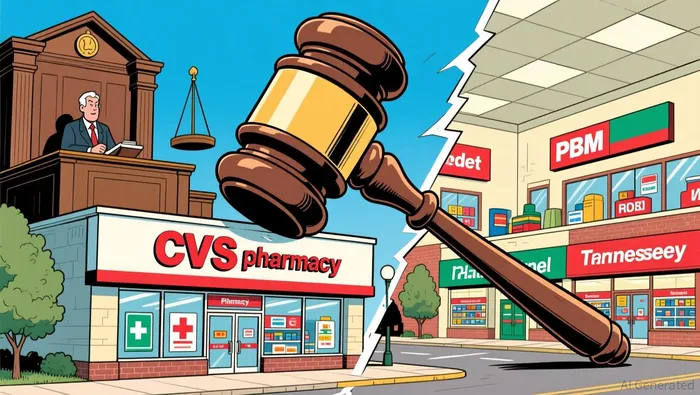
Tennessee targets the CVS model at the pharmacy-PBM junction
CVS moved quickly after Tennessee acted: it sued state officials on May 22, the same day Governor Bill Lee signed the FAIR Rx Act into law on May 22. The law does not take effect until July 1, 2028, but that delay does not make the threat minor. At issue is not just store access in one state; it is whether Tennessee can force CVS to untangle the part of the business where retail pharmacy meets CVS Caremark.
The headline exposure is easy to see. CVS says the law would affect 134 community pharmacies in Tennessee. It also says those locations employ about 2,000 people and serve about 1.5 million patients. That is enough to make the fight politically loud and operationally painful. But the larger question for investors is whether a state can single out CVS's integrated structure and force a redesign of the model that supports the company's broader platform story.
This is also becoming a precedent fight. A similar court battle is already underway in Arkansas. If CVS wins early relief in Arkansas, Tennessee, or both, the market can keep underwriting the integrated platform with more confidence. If not, the risk is that Tennessee is only the first sign that state pressure can move from reforming the model to fragmenting it.
The bull case says CVS is defending an adjustable model; the bear case says the premium is vulnerable
Why bulls think Tennessee is a manageable fight
Bulls have a straightforward case: Tennessee's legislature does not appear intimidated by CVS. The House bill moved through the finance committee unanimously, and the measure drew 86 co-sponsors in the House. That suggests supporters see the law as broad structural reform, not a narrow concession to CVS.
From that perspective, CVS may be overplaying the threat. Supporters argue the law would require a business-model adjustment rather than force immediate store closures, and the 2028 effective date gives the company time to adapt. In that reading, the lawsuit is aggressive but routine: a large company defending a valuable model before a rule fully kicks in.
If the outcome turns out to be a managed reset rather than a breakup, the stock may already be reacting to a worse-case scenario.
Why bears think the market is underpricing a structural risk
The bear case is less about Tennessee alone and more about what happens if other states adopt the same logic: that CVS's integrated setup is the problem. One outside view argues that divestiture of the pharmacy from the PBM would be the cleaner fix. If that framing gains traction, CVS's problem is not just store closures. It is pressure on the thesis that integration itself creates value.
That matters because CVS has pitched investors on a broader ecosystem built on unique enterprise capabilities across its businesses. Bears will argue that if states force structural separation, the market should not keep valuing CVS as a seamless pharmacy-insurance-PBM platform. Once that narrative weakens, valuation can come under pressure even if actual store closures are limited.
What investors should watch as the legal fight develops
The immediate catalyst is legal, not political. Arkansas already has a similar court battle underway, so that case may matter as much as Tennessee's. If CVS secures early relief somewhere, the market can keep underwriting the integrated story. If not, investors may start pricing a slower and more expensive restructuring.
The first real test is whether CVS can get emergency relief
Investors should watch whether a federal judge is persuaded that CVS is likely to succeed on the merits and that the law could cause serious harm before the case is fully resolved. Tennessee's law is already seeking to block a new law, and experts say the Tennessee dispute could take years to fully resolve. If CVS gets interim relief, the stock has room to keep trading on the broader platform narrative, including management's mid-teens Adjusted EPS CAGR through 2028. If not, the negotiation changes.
Watch whether the fight stays narrow or expands into structural separation
The next signal is whether the dispute remains focused on Tennessee's current language or shifts toward forced separation. CVS is challenging a law it says would close its 134 Tennessee community pharmacies, but reform advocates still point to divestiture of the pharmacy from the pbm as the clean solution. If the debate stays state-specific, CVS may have room to negotiate. If it moves toward divestiture, this becomes a valuation issue as well as a legal one.
CVS's campaign tactics show the fight is political as well as legal
There is also a live political side channel. Tennessee's attorney general is pressuring CVS over political messages sent via text messaging, which adds another friction point while the company's broader messaging campaign remains under scrutiny. At the same time, Tennessee's financial committee leadership had already unanimously approved the bill. That combination suggests CVS still has leverage, but not enough to control the narrative on its own.
The smarter read: model risk, not just store risk
For investors, the key question is not whether CVS is fighting back. It is whether this should be read as a costly state dispute or as an early warning that the market may be paying too high a premium for integration. Right now, the smarter read is both: Tennessee is a real operational threat, but the bigger issue is whether state pressure starts to undermine the strategic case for CVS's vertically integrated model.