

CZ's core argument is that Satoshi's anonymity is a structural advantage, not a curiosity. He stated that not knowing Satoshi's identity is better and that the lack of an active leader allows Bitcoin to remain truly decentralized. This is the thesis: a founderless project is more stable and less susceptible to speculative pressure.
The market's reaction to the Adam Back investigation provides the flow-based validation. Despite the renewed identity speculation, capital continued to flow into Bitcoin. In March 2026, US spot Bitcoin ETFs pulled in $1.32 billion, ending a brutal four-month outflow streak. This was a decisive reversal, signaling institutional demand for Bitcoin itself.
The key point is that the investigation has not triggered a flow reversal. The market's focus is on utility and price action, not creator identity. The fact that Ethereum ETFs closed March with $46 million in outflows while Bitcoin funds gained highlights a capital rotation toward Bitcoin dominance, a move that would be undermined if the market were fixated on Satoshi's identity.
Sentiment vs. Flow: The Fear & Greed Index Disconnect
The market is sending mixed signals. On one hand, retail sentiment is at a near-historic low. The Crypto Fear & Greed Index plunged to 8, signaling extreme fear. This reading, derived from volatility, volume, and social media data, reflects a paralyzing pessimism that often accompanies market capitulation.
Yet, on the other side of the ledger, institutional capital is flowing. On April 1, 2026, U.S. spot Bitcoin ETFs recorded roughly $118 million in net inflows. This was a decisive day of buying, led overwhelmingly by BlackRock's IBIT fund. The inflow came even as the broader index remained in extreme fear territory.
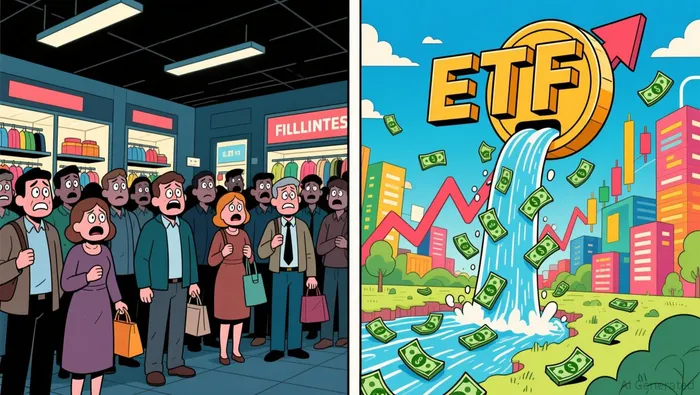
This disconnect is a key dynamic for price action. It shows that institutional conviction in Bitcoin as a core asset class persists, driving capital deployment through regulated channels. Meanwhile, retail participation is suppressed, with sentiment grinding to a halt. The flow of money is telling a different story than the fear index.
Catalysts and Risks for the Flow Thesis
The primary catalyst for Bitcoin's price action is sustained institutional inflows, but the current flow is modest and faces skepticism. In April 2026, Bitcoin ETFs saw $69.59 million in inflows, continuing a trend that began with a $1.32 billion reversal in March. Yet, the market's price target odds reflect deep caution, with Bitcoin hitting $100,000 by June 30 remaining at 0% YES. This disconnect shows that while capital is returning, it is not yet powerful enough to drive a major rally, likely due to broader macro headwinds and the asset's own volatility.
A major risk is a geopolitical or regulatory shock that compresses all risk appetite. The recent investigation into Adam Back is a minor distraction, but a larger event could overwhelm Bitcoin's specific flow narrative. The market's focus on utility and price action is a strength, but it is not immune to systemic fear. When macro conditions tighten, as they did earlier this year with sticky inflation and U.S.-Iran conflict, institutional demand can reverse quickly, as seen in the prior four months of brutal outflows.
The market's indifference to the Satoshi debate is a key structural advantage, but a definitive unmasking could introduce speculative pressure not seen in the past 17 years. CZ's argument that not knowing Satoshi's identity is better is validated by the flow data; the investigation has not triggered a capital flight. However, if the mystery were solved, it could shift Bitcoin from a decentralized, leaderless asset to one with a visible founder, potentially creating new sources of speculation and vulnerability that the current flow thesis does not account for.