

Dollar strength is being driven by rate and uncertainty premiums
The dollar is holding up near a six-week high, but this still looks more like a volatility and rates trade than a clean U.S. growth-outperformance story. The greenback was steady at 99.306 on the dollar index, while the euro and pound remained near recent lows. Just as important, traders were pricing an over 50% chance of a hike in December. That points to a market bracing for tighter policy and continued uncertainty, rather than one pricing a straightforward recovery in global growth.
Oil is the first transmission channel, rates the second
The clearest shock still runs through energy. After Tehran seized two ships, the Strait of Hormuz remained effectively shut and oil moved back above $100 a barrel. Reuters also reported Brent at $109.43 a barrel. That kind of energy shock keeps inflation risk alive, and inflation risk pushes back against expectations for easy policy. In that setup, the dollar can strengthen through both higher yields and safe-haven demand even as the broader growth backdrop weakens.
Deal headlines still create optionality, not certainty
That is why recent comments matter, but why they do not settle the trade either. Trump said negotiations were in the final stages, while also warning that Washington could wait a few days to "get the right answers." That leaves room for both interpretations: progress toward a deal, or prolonged uncertainty. For now, markets are still underwriting the latter, which helps explain why the dollar remains supported.
The bull case and bear case can both remain valid
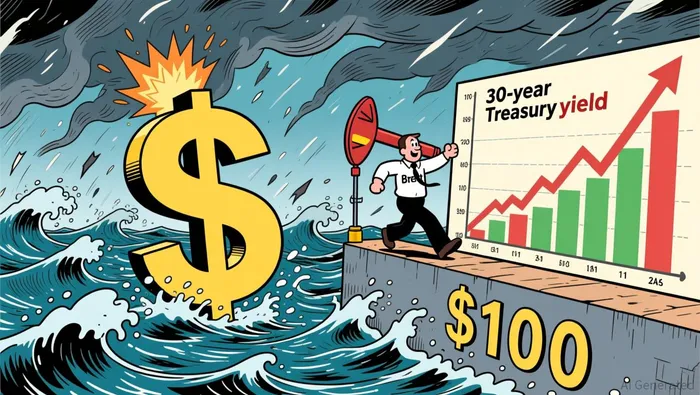
The broader backdrop is still a mix of safe-haven demand and bond-market stress. The most striking signal is the 30-year Treasury yield hitting its highest level since 2007. That suggests investors are increasingly demanding compensation for duration risk. If that holds, the dollar trade is less about relative growth and more about hedging a higher-for-longer rate environment.
Why the bullish case still works
Bulls do not need a clean all-clear on Iran. They need oil to stay firm and yields to remain elevated. After the planned strike was called off, the dollar index eased 0.3% lower on Monday, but then found support again as fears of escalation receded. That tells you the trade is still being driven by the risk of another shock, not just by relative economic strength.
Why the bearish case still matters
The bearish case is that the trade may become too obvious to keep chasing. Gold fell to its lowest level since March 30 earlier in the day before stabilizing, showing how quickly sentiment can swing between de-escalation optimism and inflation fear. If a lasting deal were to emerge, the unwind in USD and long-duration Treasuries could be fast.
The same logic helps explain why sterling hit a 2-1/2-month low against the dollar. That move reflects more than weak GBP alone; it shows how quickly rate-sensitive crosses can come under pressure when investors are guarding against oil, inflation, and policy uncertainty at the same time.
What decides the next move
For now, both views can remain right. The bull case holds if oil stays firm and Treasury yields remain elevated. The bear case strengthens if yields roll over while Iran headlines improve. The key is not the dollar index in isolation, but whether the broader rates and commodities setup continues to support it.
Portfolio positioning should stay selective
The portfolio job here is to stay paid to wait. This still looks like a volatility and rates regime, not a clean improvement in the growth story. A sensible first layer is selective dollar exposure paired with short-duration fixed income, so a portfolio can collect carry and stay protected while markets digest possible higher interest rates to tackle inflation and ongoing safe-haven demand.
Build for the regime, not a single headline
A full-blown all-in USD call is not the cleanest risk-adjusted setup. The driver remains policy fear and energy disruption rather than a durable U.S. outperformance cycle. That matters because the market is still reacting to Tehran seized two ships in the Strait of Hormuz and the resulting energy shock. At the same time, deal talk remains more optionality than resolution.
Use oil and gold as practical triggers
Oil is the main input; its move back toward $110 a barrel shows the market is still underwriting a real supply scare. Gold offers a cross-check. Spot gold at $4,543.96 per ounce held steady as inflation fears were offset by optimism around a potential U.S.-Iran deal. That suggests relief is arriving, but not fast enough to remove the inflation hedge yet.
Watchpoints: - Stay constructive if oil remains elevated, gold stays firm, and the dollar basket holds up. That would suggest rate and safe-haven demand are still in control. - Tone down aggression if oil falls while gold strengthens on deal optimism. That would imply inflation fear is fading faster than the haven bid. - Add protection quickly if oil retests the low-$110s and gold turns higher again. That would be the setup where energy pressure can spill back into growth assets and volatility.
A headline alone does not change the regime. A real regime change should show up together in oil, Treasury yields, and the dollar basket. If all three improve at once, the current hedge starts to lose its appeal.