

Brent crude oil fell nearly 7% in a single session on Monday, dropping from about $104 a barrel to the mid-$90s. It had been touching $111 earlier that week. In roughly the same stretch, the dollar index - the DXY, which tracks the greenback against a basket of European and Japanese currencies - retreated back toward 99, the level it has been fighting around for weeks.
The headline connecting the two is Middle East peace. Reports on May 24 and 25 said the United States and Iran, mediated by Pakistan and Oman, were circling a memorandum of understanding that could end months of conflict. Markets reacted the way they always do: oil down, stocks up, and the dollar... softer.
But "the dollar wobbled because of peace hopes" is the kind of explanation that sounds complete until you try to trace the mechanism. The dollar didn't just lose its safe-haven bid. It also lost the oil premium that was propping it up from the other direction. The same story that's supposed to make the dollar stronger - stability - is simultaneously pulling two different supports out from underneath it.
That is the weird part, if you think about it. The dollar is supposed to be the world's emergency currency. When things go wrong, people buy dollars. But oil - the commodity most responsible for how wrong things can go - is priced in dollars. So when a geopolitical crisis sends oil higher, it actually pushes the dollar up too. The currency that's supposed to protect you from chaos also benefits from the chaos itself, because the pricing system is built that way.
Then the crisis cools. Oil falls. The safe-haven demand fades. And the dollar gets squeezed from both sides at once.
This is basically the same dynamic that ran through April, just in reverse. In early April, a two-week ceasefire was announced between the US-Israel coalition and Iran. Oil tumbled 15 percent. The dollar plunged. Then in mid-May, Trump called the ceasefire "on life support," oil rallied back above $110, and the dollar pushed toward 99.5 as risk sentiment curdled again. Now we're seeing the April replay: peace rumors, oil off a cliff, and the dollar backing away from the levels it was just trying to reclaim.
The economic mechanism is not complicated. It's just two premiums stacked on top of each other:
When both premiums are live, the dollar gets a boost from two different angles driven by the same fear. When both unwind, the dollar loses two different bid sources for the same reason. What looks like a "wobble" is actually a mechanical decompression.
The bigger question - and the one the headline doesn't ask - is what the dollar does when the premiums stop returning. The ceasefire in April didn't hold. The current negotiations are, by every account, tentative. If this deal also fractures, the whole cycle just repeats: fear, oil spikes, dollar rallies, then collapse when whatever truce is in place turns brittle again. That's not a trend. That's a range, and the dollar has been trapped inside it.
There's also the Fed dimension, which the peace-deal framing ignores entirely. The Federal Reserve held rates at 3.5 to 3.75 percent in late April - with four dissents, the kind of split that suggests internal chaos over what to do with rising oil-driven inflation. The Fed isn't cutting. The Fed isn't hiking. It's paralyzed, and the dollar reflects that paralysis more than it reflects any particular geopolitical headline.
So the simplest model is this: the dollar right now is a risk premium masquerading as a currency. It's not trading on US economic strength or interest rate differentials the way it would in a normal year. It's trading on whether people think a deal in Tehran is real. When the news is bad, it rises on safe-haven demand and oil. When the news is good, it falls on the same two factors reversing.
That matters because if the dollar's recent moves are mostly premium-driven, then the actual underlying value of the currency is somewhere beneath whatever the DXY prints each day. When the premium comes back - and it will, because the Middle East does not stay quiet - the dollar will pop higher again, and it will feel like a new story. It won't be. It will be the same machine, running in the opposite direction.
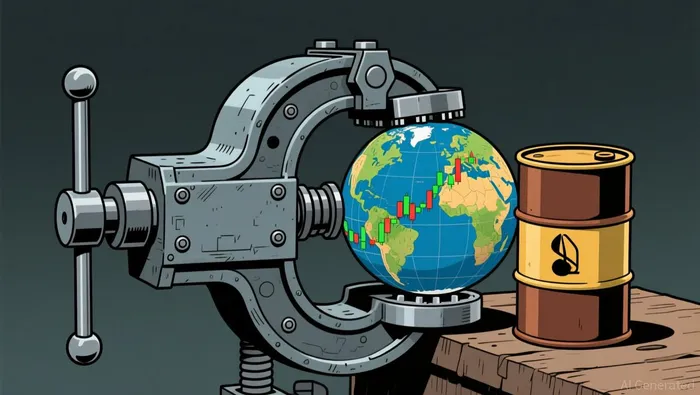
The odd thing is not that the dollar is wobbling. The odd thing is that we keep describing the symptom as the diagnosis. The dollar isn't weak because peace is coming. The dollar is revealing, in real time, how much of its recent value was built on fear that hasn't been priced out - it's just been paused.