

On May 1, 2026, DASH rose by 0.73% within 24 hours to reach $35.72, DASH dropped by 1.74% within 7 days, rose by 0.73% within 1 month, and dropped by 14.45% within 1 year.
Upcoming Quarterly Earnings and Financial Projections
DoorDash is scheduled to release its first-quarter 2026 financial results before the market opens on Wednesday, May 6. Analysts project the company will report earnings of $0.41 per share, representing a year-over-year decline of 6.8%. Revenue is expected to reach $4.15 billion, reflecting a 36% increase from the previous year’s quarter. The consensus estimate for revenue has been revised slightly lower over the last 30 days, with some models suggesting figures around $4.12 billion.
This upcoming report follows the company’s February 18 earnings release, where DoorDash reported $0.48 earnings per share, missing the consensus estimate of $0.58 by $0.10. In that quarter, revenue came in at $3.96 billion against an estimate of $3.98 billion. The firm achieved a net margin of 6.82% and a return on equity of 10.15% during that period, with revenue growing 37.7% year-over-year. For the full fiscal year, analysts forecast earnings of $3 per share, while projections for the next fiscal year stand at $5 per share.
Strategic Expansion and Partnership Developments
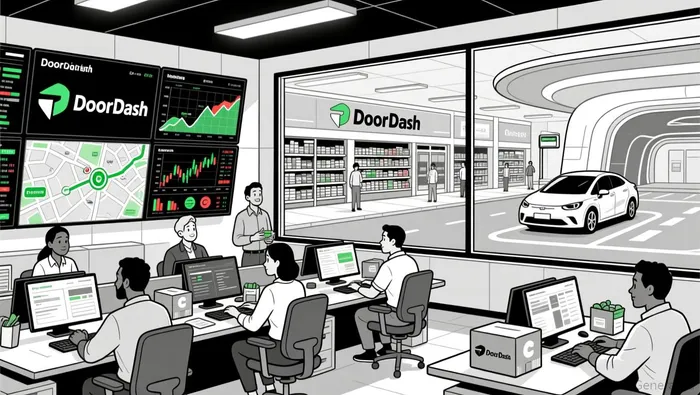
In a move to broaden its addressable market, DoorDash announced a significant expansion of its grocery services in Canada through a partnership with Empire Company, which operates Sobeys and Safeway. This collaboration aims to increase recurring order frequency in a high-margin category. Additionally, the company has integrated multiple regional grocery partners, including Harps Food Stores and four other grocers, to accelerate growth in its grocery marketplace and support gross merchandise value (GMV) expansion.
Further enhancing its utility offerings, DoorDash and Lyft expanded their partnership in Canada. Under the revised agreement, DashPass members in Canada can now access discounts on eligible Lyft rides, integrating rideshare benefits directly into the subscription program. These strategic moves are designed to strengthen consumer engagement and diversify revenue streams beyond traditional restaurant deliveries.
Analyst Sentiment and Institutional Activity
Market sentiment remains mixed as investors weigh expansion benefits against recent operational challenges. Analysts have issued various ratings and price target adjustments. Benchmark raised its price objective to $285.00 with a "buy" rating, while TD Cowen initiated coverage with a "buy" rating and a $225 target, characterizing the company as a long-duration compounder. Conversely, Cantor Fitzgerald lowered its target to $230.00, Stifel Nicolaus cut its target to $185.00 with a "hold" rating, and BTIG Research reduced its target to $280.00. On average, analysts maintain a "Moderate Buy" rating with a consensus price target of $260.29.
Institutional ownership remains high at 90.64%. Recent filings show varied activity among hedge funds. Comerica Bank reduced its stake by 44.5% in the fourth quarter, selling 38,931 shares. In contrast, Eastern Bank increased its holdings by 714.3%, and Sunbelt Securities Inc. raised its position by 124.1%. Principal Securities Inc. and UMB Bank n.a. also modestly increased their stakes in the fourth quarter.
Insider Transactions and Operational Risks
Corporate insiders have been active in selling shares. Director Stanley Tang sold 45,410 shares in February at an average price of $209.01. Chief Operating Officer Prabir Adarkar sold 10,000 shares in April at $188.34, reducing his ownership by 1.17%. These transactions were executed under pre-arranged Rule 10b5-1 trading plans. In the last three months, insiders sold a total of 89,406 shares worth approximately $16.6 million.
The company faces potential headwinds from recent operational incidents. Two safety-related events have drawn public attention: a consumer theft by a delivery worker and a violent incident involving a driver. These events raise concerns regarding operational safety and could invite increased regulatory scrutiny or costs. Additionally, increased promotional spending in April to counter softer consumer demand may pressure take-rates and margins in the near term. Despite these challenges, the company’s core logistics infrastructure continues to support its position as a broader on-demand provider for consumer goods.