

The Dow Jones Industrial Average closed at 50,009 on May 21 - its first-ever breach of the 50,000 line. The broader market joined the party, with the S&P 500 and Nasdaq also setting record closing highs. The catalyst, according to the evening headlines: hopes of Mideast progress. Iran reportedly signaled that the latest U.S. proposal had narrowed the gap between negotiating positions. Traders took that as a peace signal, oil dipped, and the equity rally accelerated.
Here is what the headlines don't tell you: the Strait of Hormuz remains effectively closed. Reopening talks are deadlocked as of mid-May. The United States and China have publicly aligned on the need to reopen it, but Iran's negotiating position has not budged, and on May 21, Khamenei's inner circle reportedly rejected moving highly enriched uranium to the U.S. as a confidence-building step.
That contradiction matters. It means the market is pricing a geopolitical resolution that hasn't happened - and may not happen for months - while treating oil like the problem is already being solved. For energy investors, the gap between diplomatic theater and physical supply reality is the most important number on the board right now.
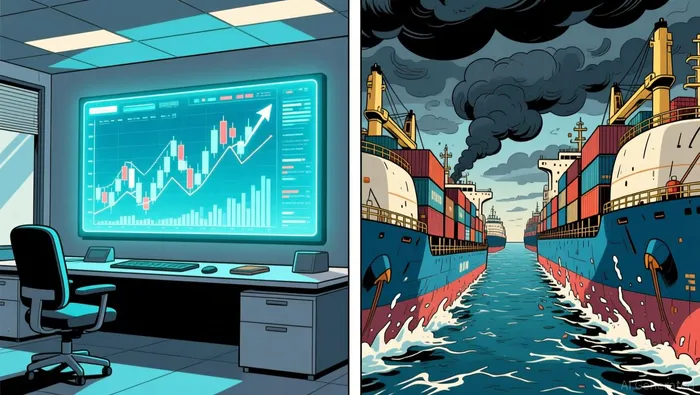
The Strait of Hormuz carries roughly 20 percent of the world's daily oil supply and a similar share of global LNG. It has been effectively closed since the U.S.-Iran conflict began in February. That is the single largest supply disruption in oil market history, stripping around 11 million barrels per day from global flows. Oil prices have reflected that reality: Brent crude is trading in the $104-$107 range, and WTI has been bouncing between $98 and $112 over the past week. Crude is up roughly 60 percent year-to-date.
Now, oil did fall on May 21 when peace hopes surfaced, only to reverse and climb back on the same session as those hopes faded. That pattern has repeated itself for months. Every time a headline suggests progress, oil dips. Then the negotiating detail comes out - Iran wants reparations, nuclear enrichment talks are postponed, Hormuz reopening terms are non-negotiable - and the price bounces back. The market keeps testing the peace thesis. The physical supply constraints keep rejecting it.
This is where the energy investor's perspective diverges from the broader market. The record Dow is celebrating the hope that oil prices will come down because war risks will dissipate. Energy companies don't trade on hope. They trade on cash flow, and cash flow at $100-plus oil is generating money at a scale that most sectors can only dream about.
The energy sector has outperformed every other sector in 2026. That is not a speculative run. It is a cash-flow run. E&P companies are generating operating cash that dwarfs their capital expenditure requirements. Midstream operators with fee-based pipeline contracts are collecting revenue that has nothing to do with the daily swing of WTI. Integrated majors are printing free cash flow that funds dividends, buybacks, and growth capex simultaneously. At $100 oil, these companies are not hoping for a windfall. They are living in one.
That cash-flow durability is what separates this rally from the speculative moves that carry most of the S&P 500 to its records. You don't need to predict whether the Iran deal happens to know that energy companies are collecting real money right now, at current prices, with current margins.
Now let's talk about the risk case, because it exists. If a genuine peace deal lands and the Strait of Hormuz reopens, oil will fall. It will fall significantly - probably back toward the $70-$80 range that reflected pre-conflict supply balances. That would compress energy margins, weaken free cash flow, and pressure valuations across the sector. The question is whether that compression destroys value or merely ends the period of extraordinary returns.
Even in that scenario, most major energy companies remain profitable at $75 oil. The companies with strong balance sheets, disciplined capital programs, and fee-based midstream exposure absorb the price drop without structural damage. Their dividends stay covered. Their leverage remains manageable. The difference is between "printing money" and "earning money" - and both are still worth more than the speculative growth multiples the broader market is rewarding at its record highs.
While it's true that a sudden oil collapse from a Hormuz reopening would hurt energy stock prices, it would also validate the exact tailwind the Dow is currently celebrating. The market can't have it both ways: record equities driven by peace hopes, while simultaneously punishing the sector that profited from the disruption. One of those narratives has to give.
The investable takeaway is straightforward. The broader market is rallying on a diplomatic outcome that has not materialized and may not materialize on any near-term timeline. Energy investors are sitting on cash flows generated by physical supply constraints that remain very much in place. The divergence between those two realities is not a bug. It is the structural reason energy has been the outperforming sector all year.
If you believe the peace deal happens quickly, the energy trade unwinds and oil drops toward $75. If you believe the Hormuz stays closed through the summer and potentially beyond, as most of the primary-source evidence suggests, energy cash flows stay elevated and the sector keeps outperforming while the rest of the market chases a resolution that keeps stalling. Either way, the evidence points to one conclusion: the Dow's record close is a sentiment move, and energy cash flows are a reality move. For value investors, the distinction between the two is the entire point.