

U.S. stocks traded lower during the first hour of Monday's session as investors reacted to a sharp rise in oil prices and renewed uncertainty surrounding negotiations aimed at ending the Iran War. The cautious tone followed reports over the weekend that talks could take longer than previously expected, and the U.S. and Iran exchanged new military strikes against each other and allies.
The Dow Jones Industrial Average fell 165.89 points, or 0.33%, to 50,866.6. The S&P 500 declined 9.06 points, or 0.12%, to 7,571.00, while the Nasdaq Composite slipped 16.46 points, or 0.06%, to 26,956.2 in the early moments of trading.
Energy markets appear to be the session's biggest story. July crude oil futures surged $3.89, or 4.45%, to $91.25 a barrel, extending gains after futures turned negative shortly before the opening bell when Iran's official news agency, IRNA, reported that "shifting and contradictory" U.S. demands were prolonging negotiations.
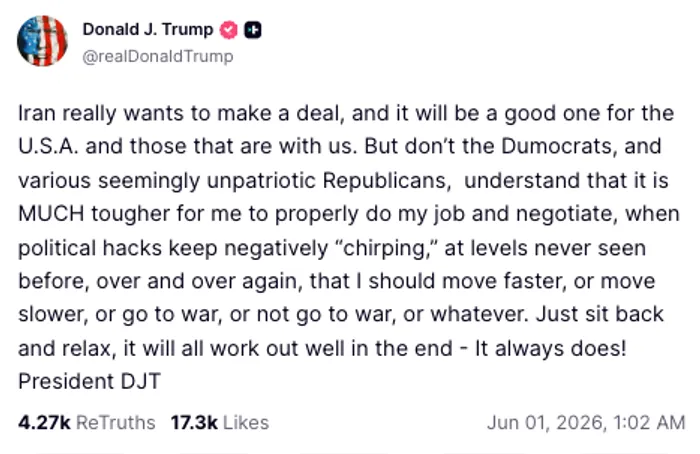
President Donald Trump attempted to reassure markets, saying Iran "really wants to make a deal" and that negotiations would ultimately "work out well," according to comments reported Monday. Still, investors appeared reluctant to increase risk exposure as talks remained unresolved.
The rise in oil also pushed volatility modestly higher. The CBOE Volatility Index, or VIX, climbed 3.20% to 15.81, reflecting increased demand for portfolio protection.
Despite the broader market weakness, enthusiasm around artificial intelligence remained a supporting force for technology shares. Investors continued to assess Nvidia CEO Jensen Huang's vision of a potential a potential $200 billion AI-enabled PC opportunity, a theme that has broadened interest beyond semiconductor leaders and into suppliers throughout the AI hardware ecosystem.
At the same time, investors have increasingly begun searching for opportunities outside the mega-cap trade. Interest in micro-cap and small-cap stocks has accelerated in recent weeks as traders look for companies that could benefit from AI-related spending without carrying trillion-dollar valuations. Recent market research shows growing flows into smaller technology firms tied to AI infrastructure and implementation.
Technology investors were also weighing fresh reports that the global smartphone market faces a record slowdown, potentially creating a more challenging backdrop for consumer electronics demand even as AI-related upgrades remain a bright spot.
Looking ahead, traders will continue monitoring developments in Iran War negotiations, crude oil prices, and incoming economic data for clues about whether the market's recent rally can regain momentum.