

Why the leaked draft is already moving markets
A leaked draft could unlock billions in frozen assets quickly - but it may still be rejected before it is finalized.
That is why this matters now: even before any verified treaty, the leak is already acting as a sentiment catalyst. The draft reportedly calls for $24 billion in frozen Iranian funds to be released during 60 days of negotiations, while the Strait of Hormuz is reportedly set to reopen within 30 days. For markets, that is enough to trigger a relief bid before the paperwork is fully clean.
Why bulls see a relief trade
The bullish case is straightforward: markets tend to front-run the first credible path to relief, not the final version of a deal. A short, visible sequence - draft terms, blocked funds unsealed, shipping lanes unchoked - gives traders a reason to position early. Even with competing media accounts, the headline combination is strong enough to shift expectations.
Why bears see a fragile setup
The cautionary case is that this is still a bargaining sheet, not a finished agreement. IRNA's version shows the draft still leaves major sticking points open, including Iran's peaceful nuclear program, sanctions, and war-damage compensation during the 60-day negotiations. Hardliners are already pushing back, with one lawmaker calling the latest text more damaging and arguing Iran is making too many concessions. That is the credibility trap: bulls see the liquidity dream, but hardline rejection can still end the trade quickly.
Oil and shipping are the fastest transmission channels
The leak matters because it changes the question from "how long could this war last?" to "how quickly could conditions improve?"
Hormuz reopening is the key market lever
The fastest repricing channel is energy. The proposed terms reportedly include the Strait of Hormuz would open and the U.S. would lift its blockade on Iranian ports. That matters well beyond Iran. Hormuz carries roughly a fifth of global oil and LNG supplies, so any credible path back to normal flow could quickly affect insurance rates, tanker spreads, and regional risk premiums.
Oil prices already reacted when Trump suggested a deal could arrive in "two or three days" and that Hormuz would open "immediately." Brent fell to $92.65 a barrel and WTI to $89.40. That looks like a relief trade taking shape in real time, before full verification.
The bullish read fits Tehran's immediate incentives
This also lines up with what Tehran appears to want. Sources say Iran is pushing an interim deal mainly to unlock financial relief and ease economic pressure, while avoiding major nuclear concessions for now. That helps explain why the first market reaction is bullish: the draft points to cash flow and shipping relief, even if the broader political settlement is still uncertain.
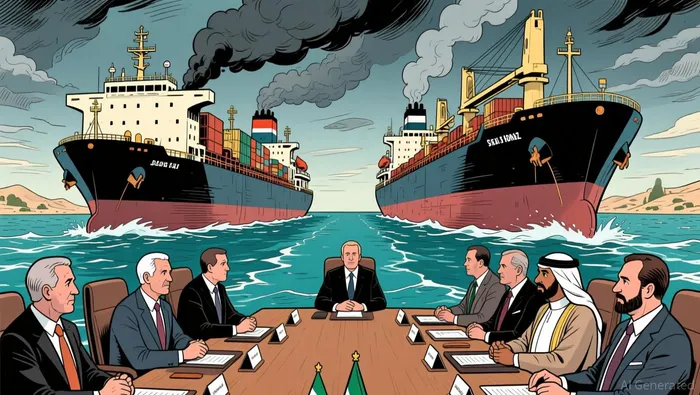
The key watchpoint is Hormuz. If reopening remains tied to the draft, the relief trade keeps its momentum. If that link weakens, the bullish case weakens with it.
Domestic politics and ongoing strikes can still kill the deal
A relief bid can reverse quickly if Tehran decides the draft is politically unsustainable.
Hardline opposition is the clearest internal risk
The hardline case is already audible inside Iran. A hardline lawmaker said the latest text was more damaging and that Iran's concessions had increased, which is exactly the kind of political pressure that can derail a relief trade before liquidity arrives. And this is not a clean diplomatic process: the U.S. and Iran had been trading air attacks for a second straight day, with Iran's IRGC saying it hit U.S. targets in Kuwait and Bahrain. That shifts the market story from "negotiations are progressing" to "the deal is being pressure-tested by force."
Escalation can override the headline narrative
The clearest invalidation signal is simple: if the war keeps expanding, the market stops trading the draft and starts trading disruption again. In that setting, any uncertainty around Hormuz keeps risk premiums elevated and makes the reopening headline harder to trust.
Timeline risk is the other constraint. The draft still points to 60 days of negotiations, not an instant finish, and Iran's foreign ministry said Tehran had not yet made a final decision. At the same time, Trump has warned that Iran should agree quickly or face heavier bombing. That may be leverage in theory, but for markets it adds another layer of narrative volatility.