

Tim Draper is reframing quantum risk around banks, not Bitcoin
The main takeaway is not whether quantum computing is an imminent threat. It is that Tim Draper has put a clean, highly shareable narrative in front of the market while attention was still cheap. He told Benzinga that Bitcoin is more secure than the dollars in a bank account, and that quantum computers would hit banks before the blockchain. The remark spread quickly: his X post already had 98.7K views. In crypto, that kind of visibility can shape positioning before the technical debate is fully settled.
That matters because the story fits a familiar template. Draper is not talking about code features or hash rates. He is reframing the debate as decentralized crypto versus fragile legacy finance, with banks exposed by legacy systems and slower upgrade cycles. Critics can fairly say quantum risk is still speculative and should not be traded on headline momentum. But markets often trade the story first and verify the science later.
Draper's claim also matters because it comes from a well-known billionaire venture capitalist at a moment when the broader debate has long cast crypto as the more vulnerable target. He is flipping that framing. If investors absorb even part of that reset, the upside is not just better sentiment. It is a cleaner "digital gold versus fragile legacy system" pitch that can reinforce crypto flows.
Why the bullish version of the pitch is persuasive
The appeal is flexibility, not finished protection
The bull case works because it is simple: decentralized code can upgrade, while banks are tied to legacy systems and slower institutions. Draper's core point is not that Bitcoin is already immune. It is that upgrades can be coordinated before a credible threat materializes, whereas centralized financial infrastructure may be slower to adapt.
That procedural advantage is the real mechanism. Bitcoin's open-source ecosystem can respond, and in an extreme scenario, full node operators could roll back to the last secure block. Banks do not have that same network-wide rollback option. That asymmetry makes the argument feel resilient.
But "more adaptable" is not the same as "quantum-safe today." Bulls are trading a governance advantage, not a finished technical shield. And if Bitcoin ever needed a rollback, that would raise hard questions about immutability. So this is a resilience argument, not a clean proof.
What the narrative gets right
A disciplined version of the bull case says only this:
- Bitcoin may be better positioned to coordinate a protocol-level response if quantum risk becomes credible.
- Banks may be more exposed because of older infrastructure and heavier regulatory and operational inertia.
- The story matters because it challenges the default assumption that crypto is the weaker link.
That discipline matters. If investors keep the flexible-adaptor framing, the narrative can still support sentiment. If they upgrade it to "Bitcoin is already quantum-proof," they are adding assumptions the evidence does not yet support.
Where Draper's claim gets less certain
The technical burden shifts when you look closer
Draper's pitch is investable, but it is not technically clean. The harder issue is not Bitcoin's ability to upgrade. It is the claim that banks are clearly the weaker link today, while secp256k1 may be more vulnerable to Shor's algorithm than RSA. That pushes the burden of proof back onto the bullish case.
That comment also highlights why this is not a simple either/or comparison. The cryptographic exposure depends on which parts of the system you are evaluating, how keys are used, and what defenses are already in place.
The weaker link may be user infrastructure, not the chain
The sharper objection is about attack surface. Even critics of the headline narrative agree that wallets and exchanges are the weak spot, not the distributed ledger itself. In Bitcoin, signature security matters most when funds are moved, because that is when the relevant cryptographic material is exposed. So the debate is less "who is already safe?" and more "where does the first break matter most?"
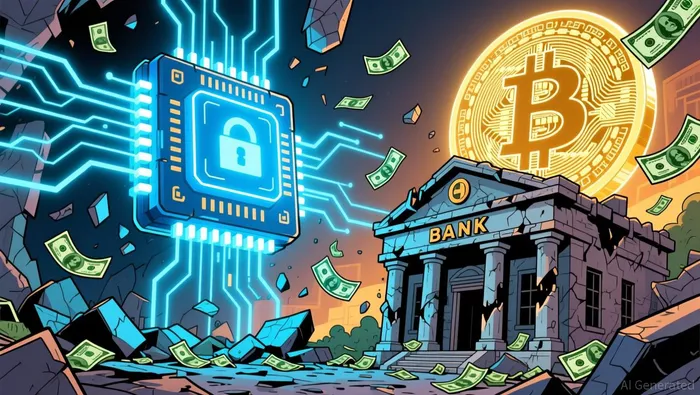
That matters because Draper's framing assumes centralized finance has the slower migration path. Banks may be bureaucratic, but upgrade mechanisms can be coordinated through standards bodies and centralized policy. Crypto does not have that same shortcut at the user layer. Its weakness is not the blockchain's consensus. It is the endpoints, key management, and migration burden across wallets and exchanges.
What would need to happen for the thesis to strengthen
Right now, this is not proof that quantum risk will hit banks first. It is evidence that the risk profile is complicated, with serious exposure on both sides of the argument.
The thesis would get stronger with concrete evidence such as:
- documented quantum-vulnerability assessments in banking infrastructure
- clear timelines for post-quantum migration in traditional finance
- evidence that crypto's user-layer upgrades are tracking ahead of that migration
Until that evidence shows up, the better stance is skepticism toward the headline and focus on the real vulnerability layer.