

Zaporizhzhia's latest drone strike hit support infrastructure while the plant was already on reduced power
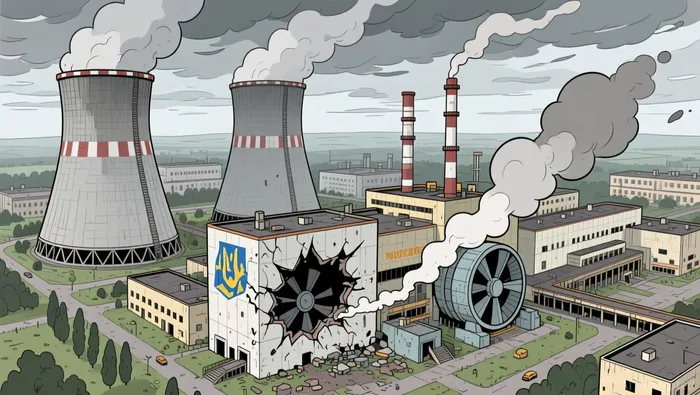
This is no longer just a headline risk. A drone reportedly struck a turbine building on 30 May, leaving a hole in its wall and marking the first drone attack within the perimeter since April 2024. The situation matters because Zaporizhzhia is the largest nuclear power plant in Europe, and it has been relying on a single 330 kV line after the 750-kilovolt Dniprovska power line was disconnected more than two months ago.
The repair window matters more than the blame game
The IAEA has secured a localised ceasefire to allow repairs, and technicians are set to begin work in the coming days. If those repairs hold, the plant's external power situation improves and one major safety stressor is reduced. If they do not, the site remains exposed while operating with less redundancy.
The immediate operational pressure is already clear: when access to the backup line was lost, the plant was forced to use emergency diesel generators. The latest strike appears to have hit auxiliary infrastructure rather than core reactor systems, and radiation levels at the site remain normal. Even so, the incident still points to a narrower safety margin while the repair window is open.
Why turbine-building damage still matters for nuclear safety
The IAEA team saw damage to a metal access hatch several levels up and found burned optical fibre remains on the ground after the strike on a turbine building next to reactor Unit 6. That matters because nuclear safety depends not only on the reactor core, but also on support systems such as communications, instrumentation, and access routes.
Interior access is still unresolved
A strike that damaged a hatch several levels up raises the possibility that internal cabling or utilities were affected, even if nothing is obvious from outside and radiation readings remain normal. That is why the IAEA has requested access to the inside of the building. Until inspectors get a fuller picture, the situation remains only partially understood.
Repeated incidents leave less room for error
This also looks less like a one-off headline event and more like part of an ongoing pattern. Earlier this month, the facility told the IAEA that a drone targeted the facility's external radiation control laboratory. Combined with the later turbine-building strike, the sequence suggests peripheral infrastructure has been hit more than once. In that context, even non-core damage deserves attention.
The other risk is visibility. In wartime, obtaining detailed information on a regular basis may not be possible. That means problems can remain hidden longer, which is another reason the key watchpoint is whether inspectors get further access before another shock hits.
What to watch next around Zaporizhzhia
The more practical angle here is not who is to blame, but whether the plant's safety chain holds during a narrow repair window. For public-market observers, that is mainly a second-order setup because there is no direct listed asset tied to the plant itself. Broader effects could show up in utilities with regional power links, grid operators connected to Eastern Europe, insurers and reinsurers exposed to major infrastructure shocks, and energy names tied to regional stability.
Clear triggers and clear invalidators
Risk rises if: - another strike hits within the perimeter, - power repairs fail or are delayed, - IAEA access remains restricted, or - cooling-support infrastructure appears affected.
The scare tone eases if: - the ceasefire holds, - repairs move forward cleanly, and - no further degradation shows up around the plant.