

Here's the thesis: Elon Musk is betting Tesla can go from factory floor demos to 1 billion units by the 2040s - the timeline is aggressive but not impossible, and the market is underpricing the optionality.
The Breakdown:
Musk just locked in his $1tn pay package by delivering on Tesla's AI vision - and the biggest piece is Optimus. The timeline? Public sales by end of 2027, with robots handling "anything you'd like" at "very high reliability" and "very high safety." That's the promise. The reality check? Profound technological challenges remain, including basic issues like hand function.
But here's what Wall Street is waking up to: Morgan Stanley predicted Apple could potentially earn $133bn a year from humanoids by 2040. That's the revenue universe. And Musk isn't dreaming small - he's targeting 1 billion humanoid robots on Earth by the 2040s.
ARK Invest's Cathie Wood projects Tesla will have Optimus transforming factory and home life by 2028/2029. But she also notes the brutal math: building humanoids is "200,000 times more complex" than robotaxis.
The Alpha:
Musk has a "long and acknowledged track record" of ambitious promises. Yet the market treats Optimus like science fiction - pricing in near-zero probability of success. That's the gap. Whether you believe the 2027 date or not, the optionality on a $133B/year market by 2040 is worth more than zero. The question isn't whether Tesla will deliver exactly as promised. It's whether the market is underpricing the sheer scale of what could happen if even a fraction of this vision materializes.
The signal: This is a binary bet on a transformational technology. The noise: Every delayed demo, every "Elon lied" take. The setup? Tesla stock already prices in car growth. The robot upside is essentially free.
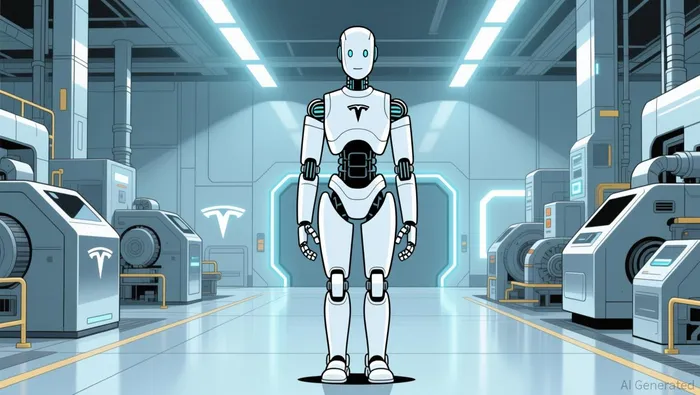
The Roadmap: From Factory Tasks to 1 Billion Units
Here's the phased play: Tesla is moving from industrial demos to global saturation - and the timeline is tighter than you think.
2026 - Complex factory tasks. Optimus is already handling "simple tasks" in Tesla factories. By end of this year, Musk expects more complex tasks in industrial environments. This is the proving ground - if the robot can't handle variability on the factory floor, nothing else matters.
2027 - Public sales. Musk locked in the date: end of next year. The condition? "Very high reliability, very high safety, and the range of functionality is also very high." That's the bar. Cross it, and you're selling to the public. Miss it, and the whole narrative cracks.
2028-2029 - Factory and home transformation. ARK Invest's Cathie Wood projects Optimus transforming factory and home life. This is the inflection point where the market starts pricing in real adoption - not sci-fi dreams, but actual units deployed in real environments.
2040s - 1 billion units. Musk's ultimate target: 1 billion humanoid robots on Earth by the 2040s. That's one robot per person. The math is brutal - ARK estimates building humanoids is 200,000 times more complex than robotaxis. But if even 10% of that vision materializes, you're looking at a market that dwarfs Tesla's car business.
The tension? Profound technological challenges remain, including basic issues like hand function. And Musk warned early production will be "agonizingly slow" - the speed of the ramp is "inversely proportionate to how many new parts and steps there are."
The setup? Each phase is a gate. Miss 2026's complex tasks, and 2027 sales look like hype. Miss 2027 sales, and 2028-2029 transformation becomes fantasy. But hit them? The 1 billion unit vision goes from "Elon lying" to "actually possible."
The signal: This isn't a linear ramp. It's a series of binary events - each one a potential catalyst. The noise: Every delay, every "another broken promise" take. The alpha? The market is pricing in zero probability of any of this happening. One successful gate opens the optionality. Two gates? The thesis flips.
The Investment Alpha: What's Priced In vs. What's Coming
Here's the brutal truth: Tesla is trading as a car company. The robot upside is priced at zero.
The Breakdown:
Musk's $1tn pay package - the largest in corporate history - hinges on one metric: deliver 1 million AI bots within a decade. He doesn't get paid unless he hits that number. This isn't a vision statement. It's a performance target with skin in the game.
Meanwhile, ARK Invest's Cathie Wood just quantified the engineering mountain: developing humanoid robots is "200,000 times more complex". That's the headwind. That's why everyone's skeptical.
But here's what's changing: Musk confirmed Optimus details directly with Larry Fink at the World Economic Forum. BlackRock's CEO. The man who manages $10 trillion. This isn't a demo. This is institutional due diligence at the highest level.
The Alpha:
Morgan Stanley just mapped the revenue universe: Apple could potentially earn $133bn a year from humanoids by 2040. That's the addressable market. Tesla's targeting 1 billion units. Even if Musk delivers 10% of that vision, you're looking at a business that dwarfs the car operation.
Current Tesla valuation = car growth + energy + FSD. Optimus = free option. The market is pricing in near-zero probability of success. That's the gap.
TL;DR: Musk's $1tn pay package ties his compensation to delivering 1 million bots. ARK flags the 200,000x complexity challenge. Larry Fink just lent institutional credibility at Davos. The market prices Tesla as a car company. The robot upside is essentially free. One successful gate - 2026 complex tasks, 2027 public sales - flips the thesis. Two gates? The $133B revenue universe becomes real. This is a binary bet on transformational tech. The noise is every delayed demo. The signal is the optionality premium that should be pricing in - but isn't.
Risks & Watchlist: What Could Break the Thesis
The thesis is binary: Optimus works, or it doesn't. Here's what breaks it - and what to watch.
Engineering bottleneck. Hands and dexterity remain the hardest problems. Musk himself admitted profound technological challenges remain, including basic issues like hand function. That's the core engineering gap. Add to that: "almost everything is new" for both Cybercab and Optimus, meaning the production ramp will be "agonizingly slow" at first. The speed is "inversely proportionate to how many new parts and steps there are." This isn't a car plant tweak - it's building manufacturing from scratch.
Regulatory path. Consumer robotics needs a regulatory green light. No one's spelled out what "very high reliability, very high safety" (Musk's own bar for 2027 sales) actually means in regulatory terms. Get that wrong, and you're looking at years of delays.
Unit economics proof needed. Even if Tesla hits the 2027 date, the robots need to be economically viable. No one's shown the math yet - cost per unit, deployment ROI, maintenance overhead. Without proof here, adoption stays niche.
Competition is coming. Apple is reportedly looking into humanoids - Morgan Stanley predicted Apple could potentially earn $133bn a year. Foxconn is already deploying humanoids at its Nvidia factory in Texas. Hyundai is weighing an IPO for Boston Dynamics that would value it at $28 billion. Nvidia's Jensen Huang says humanoids will be "one of the largest industries ever." Tesla isn't alone in this race.
The Watchlist:
- 2026 Q4: Can Optimus handle "more complex tasks" in Tesla factories? (Musk's deadline)
- 2027 Q4: Public sales launch - or a delay that cracks the narrative?
- Regulatory clarity: Any FDA/CE marking path for consumer robotics?
- Unit economics: Cost per unit, deployment ROI data - any leaks?
- Competitor moves: Apple's entry, Boston Dynamics IPO, Nvidia factory expansion
TL;DR: The thesis breaks on engineering (hands/dexterity), regulatory delay, unit economics failure, or competitor saturation. Watch the 2026/2027 gates. Miss those, and the 1 billion unit vision becomes sci-fi. Hit them? The competition catches up fast - but Tesla gets first-mover advantage in a market that could hit $133B/year. The risk is real. The reward? Still asymmetric.