

Energy Fuels is set to report first-quarter 2026 results on May 7, and the numbers suggest a company in transition. Analysts expect revenue to jump 97% year-over-year to $33.25 million, driven by higher uranium volumes and prices, while the loss is projected to narrow sharply to 3 cents per share from 13 cents a year ago.
That's a material improvement, but investors should temper expectations. The company carries a trailing four-quarter negative earnings surprise of 77.95%, meaning it has missed consensus estimates by a meaningful margin in three of the last four quarters. The Zacks model does not currently signal a beat for this release, with an Earnings ESP of 0.00% and a Zacks Rank of 3.
So what's behind the numbers? The revenue surge reflects a pivotal shift. Last year, the company reported just $16.9 million in quarterly revenues, with heavy mineral sands (HMS) from the Kwale Project contributing $15.54 million. That business has now wound down following mining completion in December 2024. This quarter's revenue is expected to be driven almost entirely by uranium sales, with the company targeting 1.5–2 million pounds of finished uranium for 2026, up from 0.65 million pounds in 2025.
Uranium prices averaged $88.49 per pound during the quarter, up 41% from $62.55 a year earlier, providing a strong tailwind. At the same time, the company commenced processing lower-cost ore from the Pinyon Plain mine in Q4 2025, which should have provided some margin support despite elevated exploration and SG&A expenses.
The bottom line: Energy Fuels is showing operational leverage as the uranium cycle builds, but the path to profitability remains work in progress. Watch for confirmation that uranium sales volumes are ramping as promised and whether the cost advantages from Pinyon Plain ore processing are enough to offset inflationary pressures and a larger workforce.
Uranium & Critical Minerals Cycle Positioning
The Q1-2026 results arrive at a pivotal juncture for uranium and critical minerals. Energy Fuels is not merely reporting quarterly numbers-it's demonstrating execution within a structural supply deficit that is taking shape across the nuclear fuel cycle.
Uranium prices averaging $88.49 per pound this quarter reflect a market tightening that has been building for years. The supply picture remains constrained: primary uranium production has struggled to keep pace with demand, while secondary supplies from decommissioned weapons and stockpiles continue to draw down. At the same time, the nuclear renaissance is gaining momentum globally, with reactor constructions accelerating in Asia and renewed interest in Western markets. This demand-supply imbalance is the defining macro backdrop for commodity exposure in this sector.
For Energy Fuels, the strategic positioning extends beyond uranium. The company's first U.S. primary production of high-purity terbium oxide-a critical "heavy" rare earth-marks a material milestone. Produced in Utah from ore mined in Florida and Georgia, this supply chain demonstrates vertical integration across domestic jurisdictions in a major win for U.S. critical mineral supply chains. This is not a side operation; it's a strategic asset in a market where China dominates rare earth processing and supply chain security has become a national priority.
The leadership transition to Ross Bhappu as CEO, announced in mid-April, signals a deliberate shift into the next growth phase as Company Enters Next Phase of Growth. For a company scaling from 0.65 million pounds of uranium in 2025 toward 1.5–2 million pounds in 2026, operational execution becomes the binding constraint. Bhappu's mandate is clear: deliver on the production ramp while managing the cost structure that comes with expansion.
The company's status as a U.S. domestic issuer since 2016 carries material weight in the current geopolitical environment effective as of January 1, 2016. In a market where energy security and supply chain sovereignty are driving policy and procurement decisions, being a domestically listed uranium producer with U.S. reporting standards is not a administrative detail-it's a competitive advantage with government and utility buyers prioritizing trusted, transparent supply chains.
The macro backdrop reinforces this positioning. Real interest rates, while elevated, are stabilizing after the aggressive tightening cycle, and the U.S. dollar's trajectory remains a key variable for commodity pricing. But the structural story-nuclear demand growth outpacing supply, critical mineral supply chain consolidation, and domestic production incentives-operates on a longer time horizon than quarterly FX swings.
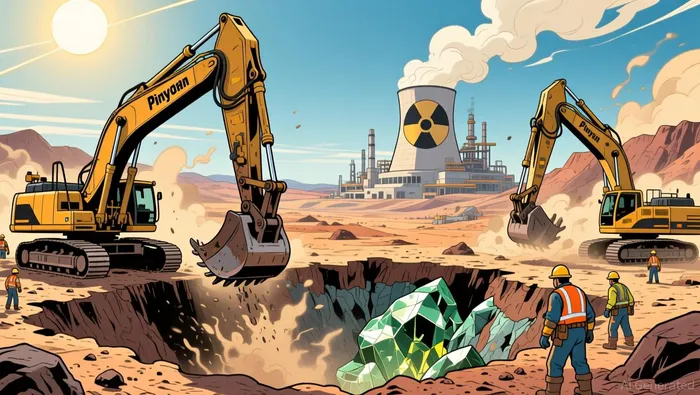
The bottom line: Energy Fuels is positioned at the intersection of two powerful cycles-uranium's supply deficit and the critical minerals push for domestic processing. The Q1 numbers will show whether the production ramp is on track. But the longer-term thesis is clear: this is a company scaling into a structural deficit market with domestic supply chain advantages that few peers can match.
Investment Implications & Forward Catalysts
The Q1-2026 results should confirm operational momentum, but the key investment thesis rests on uranium's cycle trajectory and the company's ability to scale production amid supply constraints.
Energy Fuels is anticipated to report a loss of three cents per share on revenues of $33.25 million, a material narrowing from the 13-cent loss a year ago. That improvement reflects higher uranium volumes and prices-uranium averaged $88.49 per pound this quarter, up 41% year-over-year. But the Zacks model does not conclusively predict an earnings beat, with an Earnings ESP of 0.00% and a Zacks Rank of 3. The company carries a trailing four-quarter negative earnings surprise of 77.95%, having missed consensus estimates in three of the last four quarters. Investors should temper expectations accordingly.
What matters more than the headline number is what management communicates on the call. Watch for three critical data points. First, uranium offtake agreements-specifically whether the company is locking in longer-term contracts at favorable prices or remaining exposed to spot market volatility. Second, production cost trends from the Pinyon Plain mine, where lower-cost ore processing commenced in Q4 2025 and should provide margin support through Q2 2026. Third, rare earth processing capacity expansion-the first U.S. primary production of high-purity terbium oxide in a major win for U.S. critical mineral supply chains is a strategic asset, but scaling from pilot production to commercial volumes requires capital and execution.
The production targets themselves are telling. Energy Fuels is targeting 2–2.5 million pounds of uranium production in 2026, up from 0.65 million pounds in 2025. That's a 3-4x ramp in a single year. The company says more than 2 million pounds should come from Pinyon Plain alone. Confirming that this volume ramp is on track-without blowing up the cost structure-is the central operational question.
Key risks remain. Uranium price volatility is the obvious one; $88 per pound is far from the highs seen in previous cycles, and any pullback would directly pressure revenues. Execution on rare earth production scaling is unproven at commercial scale. And broader macro sensitivity-real interest rates, dollar strength, and risk appetite-can temporarily push commodity prices beyond cycle-driven boundaries.
The CEO transition to Ross Bhappu, announced in mid-April, signals a deliberate shift into the next growth phase. His mandate is clear: deliver on the production ramp while managing the cost structure that comes with expansion. For a company scaling from 0.65 million pounds toward 2 million pounds annually, operational execution becomes the binding constraint.
The bottom line: Energy Fuels is positioned at the intersection of uranium's supply deficit and the critical minerals push for domestic processing. The Q1 numbers will show whether the production ramp is on track. But the longer-term thesis operates on a different timescale-it's about scaling into a structural deficit market with domestic supply chain advantages that few peers can match. Watch the commentary more closely than the headline earnings.