

The United States and Iran announced a ceasefire deal on June 14 that reopens the Strait of Hormuz, the chokepoint through which roughly a fifth of the world's oil supply flows. Brent crude dropped to $86.60 per barrel in the immediate aftermath. WTI fell 4.2% to $81.31. Over the past month, oil has shed roughly 20% from its 2026 peak.
The market move is the easy part. The valuation question is what happens next. Energy sector earnings were more than doubled by the conflict - four-quarter EPS growth was tracking 71% year-over-year. The US energy sector as a whole is now trading at a forward P/E of 23.3x. Chevron's trailing P/E sits at 32.6x. For a retirement portfolio, the question isn't whether oil fell today. It's whether these multiples make sense when the geopolitical premium drains away.
The earnings cliff nobody is pricing
Here's what changed and what hasn't. The Strait of Hormuz closure was the single largest driver of the oil price surge. Shipping through that corridor was effectively shut down, which removed Iranian supply and forced a rerouting premium on every barrel. That premium pushed Brent above $105 in mid-May.
Now the Strait is reopening. Under the ceasefire framework - a two-week window during which negotiators work toward a lasting agreement - Iranian oil production can resume flowing. The WTI futures curve tells the story more honestly than headlines: December 2026 deliveries trade roughly $40 below near-term contracts. The futures market is already pricing in a steep normalization. If the ceasefire holds, oil drifts toward the $80 range, not back toward $105.
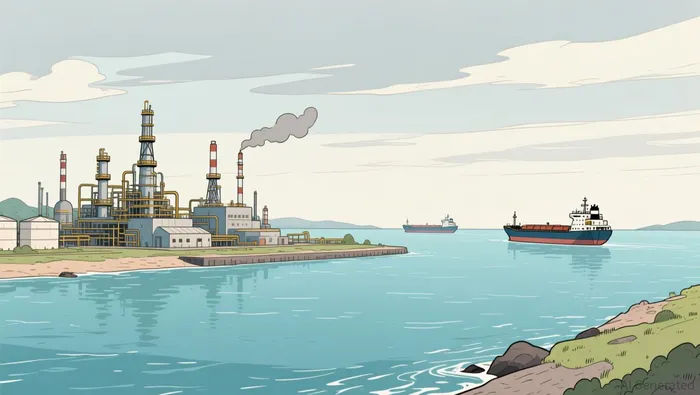
The implication for earnings is mechanical. Refiners like Valero, whose Q1 earnings beat on war-inflated crack spreads (the margin between crude costs and refined product prices), will see those margins compress as crude supply returns. Integrated majors like Chevron and Exxon are less exposed on the refining side, but their upstream production economics still run on the breakeven-to-price spread. At $80 oil, the margin is healthy but not exceptional.
Multiples that assume the war keeps paying
Chevron trades at a trailing P/E of 32.6x with a dividend yield of 3.73%. Exxon yields 2.77%. Valero, which raised its annual dividend to $4.80 per share earlier this year, now yields roughly 2.0% - a yield that expanded on price action during the crisis but compresses as oil reverts.
The issue isn't that these companies are bad businesses. The issue is whether the multiples reflect a war economy or a normalized one. A 32x trailing P/E for Chevron - a company whose 2026 earnings were inflated by a geopolitical supply crunch - implies the market still expects those conditions to persist. It doesn't.
Chevron's market cap of $373 billion and enterprise value of $413 billion price in sustained premium pricing. The sector-wide 23.3x P/E suggests the same assumption has spread beyond individual names. This is not a compounding engine trading at a compounding multiple. This is a cyclical sector trading like one.
The gate: what does normalized cash flow support?
The test is straightforward. Strip out the earnings boost from Hormuz-driven premiums. Model cash flow at $80-85 oil - which is where the futures curve is pointing and where the ceasefire equilibrium sits. Then ask whether current multiples, yields, and dividend trajectories hold.
For the integrated majors, the answer is partially yes. Exxon and Chevron have low breakevens - their costs are well below $60 per barrel on existing production. At $80 oil, they still generate strong free cash flow, service debt, and pay dividends. The valuation gap isn't a collapse; it's a compression. The stock doesn't need to fall to $50. It needs to fall enough that the multiple no longer assumes war economics.
For refiners, the math is tighter. Valero's earnings are a function of crack spreads, and those spreads are already contracting as the market anticipates normalized crude flows. The $4.80 annual dividend is safe on paper, but the yield tells the real story: at roughly 2%, Valero no longer provides the income anchor that makes refinery equities retirement-worthy. That's a trading yield, not a holding yield.
What the two-week window means for positioning
The ceasefire is a negotiation window, not a peace treaty. Trump has signaled he isn't rushing toward a permanent deal, and Iran's negotiating team has said the talks focus on ending military operations - not resolving the nuclear issue or broader tensions. There's a real scenario where this ceasefire extends, or a scenario where it collapses.
For a retirement portfolio, that uncertainty doesn't change the entry thesis. If you're sizing positions now, you should price in the more probable outcome, not tail-risk the escalation case. The futures market is already doing that: backwardation of $40 from spot to December tells you the market expects normalization. The equity market hasn't caught up yet - hence the multiples still stretched toward war economics.
The risk is the reverse: buying energy at war-inflated earnings and war-inflated multiples, then watching both revert. That's what this ceasefire forces you to confront.
Investment conclusion
Energy's role in a retirement portfolio has always been income-plus-hedge: dividend yield that rises with oil prices, and an inverse correlation to broader equities that provides portfolio ballast. That role is intact. The entry price is the variable.
At current levels - Chevron at 32x trailing earnings, the sector at 23.3x, refiners yielding below 2% - the war premium is baked into the price but not into the fundamentals. This is not a Buy signal. It's a Hold for existing positions and a Watch for new ones. Wait for the multiple compression to show up in the price, not just the futures curve. The valuation gap will create the entry point - if you don't front-run it now.
If the ceasefire extends and oil settles in the $80 range, Chevron's trailing multiple should normalize toward the 15-18x range it traded at before the Hormuz crisis. That's where the cigar-butt logic returns: durable assets, proven cash flows, and a price that finally reflects reality instead of a war that's ending.