

Summary
Energy stocks surged 37.02% in Q1 2026 as the US-Iran war shut the Strait of Hormuz, then retreated roughly 8% as crude oil pulled back from its $126 per barrel at their peak. The market is reading the pullback as "sell the news." I argue the opposite: the structural supply disruption hasn't reversed, the ceasefire is collapsing again, and the dip in energy exposure is arguably the best re-entry window of the year. Add XLE on weakness - or add the names inside it, XOM and CVX, if you prefer conviction in cash flow. Reassess only if a ceasefire actually holds.
The Market Read The Oil Retreat As A Thesis Break. It Isn't One.
What more do bears need? Oil, which spiked to $126 per barrel in March when the US and Israel launched nearly 900 strikes on Iranian military targets, has fallen back to roughly $92. That's an 11.49% decline over the past month. The Energy Select Sector SPDR ETF (XLE), which sits at 57.39 as I write this, has followed - down roughly 5.56% on the month after a ferocious Q1 rally. Energy stocks, says the consensus, have cooled off substantially and are getting "whipsawed."
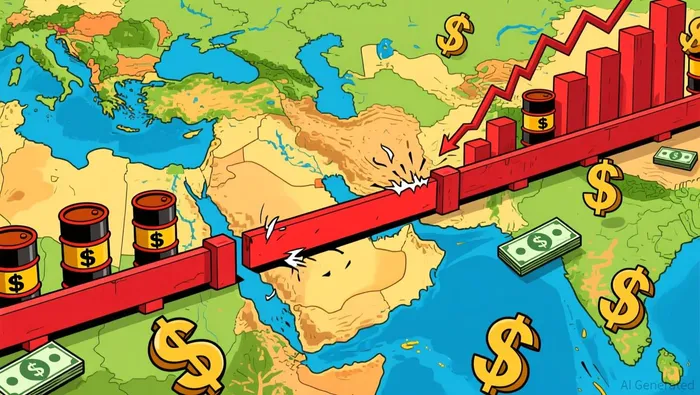
The problem with that narrative is that it mistakes a correction for a reversal. Brent crude at $92 is still roughly 40% above the mid-$60s where it sat before the conflict began in late February. More importantly, the mechanism that sent oil to $126 hasn't been undone. The Strait of Hormuz, which carries roughly a quarter of global oil flows, has been effectively closed since March. As of last weekend, the ceasefire was faltering again, with the US, Israel, and Iran trading strikes.
This is not a market that has resolved itself. This is a market that paused.
The Cash Flow Argument Is Getting Left Behind
Here's what the market is missing in its rush to fade energy. The companies inside this trade are generating cash at levels that didn't exist six months ago, and they're about to accelerate further.
ExxonMobil generated $23.6 billion in free cash flow in 2025, at a 7.1% margin. That was pre-war. Consensus analysts now expect that figure to expand to roughly $43 billion in the current environment - a near-doubling driven by sustained higher prices. Chevron is running a parallel playbook, projecting a $12.5 billion free cash flow boost by 2026 from upstream volume growth, cost cuts, and disciplined spending. Both CEOs have publicly warned that oil prices could skyrocket over the coming months as supply disruptions compound.
Free cash flow is the cash a company generates after funding its operations and capital expenditures. It's what gets returned to shareholders through dividends and buybacks, or reinvested at high returns. When FCF doubles and valuation multiples compress, the math works in your favor. That's the GARP entry point - growth, but at a price that the selloff has discounted.
Inflation Makes Energy The Hedge You Actually Want
The CPI number coming later this month will likely carry the oil shock's fingerprint. The latest data shows US headline inflation jumped to 3.3%, and economists estimate the oil price surge alone is adding 0.6 percentage points to headline CPI in 2026. Inflation expectations for the next twelve months sit at 3.5%.
Why does this matter for the energy trade? Because when inflation is structurally higher, the Federal Reserve can't cut rates. The dollar has strengthened 2.05% over the past month as yields rise and inflation expectations widen. In an environment where the Fed is trapped between sticky inflation and geopolitical supply shocks, energy stocks stop being a cyclical play and become the portfolio's inflation hedge. They produce what the market is paying more for, and their cash flows reprice with commodity prices rather than lagging behind them.
That's not a marginal benefit. It's the difference between holding energy and holding cash while inflation eats your real returns.
The Bear Case Is Clear - And That's The Point
Let me be direct about what breaks this trade. A ceasefire that holds. If Iran accepts a negotiated settlement, the Strait of Hormuz reopens, supply normalizes, and oil falls back toward the mid-$70s or lower. In that scenario, energy stocks repricing from their current levels would be justified. The XLE trade would lose its structural tailwind, and I'd reassess.
But here's what the data says right now: the ceasefire is not holding. Fresh strikes are escalating. Peace talks are shrouded in uncertainty. Exxon and Chevron management is guiding for higher, not lower. The supply disruption that started in February is entering its fourth month without resolution.
The market has arguably baked in a doomsday narrative about energy being a dead trade - that the Q1 rally was all emotion and no substance. But if the war doesn't end, the cash flow expansion doesn't stop, and inflation stays sticky, the pullback is a setup, not a warning.
The Action
I'm not suggesting you chase XLE at the front end of any bounce. The setup is constructive, but the better risk/reward is on weakness. Energy has whipsawed through Q2, and whipsaws create entry windows.
Buyers should add XLE on weakness, or go direct into XOM and CVX if they prefer company-level conviction. Don't let this buying opportunity go to waste - the combination of sustained supply disruption, doubled free cash flow, and an inflation regime that traps the Fed is not something that happens every year.
I would reassess if a ceasefire holds and oil falls below $80 on structural reopening of the Strait of Hormuz. Until then, the trade works in your direction.
This article reflects the author's view as of June 10, 2026. It is not investment advice.