

ERock - formerly Enchanted Rock - is launching its initial public offering this week, pricing 27.9 million shares between $20 and $23 and targeting a $5 billion valuation for a company that lost $59 million last year.
That gap between the IPO price and the underlying economics is the story worth reading. The market is bidding up an AI power narrative. The financials tell a different tale.
Let me start with the cash flow reality.
ERock generated $183.1 million in revenue for fiscal year 2025, up 42.5 percent from 2024. That sounds fast, and it is. But revenue is not cash flow, and revenue is not profit. The company posted a net loss of $59.0 million on that revenue. Even on the more generous adjusted EBITDA measure - which strips out interest, taxes, depreciation, and amortization to approximate operating cash generation - the result was negative $22.6 million.
In other words, ERock is spending more cash than its business produces. The backlog, which we'll get to, has not yet converted into a self-funding operation.
Now let's talk about the balance sheet.
As of March 31, 2026, ERock held approximately $301 million in cash and equivalents. Total liabilities stood at $645.5 million. The company has roughly twice as many obligations as liquid assets. For a business that is not yet generating positive operating cash flow, that leverage profile means the IPO proceeds are not optional window dressing - they are a structural necessity to keep the lights on while the backlog converts.
The company is raising $642 million in this offering. After the IPO, the balance sheet looks workable. Without it, the math gets thin fast.
From a valuation perspective, the $5 billion price tag translates to roughly 27 times trailing revenue. By comparison, a mature, profitable power equipment company like Caterpillar trades at roughly 15 to 17 times revenue and generates double-digit free cash flow margins. Caterpillar is a diversified industrial with defense, mining, and construction exposure. ERock is a single-product, single-theme growth play that lost money on every dollar of sales last year.
The valuation implies the market expects that loss trajectory to reverse decisively within 12 to 18 months and sustain growth through the second half of the decade. That is not an unreasonable assumption - but it is an assumption, and assumptions are not margin of safety.
Here's what supports the thesis on the other side.
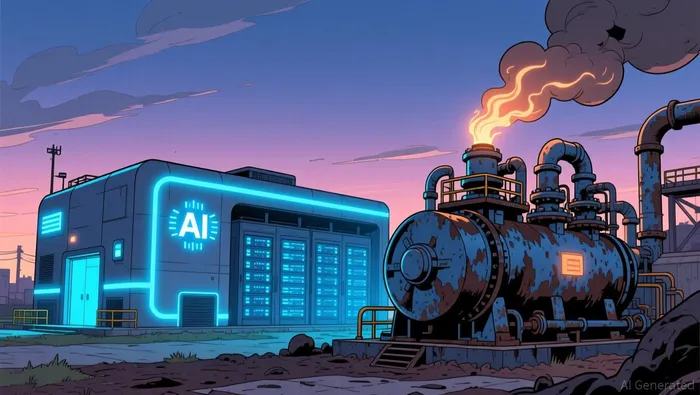
ERock carries a contracted backlog of approximately $1.28 billion to $1.3 billion. The company has deployed roughly 1,000 megawatts across about 400 sites and actively manages 761 RockBlock systems - its modular natural gas power platform designed for data centers and similar facilities. The data center generator market is growing, projected to nearly double by the early 2030s as hyperscalers demand faster, behind-the-meter power solutions.
ERock also counts Microsoft among its customers, with a partnership announced in 2023 to provide backup power for a Microsoft data center in San Jose. The brand credibility matters in a sector where uptime is everything.
However, there are two structural risks the IPO prospectus won't soften.
First, customer concentration. In the first quarter of 2026, the three largest customers accounted for 62 percent of ERock's revenue - 37 percent, 13 percent, and 12 percent respectively. A churn event from a single client would dent the business materially. In a fee-based midstream or pipeline model, long-duration contracts with diverse offtakers create stability. ERock's revenue mix does not yet carry that same predictability.
Second, competitive pressure. ERock is entering public markets while Caterpillar, Cummins, Rolls-Royce, and Generac - all profitable companies with established data center generator franchises - are already in the space. Caterpillar alone is deploying combined gas generator and battery storage systems in the gigawatt range for hyperscale campuses. ERock's differentiated positioning needs to be sharper than "we also sell generators to data centers" to justify a premium growth multiple.
While it's true that the backlog provides a runway and the revenue growth trajectory is impressive, I would argue that the combination of negative cash flow, heavy liabilities, concentrated revenue, and established competitors makes this a speculative growth bet, not a value opportunity. The $5 billion valuation prices in years of flawless execution.
There's better out there. Profitable power infrastructure names with positive free cash flow, defensible balance sheets, and exposure to the same energy demand tailwinds trade at multiples that acknowledge risk rather than pricing it away.
For a deep-value investor who measures opportunity by the gap between price and cash-flow-supported intrinsic value, ERock at its IPO price does not clear the bar. The company may very well be a successful business in five years. But success is not the same as a margin of safety at today's price. A stock can be a great company and still be a bad investment if you pay too much.
I rate this a Hold - meaning I would not participate at the IPO price. The narrative is strong, the end market is real, and the backlog is genuine. But the cash flow has not arrived, the balance sheet needs the offering proceeds, and the valuation assumes the best-case scenario. There are better ways to play the data center power buildout without buying the execution risk on top of the valuation risk.
Even if ERock converts its entire backlog and reaches profitability within two years, the $5 billion starting valuation gives early public investors little room for the kind of error that makes value investing worthwhile. The market is not mispricing this name - it's just pricing in a future that hasn't happened yet. That's not a value gap. That's a growth story.