

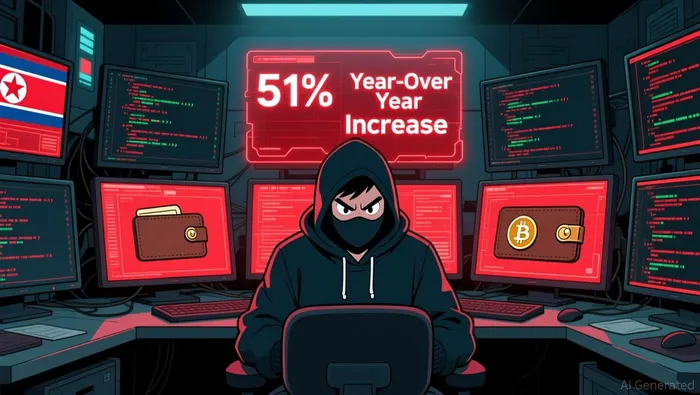
The scale of North Korea's crypto theft operation hit a new peak in 2025. The regime stole $2.02 billion in cryptocurrency, a 51% year-over-year increase that shattered its own previous record. This haul pushed the country's total stolen crypto to around $6.75 billion, making it a critical, state-funded enterprise.
The financial impact is staggering. This activity now accounts for an estimated 13% of North Korea's GDP, transforming cybercrime into a primary revenue stream for the isolated regime. The threat has evolved from opportunistic attacks to sophisticated, long-term operations designed to infiltrate and exploit the ecosystem from within.
A prime example is the $285 million hack of Drift Protocol. For six months, North Korean operatives posed as a legitimate trading firm, building relationships at conferences and depositing over $1 million of their own funds. They infiltrated the Solana-based exchange through social engineering, striking in under 12 minutes after months of preparation. This case illustrates a shift toward embedding operatives and using third-party intermediaries to bypass scrutiny, making detection far more difficult.
The Defensive Recovery: $5.8M Frozen
The ETH Rangers program delivered a tangible defensive win, recovering or freezing over $5.8 million in stolen funds. This effort, launched in late 2024, successfully identified approximately 100 North Korean IT workers embedded across 53 crypto projects. The operation exposed a deep, systematic infiltration of the ecosystem, with operatives gaining access through legitimate employment channels.
Yet the scale of this recovery is dwarfed by the offensive threat. The $5.8 million frozen represents a mere fraction of the $2.02 billion stolen by North Korea in 2025. This stark contrast highlights the immense challenge facing the industry. While the program exposed hundreds of vulnerabilities and prompted incident responses, the sheer volume of theft underscores that defensive efforts are playing catch-up to a state-sponsored, high-capacity criminal enterprise.
The bottom line is one of asymmetric pressure. The ETH Rangers' work is a critical step in fortifying the Ethereum ecosystem, but it operates against a backdrop of record-breaking, multi-billion dollar thefts. The program's success in identifying operatives is a win, but the financial damage inflicted in a single year remains overwhelming.
Market Implications: Volume and Liquidity
The Stabble incident is a stark reminder that the threat persists long after an employee leaves. In April, the Solana DEX urged all liquidity providers to withdraw funds after a suspected former employee was flagged. No exploit occurred, but the protocol's $1.75 million in TVL was at risk. This forces a costly, precautionary posture on all projects, raising vetting costs and operational friction across the ecosystem.
This aligns with a troubling trend: North Korean actors are achieving larger thefts with fewer attacks. The record $2.02 billion stolen in 2025 came from a smaller number of incidents, often relying on embedded operatives rather than technical exploits. While overall DeFi hack losses have been suppressed, suggesting improved security, the human-targeting strategy is proving more effective and harder to defend against.
Regulatory pressure is mounting to counter this. U.S. authorities have secured multi-year prison sentences for individuals who helped DPRK IT workers infiltrate U.S. companies. This signals a crackdown on the facilitation chain, but it does not eliminate the core threat of embedded operatives. The market's liquidity is now caught between the high cost of due diligence and the persistent, sophisticated risk of insider infiltration.