

If you're funding retirement with income, the first question isn't whether Ethereum broke a technical support level. It's whether the cash-flow engine that pays you is still running. While headlines scream about President Trump rejecting Iran's counterproposal and analysts flag a "$2,150-$2,200 support zone" as a potential "no-trade zone," the real story for yield-focused investors is simpler: Ethereum's staking yield hasn't budged, and the network still collects billions in fees.
Yes, the price dropped. But the income stream didn't.
Start with what pays you now. Ethereum staking yields currently range between 3.5% and 4.2% APY, compressed from earlier levels but still meaningful. That compression comes from high network participation-more validators sharing block rewards-not from any breakdown in the underlying mechanism. If you were earning that yield yesterday, you're earning it today. The geopolitical drama in the Strait of Hormuz doesn't touch the code that distributes staking rewards.
The same goes for network fee revenue. While Ethereum has sacrificed some fee income to fuel Layer-2 growth-giving up roughly $100 million in 2025 revenue to make the network cheaper and faster-the base layer still generated $2.48 billion in fees during 2024. That's the "dividend" from transaction activity, and it hasn't disappeared because peace talks between Washington and Tehran hit a roadblock.
Don't look at the price first. Look at what's producing the price.
The "no-trade zone" warning from analyst Ted Pillows refers to a technical price level, not a fundamental one. If Ethereum breaks below $2,150-$2,200, the technical picture worsens, but the yield picture doesn't change. For income investors, lower prices mean you can buy more future yield for the same dollars-as long as the yield engine stays intact.
And it has. While crude oil prices spiked on Strait of Hormuz concerns and Bitcoin whipsawed between $80,700 and $82,400, Ethereum's staking mechanism kept paying. XRP traded flat around $1.4580, Dogecoin edged up 1.3%, but those are sentiment moves, not cash-flow events.
The portfolio is the yield machine, not any single ticker. Ethereum's role in that machine is to provide staking income and exposure to blockchain fee revenue. If the income stream is still sound-and it is-then geopolitical volatility becomes a reinvestment opportunity, not a sell signal.
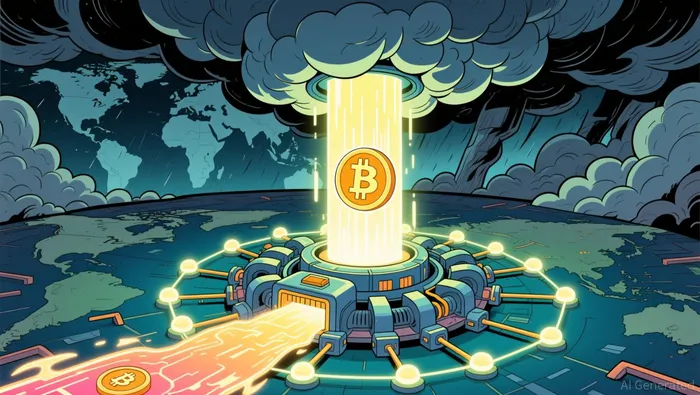
We are ignoring the noise and collecting the income. The real risk isn't that Ethereum tests $2,150. It's that investors panic-sell a working yield generator because they're watching headlines instead of checking their staking rewards.