

The immediate threat to jet fuel supply is now a tangible reality. The conflict in the Middle East has directly targeted a critical chokepoint, with the Strait of Hormuz effectively closed to shipping traffic for a period. This disruption has sent shockwaves through global markets, but its impact is being felt most acutely in Europe. The bloc is particularly exposed, importing some 30% to 40% of its jet fuel, at least half of that from the Middle East. With the primary maritime route for Gulf energy now a zone of risk, the vulnerability is stark.
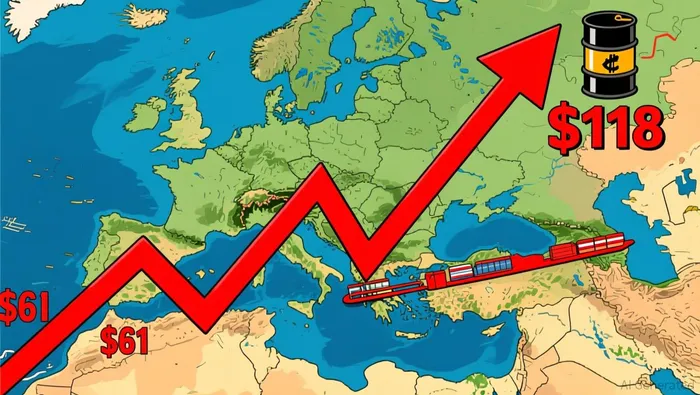
The market's reaction was swift and severe. Crude oil prices, the foundational input for jet fuel, saw a dramatic spike in the first quarter of 2026. The front-month futures price for Brent crude rose from $61 per barrel to $118 per barrel over the quarter. This represents the largest inflation-adjusted quarterly increase in data going back to 1988, a classic market response to a sudden, acute supply shock. For the aviation sector, this translates directly to soaring fuel costs and a real threat of operational chaos, with airlines warning of potential jet fuel shortages within weeks that could lead to flight cancellations by late May.
Yet, this sharp price pop is a short-term anomaly against a longer-term bearish backdrop. The fundamental supply-demand balance for crude oil remains structurally weak. J.P. Morgan Global Research, for instance, sees Brent crude averaging around $60 per barrel in 2026, a forecast underpinned by soft fundamentals and the expectation of persistent global oil surpluses. The disconnect is clear: a geopolitical event can violently distort prices in the near term, but the underlying cycle-driven by strong supply growth and evolving trade flows-is pointing toward lower levels. The current spike, therefore, is a volatility event, not a permanent shift in the commodity's long-term trajectory.
The EU's Strategic Pivot: Diversification and SAF
The EU's response is a clear attempt to manage a crisis while reinforcing a longer-term strategic shift. The immediate focus is on diversifying supply away from the Middle East. The Commission is preparing new guidelines that will urge members to cut their dependence on Middle Eastern jet fuel and explore increased imports from the U.S. This push is already showing early results, with jet fuel imports from the U.S. and Nigeria rising sharply in April. Yet the plan is explicitly non-binding and acknowledges the bloc's limitations in increasing jet fuel output domestically. The core of the strategy, therefore, is a dual-track approach: securing alternative physical supply routes in the near term while accelerating the structural transition to sustainable fuels.
The longer-term pillar is a renewed commitment to Sustainable Aviation Fuel (SAF). The new guidelines will put a greater focus on self-sufficiency and resilience via Sustainable Aviation Fuel (SAF) or synthetic fuels. This isn't just a climate policy; it's being framed as a supply security imperative. The logic is straightforward: domestic production of synthetic fuels, even if initially small, reduces reliance on volatile global trade flows. The Commission's plan includes EU-wide mapping of refining capacity and measures to ensure that existing refining capacity is fully utilised and maintained. This operational focus aims to squeeze maximum output from Europe's current industrial base, a pragmatic step to boost self-sufficiency without waiting for new build projects.
Crucially, the Commission has drawn a firm line on climate policy. Despite direct pressure from airlines facing a potential jet fuel shortage within weeks, the EU has rejected calls to suspend the Emissions Trading System (ETS) or SAF allowances. This signals that the bloc is prioritizing its long-term decarbonization goals even amid acute supply stress. The message is that resilience and sustainability are being treated as complementary objectives, not competing ones. The policy push for SAF is being embedded directly into the crisis response, framing the transition not as a future cost but as a present-day solution to a geopolitical vulnerability.
The bottom line is a policy response that is both reactive and forward-looking. The immediate actions-diversifying imports and maximizing refinery output-are designed to stave off the flight cancellations possible by late May that IATA's director general has warned about. But the deeper structural moves, centered on SAF and refining efficiency, are aimed at reshaping the EU's energy footprint. This pivot reflects a macro-level understanding: that geopolitical risk is a persistent feature of the global order, and true resilience requires a fundamental reconfiguration of supply chains, not just temporary fixes.
The Technical Hurdle: US Jet A in Europe
The EU's push to import more jet fuel from the U.S. is a logical step, but it runs headlong into a fundamental technical barrier. The primary issue is a difference in fuel specifications. The U.S. standard, known as Jet A, has a higher freezing point than the European standard, Jet A-1. This distinction is critical for aviation safety, as Jet A-1 is specifically designed for long-haul, high-altitude, and cold-temperature operations, making it the preferred fuel for military and commercial fleets operating across Europe's skies.
This specification gap means that U.S. Jet A cannot be used directly in most European aircraft or distribution systems. The solution requires either costly modifications to European refining and distribution infrastructure to handle the different fuel, or the complex and expensive process of blending U.S. Jet A with European Jet A-1 to meet the required standards. Both options add layers of logistical complexity and cost, undermining the simplicity of a "quick fix" import strategy. The EU's own draft guidelines acknowledge this challenge, noting that they will look at the distribution logistics of increasing the use of U.S. Jet A fuel, a clear signal that the technical hurdles are being factored in.
The recent surge in imports from the U.S. and Nigeria is a telling development. It shows that market forces are already attempting to mitigate the Middle Eastern risk, with trade flows jumping in April. Yet this increase reflects a near-term, partial mitigation rather than a full structural solution. It demonstrates the market's agility in finding alternative sources, but it also highlights the scale of the problem. The EU's vulnerability is so acute that even these partial diversions are being welcomed as a stopgap. The real test will come if the Strait of Hormuz remains closed for an extended period, forcing a much larger and more permanent shift in supply that the existing infrastructure and fuel specifications are not built to handle.
The bottom line is that while the U.S. import route offers a tangible near-term buffer, it is not a seamless alternative. The technical and logistical costs of bridging the specification gap mean that this diversification effort will be more expensive and complex than a simple swap of suppliers. For the EU's strategy to succeed, these hurdles must be addressed through coordinated investment and policy, moving beyond the initial trade flows to a deeper integration of different fuel streams into the European system.
Implications for Supply, Demand, and Price Cycles
The EU's policy pivot and the underlying technical constraints will reshape the jet fuel landscape, but the changes will unfold over a multi-year cycle, not a few months. The most significant structural shift is the accelerated push for Sustainable Aviation Fuel (SAF) and synthetic fuels. This is a long-term investment cycle, with new production capacity taking years to build and scale. The immediate impact will be a modest increase in blended fuel volumes, but the real transformation in supply chains and pricing power is measured in years, not quarters. This creates a persistent gap between the urgent need for supply resilience and the slow pace of building domestic fuel alternatives.
At the same time, the core vulnerability of Europe's refining base remains unchanged. The region's jet fuel self-sufficiency is structurally low, with Europe importing some 30% to 40% of its jet fuel. The EU's own guidelines acknowledge its limitations in increasing jet fuel output domestically. This creates a persistent supply-demand gap that any diversification strategy must work within. The recent surge in imports from the U.S. and Nigeria is a market-driven response to acute risk, but it does not address the fundamental issue of limited local refining capacity. The technical hurdle of blending different fuel specifications adds cost and complexity, meaning that even these alternative flows will likely be more expensive and less efficient than a seamless domestic supply.
This sets up a clear dynamic for the price environment. In the short term, the geopolitical shock has already caused a violent spike, with Brent crude rising from $61 per barrel to $118 per barrel in the first quarter. This volatility is a direct result of the acute supply disruption. However, the longer-term cycle is bearish. J.P. Morgan Global Research sees Brent crude averaging around $60 per barrel in 2026, a forecast based on strong supply growth and global oil surpluses. Once the Strait of Hormuz crisis subsides and shipping resumes, this structural bearishness is likely to reassert itself. Jet fuel prices, which move closely with crude, will see volatility but are expected to revert to lower levels as the immediate shock fades.
The bottom line is a market caught between two forces. The near-term price spike is a real and disruptive event, but it is an outlier against a backdrop of weak fundamentals. The EU's strategy aims to build resilience, but its success hinges on navigating a multi-year investment cycle for new fuels while operating within the constraints of a limited refining base. For investors and operators, this means managing high short-term volatility while positioning for a longer-term environment where prices are likely to be lower, even as the geopolitical risk of supply disruption remains a persistent feature.
Catalysts, Risks, and What to Watch
The coming weeks will test the EU's strategy against a backdrop of acute supply pressure. The primary catalyst is the formal presentation of the new guidelines next week. This event will clarify the scope and binding nature of the recommendations, moving them from draft to policy. The details on how the EU plans to handle potential shortages, including the critical question of airline compensation, will be a direct signal of its preparedness. The market will watch for any hints of a coordinated fuel stock release, a tool the Commission has flagged as a possible last resort if the Strait of Hormuz remains snarled.
A key risk is the potential conflict between the EU's climate policies and short-term supply needs. The bloc has already rejected calls to suspend the Emissions Trading System (ETS) or SAF allowances, a decision that signals policy discipline. While this protects long-term decarbonization goals, it may create friction. Airlines facing a real shortage may argue that the ETS imposes an additional, unwelcome cost during a crisis. The real test will be whether the EU's guidance on fuel shortages includes a clear pathway for airlines to avoid penalties, which could be seen as a de facto policy accommodation. The tension between these two objectives-climate targets and immediate supply security-is the central policy friction point.
The most direct signal to monitor is flight cancellations. IATA's director general has warned that flights in Europe could start to be cancelled from the end of May due to a lack of jet fuel. This is the ultimate measure of the supply crisis's severity and the effectiveness of the policy response. The recent surge in imports from the U.S. and Nigeria is a market-driven buffer, but it is not a full solution. If cancellations begin, it will validate the airlines' warnings and force a more urgent, coordinated response from the EU. The timing is tight, with some airports warning of shortages within three weeks if the Strait of Hormuz remains closed.
In practice, the coming weeks will be a period of high visibility and testing. The formal guidelines will set the framework, but the real stress test will be the operational reality of fuel availability and flight schedules. For the market, the path forward remains a balance between managing near-term volatility and navigating a longer-term cycle where structural supply growth and refining efficiency will ultimately define the price environment.