

The physical balance for jet fuel in Europe is now precarious. The International Energy Agency has warned that the region has "maybe six weeks of jet fuel left", with stocks at a critical "less than 20 days of coverage". This is a dramatic drop from the typical several months' worth held by some countries, and it sets a clear timeline for action.
The vulnerability stems from a structural dependency. Europe has long relied on the Middle East for about 75% of its jet fuel imports, a flow of roughly 375,000 barrels per day. The recent closure of the Strait of Hormuz by Iran has severed this primary artery, creating a single point of failure for a vital commodity. The IEA notes that this crisis has thrown a "proverbial wrench into the inner workings of the aviation fuel markets" because even other major exporting refineries in Asia are themselves dependent on Middle Eastern crude.
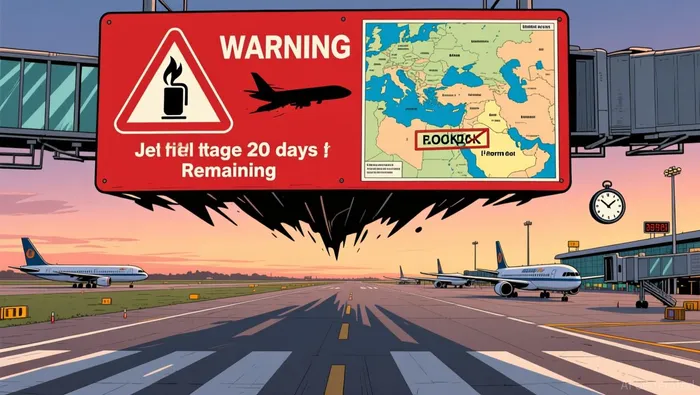
The market is now at a tipping point. The agency's analysis shows that if Europe cannot replace more than half of its blocked Middle Eastern imports, "physical shortages may emerge at select airports, resulting in flight cancellations". The scenario is stark: even a partial replacement effort would be insufficient to maintain inventory through the summer. The balance between dwindling stocks and the region's heavy import reliance means the system is now one step away from a physical breakdown.
Price Signals and Market Response
The market's verdict is clear and severe. The benchmark European jet fuel price has hit an all-time high of $1,838 per tonne, a level that represents a roughly doubling since the conflict began. This surge is sharper than the price moves seen in gasoline or diesel, highlighting the acute vulnerability of this specific commodity.
This price spike is the direct financial signal of a physical supply crunch. With the Strait of Hormuz effectively closed for over six weeks, the primary supply artery to Europe has been severed. The market is responding with urgency, but the scale of the disruption is overwhelming. Record U.S. jet fuel imports to Europe, estimated at 149,000 to 200,000 barrels per day in April, are the fastest response possible. Yet, as the IEA notes, these shipments only cover around half of the EU's lost volumes from the Gulf. The market is working harder to attract replacement cargoes, but the gap remains wide.
The price action shows how markets amplify underlying stress. The doubling of jet fuel prices is a stark warning that the physical balance is breaking. Airlines are already cutting routes and raising fares to cope with costs that typically make up 20-40% of their operating expenses. The record U.S. exports are a testament to global supply chain agility, but they are a partial fix for a systemic problem. The price signal tells us that the cost of bridging this gap is now extremely high, and the market is pricing in the risk of shortages that could force flight cancellations by June if replacement efforts stall.
Financial and Operational Impact on Carriers
The commodity imbalance is now translating directly into financial pain and operational strain for Europe's airlines. EasyJet provides a stark case study. The carrier has already taken on roughly £25 million ($34 million) in additional fuel costs due to the conflict, a figure that underscores the immediate and material impact of the price spike. This cost burden is so severe that the company now expects to report a headline loss before tax of between £540 million and £560 million for the first half of 2026. That forecast, which implies a significant deterioration from the prior year, is a direct consequence of the jet fuel crisis.
The financial pressure is also hitting demand. EasyJet reported that bookings are down two percentage points for the three months to the end of both June and September compared to a year ago. This weakness suggests that soaring fuel costs are being passed on to consumers, dampening travel appetite for key summer months. The airline's own warning of "near-term uncertainty around fuel costs and customer demand" captures the double-edged sword carriers now face.
Operationally, the response has been one of managed continuity. EasyJet's CEO, Kenton Jarvis, stated that all the airports it serves are "operating as normal" and that the company has three to four weeks visibility on fuel supplies. This indicates that, for now, the physical supply chain is functioning to keep operations running. Yet this visibility is short-term and introduces significant uncertainty. As the CEO noted, the outlook for late summer demand "very much depend[s] on what happens to the conflict in the next week or two."
The bottom line is that the commodity balance is forcing a painful trade-off. Airlines are absorbing massive fuel cost increases, which are already forcing a headline loss and weakening bookings. While operations continue today, the short visibility window and the looming threat of physical shortages mean this situation is not sustainable. The financial toll is clear, and the demand-side pressures are building, setting the stage for more difficult decisions ahead.
Resolution Pathways and Key Catalysts
The path to resolving Europe's jet fuel crisis hinges on a single, volatile catalyst: the status of the Strait of Hormuz blockade. The situation is a race against time, with the Airports Council International Europe warning that "systemic jet fuel shortage is set to become a reality for the EU" if significant and stable passage doesn't resume through the strait by the end of April. This creates an immediate deadline. The primary catalyst, therefore, is the duration and resolution of the conflict that has kept the strait closed for over six weeks. If the blockade lifts quickly, the market could stabilize. If it persists, the physical shortages the IEA has warned about will likely materialize, forcing a more severe operational and financial reckoning.
In response, airlines are implementing a range of measures to manage the crisis. The most direct response is financial: carriers are cutting unprofitable routes, raising fares, and adding fuel surcharges. This is a standard industry playbook for absorbing cost shocks, but it comes at the cost of demand. As seen with EasyJet, the pressure is already weakening bookings. The goal is to pass on the soaring cost of fuel, which now makes up a massive portion of operating expenses, to consumers. However, this strategy has limits; raising prices too aggressively risks accelerating demand destruction, which is already evident.
The European Commission's stance adds a layer of official caution. While acknowledging there is "no evidence of fuel shortages" in the EU at present, it concedes that supply issues could emerge in the near future. This reflects the agency's attempt to balance the urgent warnings from industry groups with the reality that the physical supply chain is still functioning, albeit under immense strain. The Commission is coordinating energy measures and meeting weekly, but its position underscores the uncertainty. It is not yet declaring a shortage, but it is preparing for one.
Analyst skepticism about the speed of shortages introduces a note of complexity. Some experts question whether the dire warnings of imminent, widespread shortages will play out as quickly as feared. This skepticism likely stems from the rapid acceleration of alternative supply flows, like the record U.S. exports. Yet the core tension remains. The market is pricing in the risk of a breakdown, and the physical balance is so tight that even a minor disruption to replacement shipments could tip the scales. The race is not just against the calendar, but against the fragility of the global supply chain that has been knocked off its hinges by the closure of a single maritime chokepoint.