

European equity futures fell more than 1% on Thursday as the prospect of a swift Middle East resolution evaporated, with President Trump vowing intensified strikes on Iran over the next two to three weeks. The STOXX 600 futures slid nearly 2%, while German and French index contracts dropped 1.7% and 1.6% respectively as market sentiment weakened.
The oil market remains in structural deficit, with the Strait of Hormuz still blocked and approximately 10 million barrels per day offline because the Strait remains closed. Traffic through this critical chokepoint has collapsed to fewer than a dozen tankers daily, down from around 135 before the conflict and only 2-3 million bpd would return even under full reopening scenarios. This physical supply shock is keeping spot oil prices elevated in the $140-150 range despite futures volatility.
The inflation implications are immediate and severe. Interest rate futures now price in at least two 25-basis-point rate hikes by year-end according to LSEG-compiled data, a stark reversal from the no-change stance markets had priced before the war. The IMF is urging central banks to hold rates steady while they assess the conflict's consequences as US inflation keeps rising.
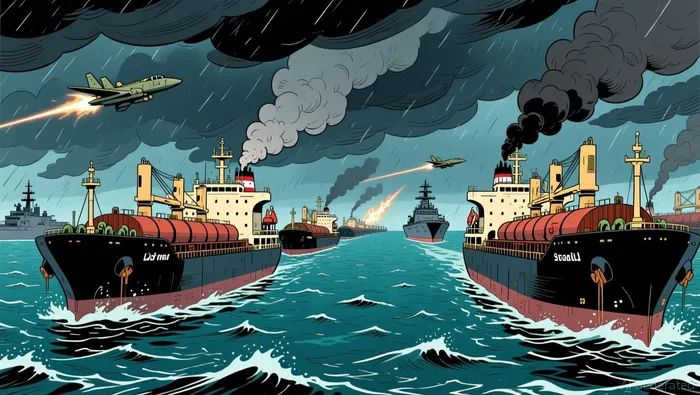
For European equities, this creates a triple threat: direct energy cost pressures on industrials and banks, heightened inflation eroding real returns, and a monetary policy trajectory that removes the rate cut tailwind investors had counted on. The correlation between oil and the dollar is approaching record highs last seen during the 1930s tariff era, reinforcing the dollar's strength against the euro at a time when European exporters already face demand headwinds.
The risk environment has shifted from "will there be escalation?" to "how long can European equities withstand sustained oil prices above $100?"-a question that will test sector rotations and portfolio hedging strategies across the continent.
Inflation and Monetary Policy Implications
The IMF is urging central banks to keep rates unchanged while they assess the conflict's consequences as US inflation keeps rising. This guidance reflects the fundamental shift in the policy landscape: the oil shock has reintroduced inflation as the dominant constraint, eliminating any room for accommodative moves.
The ECB finds itself trapped in a classic stagflationary setup. Elevated energy costs from the Strait of Hormuz disruption-about 10 million barrels per day remain off the market-are feeding directly into production costs across energy-intensive sectors. Industrials, banks, and cyclicals face margin compression as input costs surge while demand remains uncertain. This is the precise environment that constrains the equity risk premium: higher discount rates from persistent inflation, combined with deteriorating corporate profitability.
The policy dilemma is stark. The Fed, facing core PCE rising to 3.1%, is signaling a hold at 3.50%-3.75% with no cuts until perhaps September. The ECB, already at restrictive levels, cannot cut into an inflationary shock without risking a currency crisis-the dollar's strength against the euro is already intensifying, with the 30-day correlation nearing record highs. Any attempt to ease would further weaken the euro and import more inflation.
For equity investors, this means the tailwind from rate cuts has evaporated. The triple threat-energy cost pressures, inflation eroding real returns, and a monetary policy trajectory that removes the rate cut expectation-creates a structural headwind for European equities. The question is no longer about timing the bottom, but about sector rotation toward defensive positions and hedging strategies that account for sustained volatility in both energy and FX markets.
Portfolio Positioning and Risk Management
The dollar's outperformance against AUD, NZD, and Asian EM FX reflects investors pricing in higher import-bill costs and tighter global funding conditions as investors price in higher import-bill costs. For a hedge fund portfolio, this signals a clear FX allocation shift: reduce exposure to commodity-linked and emerging market currencies, and consider long USD positions as a hedge against imported inflation and capital flow reversals. The dollar's strength is structural, driven by the oil shock's impact on the U.S. trade balance and the Fed's hawkish hold at 3.50%-3.75%.
European equities remain vulnerable to further Middle East escalation, with the STOXX 600 futures already down nearly 2% on hopes of a quick resolution evaporating fell more than 1% on Thursday. The risk-adjusted return profile has deteriorated: elevated oil prices compress margins for energy-intensive sectors (industrials, banks, cyclicals), while the elimination of rate cut expectations removes the equity risk premium tailwind. Positioning should rotate toward defensive sectors-utilities and consumer staples offer non-cyclical cash flows that weather inflationary pressure better than growth-oriented names.
Key watchpoints for portfolio rebalancing: German retail sales and unemployment data will test the eurozone's growth resilience, while euro-area inflation prints will constrain ECB policy flexibility such as German retail sales and unemployment, plus euro-area inflation prints. U.S.-Iran negotiations remain the primary geopolitical variable-if talks resume and the Strait of Hormuz reopens, oil prices could retreat sharply, creating a short-term rally opportunity in European equities. However, the baseline scenario is sustained elevated oil prices, which favors a defensive posture.
From a hedging perspective, two strategies stand out. First, long volatility positions-via VSTOXX futures or equity option straddles-capture the elevated uncertainty premium without directional exposure. Second, sector rotation into utilities and consumer staples provides natural downside protection: these sectors have lower beta to oil price swings and maintain demand in inflationary environments. For systematic strategies, increase correlation monitoring between oil and equities-the approaching record-high correlation suggests traditional diversification breaks down, and portfolio hedging must be more explicit.
The bottom line: European equity exposure should be reduced or hedged until geopolitical clarity emerges. The risk-adjusted return setup favors cash preservation, selective defensive sector allocation, and long volatility as a portfolio insurance mechanism. Any tactical long exposure should be sized for drawdown protection, not alpha generation, given the structural headwinds from energy costs and monetary policy tightening.