

The title of a recent ECB survey headline says eurozone consumers take a "benign view" on the inflation surge. That framing is backwards. The data tells a different story - one where expectations are tearing loose, the economy is barely growing, and the old playbook is running out of moves.
Let me show you what the numbers actually say.
The numbers that matter
The ECB's Consumer Expectations Survey for March 2026 showed median one-year-ahead inflation expectations doubling from 2.5% to 4.0% in a single month. Perceived inflation over the past 12 months - what consumers actually feel at the checkout - rose to 3.5% from 3.0%. And medium-term expectations, which should be anchored at the ECB's 2% target, drifted to 2.4%.
Now here's what makes this structural rather than a one-off blip: actual inflation confirmed the direction. Headline HICP (the harmonized consumer price index the ECB tracks) moved from 2.6% in March to 3.0% in April to 3.1% in May. This is not a momentary overshoot. It is a trend.
I don't think "benign" describes a consumer base that now expects prices to rise twice as fast over the next year as they did three months ago. That is what de-anchoring looks like before the word appears in the academic papers.
What broke the anchor
The immediate trigger is the war in Iran and the energy-supply shock it created. Household gas prices surged across EU capitals between February and April. Oil and natural gas prices pushed through directly to consumer costs. The ECB itself warned that a prolonged period of higher energy prices would push growth lower and inflation higher - a stagflation-style trap.
But energy shocks are the spark, not the structure. The structural risk is what happens when consumers stop believing prices will come back down. Once expectations shift, wage demands follow, businesses raise prices preemptively, and the 2% target becomes a memory rather than a constraint.
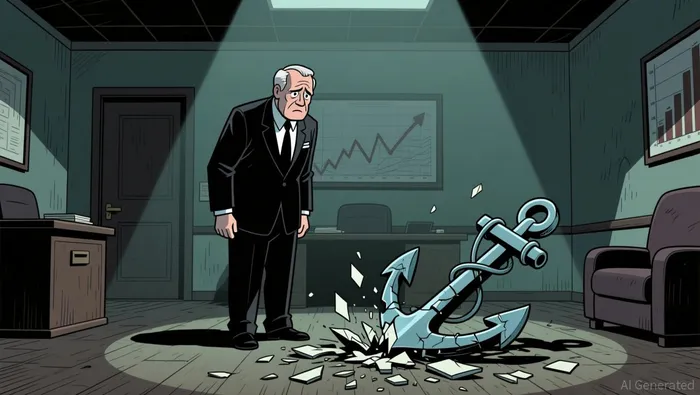
The policy bind
This is where the ECB is caught between two outcomes it doesn't want. The eurozone economy grew a meager 0.1% in the first quarter of 2026 - essentially flat. Raising rates risks choking off what little growth exists. Keeping rates at 2% risks losing credibility as inflation expectations drift.
The ECB debated a rate hike at its April meeting - "at length, and in depth," Lagarde said. The June 11 decision was expected, though the case has weakened as growth concerns intensify. A hike into a stagnating economy is a form of monetary whiplash: punishing households and businesses while trying to convince them to expect lower inflation.
The deeper problem: in a world where energy transition, deglobalization, supply-chain reconfiguration, and fiscal dominance all pressure prices upward, the old 2% orthodoxy may no longer be deliverable without unacceptable growth sacrifice. I believe this is becoming true whether anyone wants to say it out loud.
What this means for dividend investors
This matters because inflation expectations determine the real return on your income portfolio. If you're collecting a 4% dividend and consumers expect 4% inflation, your purchasing power is flat. If you're collecting a 2% dividend, you're losing ground. Every year.
The filter is pricing power. Period.
Companies that can raise prices without losing customers are the only ones that can grow dividends above inflation. When you look at the eurozone regime - energy shock, stagnant growth, de-anchoring expectations - the question is not "which sector will bounce." The question is "which businesses have toll-like revenue models, oligopolistic positioning, and mission-critical services the economy cannot function without?"
That tilts the opportunity set toward energy infrastructure, midstream operators, industrials with pricing contracts, defense, logistics, and select REITs with short-duration leases that reset with inflation. These are businesses where the cash flow comes from physical throughput, regulated returns, or inelastic demand - not from hope.
The equity yield curve still works
Here's the framework that holds across regimes: the sweet spot on the equity yield curve is moderate yields (2-4%) combined with strong dividend growth (8-15%). The compounding math works in any inflation environment, because what you buy is not the current yield - you buy the trajectory. A 2% yield growing at 12% for 20 years becomes a 60% yield on cost.
The entry point is what separates good outcomes from average ones. When a quality business goes out of favor because the macro backdrop looks ugly, its yield inflates temporarily. That is when you deploy. Not when the stock has already rallied and the yield has compressed.
I don't think the eurozone data changes this logic. It reinforces it. In a regime where inflation expectations are drifting upward and growth is weak, dividend growers with pricing power become more valuable, not less. The alternative - chasing static yield or hoping a growth stock's distant earnings will materialize - is gambling, not income investing.
The counterargument
The obvious objection: what if inflation peaks and the ECB gets it under control? What if the energy shock is temporary and the old regime returns?
That's possible. The Iran situation could de-escalate. Oil prices could fall. The 4% one-year expectation could compress back toward 3% or lower. But medium-term expectations are already above 2%, and the structural drivers - demographics, energy transition costs, reshoring, fiscal pressure - don't disappear because one conflict ends. The old regime required cheap energy, open borders, a growing global workforce, and willing bond buyers. Several of those conditions have changed permanently.
Positioning for a higher-inflation average is not a bet on permanent chaos. It's a risk/reward calculation: companies with pricing power and balance-sheet strength win in both outcomes. In a hot-inflation world, they compound. In a return-to-2% world, they still compound - just with more margin for error.
So what
The competitor headline asked you to relax. The data asks you to pay attention. When inflation expectations double in a month and actual prices follow, that is the signal that the regime has shifted. You don't need a crisis to act. You need the right filter - pricing power, balance-sheet strength, payout durability - and the patience to let compounding do the work.
This is not a bet on one geopolitical outcome. It's a positioning decision for a world where inflation runs above 2% for longer than the consensus wants to admit. The TOLL stocks - energy, industrials, defense, logistics - provide what the economy cannot function without, and they can raise prices without losing customers. From an income and risk/reward point of view, that is the setup that survives.
I believe this may not fit every investor. But if you're building a portfolio that needs to protect purchasing power while generating growing income, the question is no longer whether to tilt toward pricing power and real-economy cash flows. The question is whether you have enough conviction to hold when the headline narrative says you should be worried about something else.