

Let's be real - Q1 sucked. Bitcoin dumped, and Fold took the hit along with the rest of the crypto industry. Transaction volumes fell 31% year over year and revenue declined 21% year over year. That's the FUD in a nutshell, and anyone holding paper hands probably already bailed.
But here's the thing about crypto winters - they're not feature bugs, they're features. The Bitcoin price crash tested holder conviction, and that's exactly when you separate the diamond hands from the paper hands. The real story isn't the correlation play; it's what Fold was building while everyone else was panicking.
Operating expenses fell 19% - that's discipline, not desperation. Net loss narrowed year-over-year. Meanwhile, the Fold credit card is now live with more than 1,000 cardholders, rollout ahead of schedule, with strong early demand. Management is intentionally throttling access while they validate fraud controls and economics - that's not a panic move, that's smart scaling.
The wait list? More than 80,000 potential users are queued up for this thing. While the Bitcoin price was getting wrecked, Fold was laying the adoption infrastructure that's now ready to go mainstream. The Bitcoin Gift Card keeps onboarding thousands. The Bitcoin Bonus Program with Steak 'n Shake is expanding. These are the products that turn Bitcoin speculators into Bitcoin users - and that's where the real money gets made.
Paper hands saw red and ran. Diamond hands saw the foundation being laid and HODLed. The credit card is the FOMO play - it's the on-ramp that turns casual Bitcoiners into ecosystem users who spend, earn, and hold through the cycles. That's the narrative that matters when the next bull run hits.
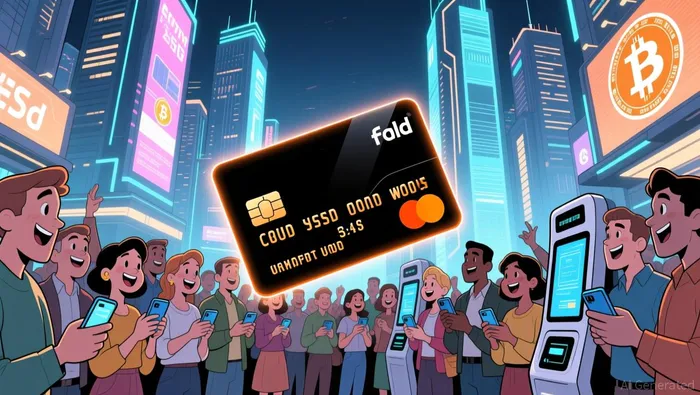
The Credit Card Is Live - 1,000 Diamond Hands Holders and an 80K Wait List
The Fold credit card is now live with more than 1,000 cardholders more than 1,000 cardholders - and management is intentionally throttling access while it validates fraud controls, underwriting, servicing, and economics. That's not a bottleneck; that's discipline. While meme coin projects are pumping vapor and chasing hype, Fold is doing the unglamorous work of building infrastructure that lasts.
The demand signal is what separates real products from vaporware. Rollout is proceeding ahead of schedule with strong early demand and encouraging user behavior. But the real number that matters is the wait list: more than 80,000 potential users are queued up wait list of more than 80,000 potential users. That's not speculation; that's a pipeline of actual adoption waiting to be unlocked.
Here's the thesis: the credit card is the on-ramp that turns Bitcoin speculators into Bitcoin users. Paper hands buy and hold. Diamond hands buy, hold, and spend. The credit card is the engine that drives that behavior - it's how Fold becomes the primary financial platform for Bitcoin-minded people. Management believes it could become a major acquisition and engagement engine across the Fold ecosystem major acquisition and engagement engine.
The throttling is a feature, not a bug. It shows management is thinking about unit economics and risk management from day one, not just chasing vanity metrics. They're building this to scale sustainably, not to pump and dump. That's the difference between a product that lasts and a gimmick that fades.
While the Bitcoin price was getting wrecked in Q1, Fold was laying the adoption infrastructure. The credit card is now live. The wait list is massive. The question isn't whether this product works - the early data says it does. The question is whether investors have the conviction to HODL while the rest of the ecosystem catches up.
Treasury Bitcoin Strategy - 80% of Market Cap in BTC Is a High-Conviction HODL
Here's where Fold separates itself from the copycat crypto projects. While other companies are dumping BTC at the first sign of volatility, Fold's treasury strategy is a straight-up signal of conviction. Last we checked, their Bitcoin holdings represented 80% of market cap - that's not a hedge, that's a statement.
For the crypto-native crowd, this is the kind of move that builds conviction. When management puts 80% of their balance sheet into Bitcoin, they're saying they believe in the long-term narrative more than the short-term price action. That's the difference between a company that treats Bitcoin as a treasury asset and one that treats it as a trading position. Fold is clearly in the first camp.
Now, I know what the FUD crowd will say - "what about liquidity risk?" "what about volatility?" But here's the thing: Fold has been deliberate about this. They've got a $250M equity facility ready to support growth, and they've been expanding capital facilities to support larger-scale expansion. The treasury Bitcoin isn't collateral - it's a conviction play. They're not holding BTC because they have to; they're holding it because they believe in the network effect, the scarcity, the long-term store of value thesis.
This matters for the narrative. When a public company puts 80% of its market cap into Bitcoin, it's telling investors: "We're not trading this. We're HODLing this." That's the kind of signal that attracts long-term holders, not flip traders. It's the difference between building a community and building a price chart.
The credit card brings users in. The treasury strategy tells them who Fold is. Diamond hands recognize diamond hands. That's the story here.
The Play: Catalysts, Risks, and What to Watch
The setup is clear: FLD at $1.48 with 296K in volume isn't getting the attention it deserves. That's the gap. The Q1 numbers got crushed alongside the rest of crypto - transaction volumes down 31% year over year and revenue down 21% - but that's the cyclical FUD talking. The product pipeline? That's the real FOMO.
Here's the thesis: Fold is a bet on Bitcoin adoption infrastructure. The credit card is live with more than 1,000 cardholders and a wait list of more than 80,000. The Bitcoin Gift Card keeps onboarding thousands. The Steak 'n Shake Bonus Program is expanding. These aren't vaporware promises - they're shipped products with real user data. The Q1 weakness was a Bitcoin price event, not a product failure.
The FOMO catalysts to watch:
Credit card rollout acceleration is the big one. Management is intentionally throttling access to validate fraud controls and unit economics - but that throttle will come off. When they expand to the full 80K wait list, that's a massive user acquisition engine firing. The early data shows strong demand and encouraging user behavior. That's the signal.
Then there's the partnership expansion. The Bitcoin Bonus Program is drawing interest from additional employers - management says this could broaden into payroll, benefits, treasury, and corporate spending tools. That's a potentially significant new business channel beyond consumer rewards. Watch for announcements here.
Bitcoin price stabilization would be the final piece. Fold's transaction volumes are correlated to BTC price action - that's the nature of the business. But when Bitcoin finds a floor, the product pipeline is ready to capture that inflow. The credit card becomes the on-ramp. The gift card becomes the entry point. The ecosystem locks in users who spend, earn, and hold.
The FUD risks to respect:
Bitcoin correlation is the obvious one. If BTC dumps again, Fold takes it. The Q1 print showed exactly how sensitive volumes are to price action. That's not a bug - it's the underlying exposure.
Execution risk is real. Throttling access is smart, but scaling fraud controls, underwriting, and servicing while expanding rapidly is hard. One misstep on security or user experience could damage the brand when it matters most.
Competition is coming. The credit card space is getting crowded. Fold has the Bitcoin-native angle, but traditional fintechs and crypto exchanges are all chasing the same on-ramp play.
The play:
For diamond hands, this is a HODL setup. The current price reflects the Q1 FUD, not the product pipeline. The 80K wait list is a pipeline of actual adoption. The credit card is already live and performing. The treasury strategy signals conviction. The question isn't whether the products work - the early data says they do. The question is whether you have the conviction to hold while the rest of the ecosystem catches up.
Watch the credit card expansion announcements. Watch the wait list conversion. Watch Bitcoin price action - when it stabilizes, Fold's adoption infrastructure is positioned to capture the inflow. That's the FOMO play. That's where the money gets made.