

Ford's stock took a sharp hit yesterday, falling nearly 5% on news of a fresh wave of recalls. This isn't a minor correction; it's a multi-pronged event that directly challenges the company's recent operational narrative. The immediate catalyst is a new, targeted recall of 254,640 vehicles, covering 2021-2026 Broncos and Edges, and 2020-2024 Escapes and Lincolns. The risk here is clear: the software flaw may cause the loss of the rearview camera image and some advanced driver assistance features, directly impacting driver safety and convenience.
This specific recall is part of a larger, more costly problem. Earlier this week, Ford announced a separate, massive U.S. recall for roughly 4.4 million vehicles over a trailer module software issue. That recall alone dwarfs the latest one in scale. Adding to the burden, a different recall from the same period impacts nearly 1.74 million vehicles due to rearview camera and ADAS software problems. Together, these three events create a significant operational and financial headwind.
The market's reaction was swift and decisive. The stock's 5.3% drop reflects investor concern over the mounting costs of these fixes, the logistical complexity of managing such a large-scale software rollout, and the reputational damage from persistent quality issues. For a stock that had been trading near its 52-week high, this news provided a clear catalyst for profit-taking and a reassessment of the quality story.
Financial and Operational Impact: Cost vs. Scale
The immediate financial burden of these recalls is mitigated by a key cost-saving mechanism: the primary remedy is a free software update. For the latest recall of 254,640 vehicles, Ford will provide the fix either at a dealership or via an over-the-air update at no charge to the customer. The same approach applies to the massive nearly 1.74 million vehicle recall over rearview camera software issues, where a free software update is the solution. This is a significant advantage over mechanical recalls, which require parts, labor, and vehicle downtime.
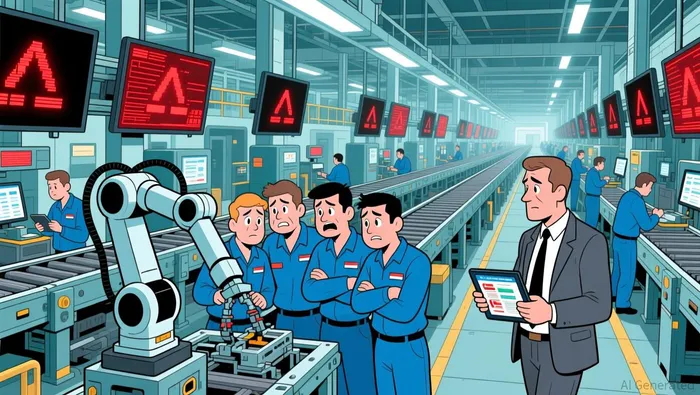
Yet, the scale of the logistics creates a substantial operational cost. Managing the notification process, scheduling appointments, and ensuring the software update is applied correctly across millions of vehicles demands a major customer service and field operations effort. The sheer volume of the nearly 1.74 million vehicle recall alone represents a massive logistical undertaking, diverting resources from other priorities. While the per-vehicle fix cost is low, the aggregate cost of this operational grind is not trivial.
This pattern fits a troubling trend. Ford is leading recalls in 2026, with Ford alone already at 17 recalls so far this year. A large portion of these are tied to rearview camera software problems, echoing the issues from 2025. In that year, Ford accounted for 153 US recalls covering about 13 million vehicles, more than any other automaker. This persistent quality issue raises serious questions about the company's platform consolidation and software integration efforts. The operational cost is not just in fixing cars, but in the ongoing reputational and internal efficiency toll of managing this recall wave.
Valuation and Risk/Reward Setup
The stock's sharp 5% drop creates a classic tactical test. Ford had been on a powerful run, with shares up 40% over the past year before this recall news. That kind of momentum makes the stock particularly vulnerable to negative catalysts, as the recent volume spike shows. The market is pricing in a worst-case scenario of escalating costs and reputational damage.
Yet the fundamental impact may be more contained. The primary fix for these software issues is a free update, which keeps per-vehicle costs low. The incremental warranty expense for these recalls is likely a one-time charge that will be absorbed over a few quarters. This is a manageable operational issue, not a structural financial crisis. The opportunity lies in the potential for a temporary overreaction to a problem that Ford's own recent sales data suggests it can still manage.
Consider the counter-narrative from the company's core business. Just last month, Ford reported a 30.4% year-over-year surge in large SUV sales, with the Explorer and Bronco leading the charge. This strong demand provides a buffer. If the recall costs are offset by robust sales of these key models, the net impact on near-term earnings could be minimal. The risk is reputational erosion, which could dampen future sales, but that is a longer-term concern.
The bottom line is a clear risk/reward setup. The key risk is that persistent quality issues, now involving newer vehicles, undermine the brand's credibility and halt the stock's upward momentum. The opportunity is that the market is overreacting to a contained, fixable problem. For a tactical investor, the 40% gain makes the stock a prime candidate for a "sell the news" trade, but the contained financial impact and strong underlying sales suggest the downside may be limited.
Catalysts and What to Watch
The market has priced in the immediate recall news. Now, the tactical setup hinges on near-term events that will confirm whether this is a contained operational hiccup or the start of a deeper quality crisis. Three key watchpoints will provide the clarity needed to reassess the stock's trajectory.
First, monitor the rollout timeline and customer service feedback for the software updates. The fix is free and can be delivered over-the-air or at a dealership, but the execution matters. The company plans to mail notification letters to affected owners on March 30, and the process is already visible on Ford's recall status portal, where some campaigns are marked "incomplete." The key metric is speed and satisfaction. A smooth, high-completion-rate OTA update would signal operational competence and limit reputational damage. Conversely, a slow rollout with widespread customer complaints about appointment delays or update failures would validate the market's fear of a quality breakdown.
Second, watch for any change in Ford's guidance or warranty expense commentary in its next earnings report. The stock's 40% run-up suggests investors are betting on sustained profitability. The recent recalls add a one-time cost, but the real risk is that warranty expenses become a recurring drag. Ford's management will need to address whether these software fixes are an isolated event or indicative of broader, ongoing quality issues that could pressure margins. Any hint that the company is revising its full-year outlook or increasing its warranty reserve would be a direct challenge to the current valuation.
Finally, track sales trends for the affected models-Broncos, Escapes, and Lincolns-to gauge reputational impact. The counter-narrative is strong: Ford just reported a 30.4% year-over-year surge in large SUV sales, with the Explorer and Bronco leading. If sales of these key models remain robust in the coming months, it suggests the recall is not spooking buyers. However, a sudden slowdown in demand for the recalled Broncos, Escapes, or Lincolns would be a clear sign that the quality issues are eroding brand trust and could halt the stock's momentum. The bottom line is that the next few weeks will test whether the market's sharp reaction was a tactical overreaction or the start of a fundamental reassessment.