

Dollar calm reflects divided expectations on US-Iran talks
The quiet tape says more about uncertainty than direction
The dollar is not showing clear strength. It is showing a market stuck between two very different outcomes.
The tape looks quiet, but that calm is fragile. The dollar index was hovering around 99.2 points while broader currency markets moved in tight ranges. Reuters also reported the dollar index was flat at 99.17 as traders stayed in wait mode. Against that backdrop, there is still a 33% chance of a U.S.-Iran deal by June 30. That is a large enough geopolitical catalyst for FX and risk assets to stay compressed for much longer.
Mixed messages are keeping the market trapped
The stillness is not coming from consensus. It is coming from conflicting signals. Trump said he expects a peace deal within a week and that talks were progressing rapidly. At the same time, Iranian media reported Tehran had stopped negotiating with the U.S., and Iran made no official comment. That helps explain why investors are approaching any progress with caution.
If deal odds move higher, safe-haven pressure can ease and the dollar can weaken. If those hopes break, the market can quickly reprice the oil and inflation shock again. In a tape this tight, waiting for full clarity can mean missing the start of the move.
Oil, not FX headlines, is the main transmission channel
FX is not the first mover here. Oil is. When deal hopes fade, Brent jumped over 2% higher today. When progress talk improved, it fell around 3% on Wednesday. That is the channel investors are really trading: not FX headlines in isolation, but whether Middle East tension translates into tighter oil supply and higher inflation expectations.
Hormuz transit expectations are the missing link
Headlines are still clashing with actual flow. Iran has not communicated with Washington for a few days, and even with some optimism around talks, total transits remain significantly below pre-conflict levels. That keeps a supply-risk premium in crude. So the market is not pricing a normal oil setup; it is pricing whether Hormuz can genuinely reopen.
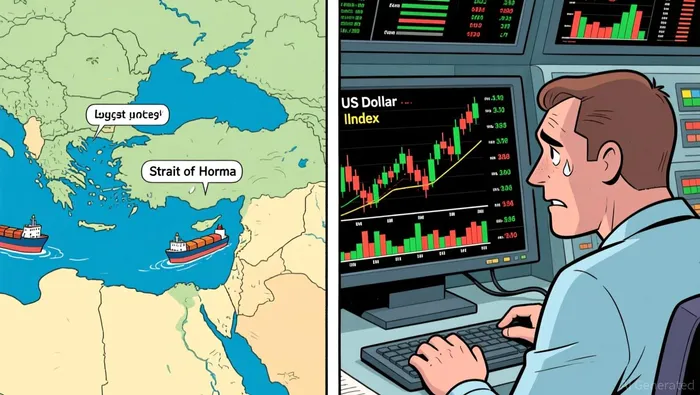
That is why the sequence matters. Better headlines only matter if they improve transit expectations. Better transits can then push oil lower. Lower oil can reduce the inflation shock. And only then does FX get a cleaner path to reposition through rates, terms of trade, and risk appetite.
Much of the May relief move is already visible
Brent is already down almost 19% for the month of May and about 20% from 2026 highs. That shows how much relief the market has already discounted. It does not mean the move is over. As long as Hormuz transits remain suppressed, oil can still swing sharply on the next confirmation, or reversal, of supply normalization. Because oil appears to move first, FX traders who wait for a direct currency signal may be reacting after the energy market has already done much of the work.
Why policy may be the next FX catalyst
This is where the setup becomes more investable. Multiple central banks are meeting this month, so energy-driven inflation can no longer stay isolated in commodities. The clearest signal is already in Tokyo: 65% of economists expected the BOJ to lift its rate to 1.0% in June, with that inflation pressure explicitly tied to the war-driven energy shock.
Watch three things now:
- whether the next headline moves oil first
- whether Hormuz transits actually improve, not just the talk of improvement
- whether central banks start pricing an oil-driven inflation path faster than FX does
If those signals line up, the FX market can stop looking flat and start following money flow through oil and rates.
Range-first stance still looks right for FX
Base case first: stay range-first until the next headline hits the oil tape. The dollar is still hovering around 99.2 points, which says compression, not direction. The cleanest beta is still USD/JPY. It is sitting near 159.66, right under the 160 per dollar line that raises intervention risk. That makes it more interesting than most majors right now: if deal odds jump, the yen can strengthen; if those odds crack, 160 becomes more than a theoretical level.
Two paths from here
The opportunity is that the market has already discounted much of the May relief move. Brent is still down almost 19% for the month of May, but that does not mean the repricing is finished. It means the next headline matters more.
What would weaken this view
If Hormuz transit actually improves without a real diplomatic step, the cleanest version of the deal trade loses some of its catalyst. If USD/JPY clears 160 on intervention warnings without follow-through in oil, that looks more like exhaustion than conviction.
What to watch now?
- A fresh move in the dollar index around 99.2
- Whether 159.66 turns into a clean break of 160 per dollar
- Whether ships are transiting enough to support the lower-oil trade