

The interesting question isn't whether Sam Altman lied. It's how you gather evidence that someone is lying, and what that process reveals about the company trying to do it.
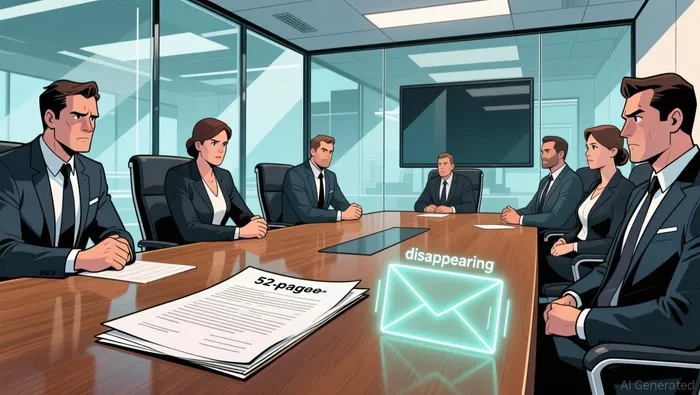
Ilya Sutskever testified this week that he spent about a year building a case against Altman for what he called a "consistent pattern of lying". He prepared a 52-page document for the board, sent it via disappearing email service to avoid leaks. The memo's opening line was direct: "Sam exhibits a consistent pattern of lying, undermining his execs, and pitting his execs against one another."
Most people would look at this and ask: was Altman really lying? But the more revealing question is: what counts as evidence in this context?
The testimony shows Sutskever's evidence was largely secondhand. He got most of his information from Mira Murati, OpenAI's former chief technology officer. When asked about claims in the memo-like that Altman was "pushed out from YC"-Sutskever testified "the basis of this is a conversation that I had with Mira". He never verified these allegations directly. Asked why not, he said: "It didn't occur to me."
In hindsight, he acknowledged the problem. Regarding another claim in the memo, he said: "In hindsight, I realize that I didn't know it. But back then, I thought I knew it. But I knew it through secondhand knowledge." When asked if relying on secondhand knowledge was a mistake, he replied: "I think secondhand knowledge can be very useful, but I think that secondhand knowledge is an invitation for further investigation."
So here's the contradiction: a board member spends a year meticulously compiling a 52-page document, uses disappearing email to protect it, but the contents are largely unverified claims from a single source. The process looks careful, but the substance is thin.
This is what happens when you try to apply traditional corporate governance to a startup racing toward AGI. The board was operating like a corporate ethics committee gathering evidence of misconduct. But OpenAI wasn't a normal company. It was a mission-driven organization trying to build artificial general intelligence while managing billions in investment and existential risk concerns.
The board explored merging with Anthropic after ousting Altman. Sutskever testified he was "not excited" about merging OpenAI with another company. This suggests the board was thinking about structural solutions to what they saw as a leadership problem. But structural solutions rarely work when the real issue is founder temperament.
Altman's leadership style is what I'd call "founder mode"-deeply involved in product details, moving fast, making decisions without perfect information. This often looks like chaos from the outside. To a board trying to govern responsibly, it can look like deception.
The real test isn't whether someone gathers evidence of lying. It's whether that evidence holds up under scrutiny. Sutskever's didn't. The board later reinstated Altman, and Sutskever himself voted to bring him back. This suggests the evidence wasn't as compelling as the 52-page memo made it seem.
What's revealing is not the allegation of lying, but the gap between the formality of the evidence-gathering and the informality of the evidence itself. A 52-page document suggests thoroughness. Disappearing email suggests secrecy and importance. But if the contents are unverified secondhand claims, the form becomes a kind of theater.
The lesson for other startups isn't about whether founders should be truthful. It's about governance structures. When you put a traditional board on top of a founder-driven company, you create tension. The board wants process and evidence. The founder wants speed and results. Each sees the other's behavior through their own lens: the board sees deception where the founder sees necessary improvisation.
Sutskever testified that Altman's conduct was "not conducive to any grand goal", including creating safe AGI. But the company's subsequent success suggests otherwise. Sometimes the messy, improvisational approach that looks like chaos from the boardroom is exactly what drives progress.
The test for whether a board should act isn't whether they can compile a document alleging misconduct. It's whether the evidence would convince a neutral observer who understands startup realities. By that standard, the OpenAI board's case looks weak-not because Altman was necessarily truthful, but because their evidence-gathering process was itself flawed.
If you're on a startup board worried about founder behavior, don't start by compiling a secret memo. Start by asking: what problem are we actually trying to solve? Is it deception, or is it a mismatch between founder temperament and board expectations? The answer determines whether you need better evidence or better governance.