

Do you know what I find more interesting than Fervo Energy's shares jumping 33% on its IPO debut? The fact that nobody is asking what the company actually earns.
The answer is roughly $138,000 in revenue for all of 2025. That is not a typo. The company now carries a $12.4 billion market cap - a number that feels comfortable on a screen but deserves scrutiny from anyone who believes dividends come from cash flow, not consensus.
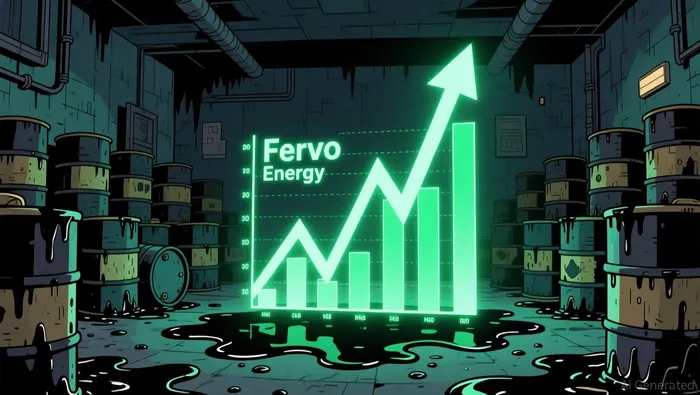
This is the geothermal moment. Or at least the market wants it to be.
The IPO that won't stop running
Fervo Energy went public on May 13, selling 70 million shares at $27 each in an upsized offering that raised $1.89 billion. The shares opened near $35 - a 33% premium to the issue price - and kept climbing. Within two weeks, the market cap had ballooned to $12.4 billion, with the stock up roughly 42% from IPO.
The narrative is clean and compelling. Fervo builds enhanced geothermal systems - essentially using advanced drilling techniques to access heat deep underground in places where traditional geothermal resources don't exist naturally. The pitch: 24/7 carbon-free baseload power, exactly what AI data centers need. Between 2022 and 2025, Fervo says it cut drilling times by about 75% and per-foot drilling costs by roughly 70%. The company was ranked #1 on TIME's 2026 list of America's Top GreenTech Companies.
It is an impressive origin story. It is not a dividend story.
Fervo pays no dividend. It generates no material profit. It has essentially no revenue. And yet the market has assigned it a valuation that would make mature energy producers envious.
The one that does - and how little it gives back
Ormat Technologies, the longest-established publicly traded geothermal company in the world, offers a more grounded reference point. Ormat actually generates electricity, sells power under contracts, and reports earnings - $2.06 per share on a recent trailing basis. Its 52-week stock range has stretched from $70 to $138, reflecting its own re-rating on the geothermal revival.
Ormat pays a dividend. The yield is approximately 0.36%.
That is not an income position. That is a rounding error dressed up as a payout. It confirms something the dividend strategist needs to hear: geothermal as an asset class, even in its most mature form, does not compete on income. Not today. Not at these valuations.
Where the real economy actually is
While the geothermal trade runs on narrative, something else is happening in the energy complex that has nothing to do with PowerPoint decks and everything to do with barrels, geopolitics, and cash.
Brent crude is trading around $102-$106 per barrel. WTI is in the $96-$105 range. These prices exist because of a Middle East conflict that has disrupted supply, tightened global inventories, and sparked what the IEA has called an unprecedented disruption to global fuel markets. The situation is volatile - a reported U.S.-Iran deal in principle sent Brent down 5% in a single session last week - but the structural tightness in oil supply remains.
For the dividend investor, this matters for three reasons.
First: pricing power. Oil companies do not need to negotiate with customers to raise prices. The market sets the price, and when supply is constrained and demand holds - which it does, because the global economy literally cannot function without liquid fuels - the price rises. That is the pricing power filter in its purest form. Fervo needs to convince data center operators to build around its projects and wait years for completion. Exxon needs to open a valve.
Second: actual cash flow. Major integrated oil companies are generating tens of billions in free cash flow at these prices. That cash flow funds dividends, buybacks, and reinvestment simultaneously. The payout is real, it is covered, and it is growing. I don't think investors need to be told which of these two businesses - $138K in revenue or $20B+ in annual free cash flow - is better positioned to compound a dividend over the next decade.
Third: inflation protection. This is where the macro regime matters. I believe inflation is likely to remain more persistent than the market's baseline assumes - structurally closer to 3-4% than a return to the old 2% world, driven by deglobalization, demographics, the energy transition, and fiscal dominance. Oil at $100 is not an accident. It is the price signal telling you that supply is not elastic enough to meet demand without pain. Companies that sit on the supply side of that equation - with proven reserves, operating discipline, and balance sheets that can service debt at these capital costs - are the ones that protect purchasing power.
Geothermal may eventually contribute to that picture. I don't dismiss the long-term structural case for firm, carbon-free power. But Fervo's shareholders are not being paid to wait. They are being asked to hope.
The geothermal reality check
The AI data center power shortage is real. Utilities cannot meet the load from intermittent renewables alone, and new nuclear takes a decade. Geothermal, if it scales, fills a genuine gap. CTR - a California lithium and geothermal company also pursuing a 2026 public listing - adds another name to the pipeline. The number of publicly traded geothermal developers could triple this year.
But here is the distinction that matters for portfolio construction: a structural opportunity in five to ten years is not a dividend growth position today. It is a venture-style growth bet wearing an energy label.
Fervo's Cape Station project in Utah is described as one of the world's largest enhanced geothermal developments. That is the kind of infrastructure that takes years to build, commission, and scale. The revenue curve from near-zero to meaningful will be long. The capital requirements will be enormous. And the technology risk - enhanced geothermal is still, by any honest definition, a scaling challenge - is not priced into that $12.4 billion market cap.
I don't think investors are being paid to take that risk. From an income and risk/reward point of view, the geothermal trade is a growth sleeve, not an income sleeve. Treat it that way.
So what do you actually do?
The geothermal IPO rally is a reminder of a habit I distrust: confusing narrative momentum with investment quality. A 42% post-IPO pop is not evidence of intrinsic value. It is evidence of enthusiasm. Enthusiasm funds exits for early investors. It does not fund your retirement.
This is not to say geothermal deserves zero conviction. The long-term case for firm carbon-free power is structural and worth watching. But it belongs in the growth sleeve, at a size you can afford to lose, with a time horizon measured in years, not quarters. If you are building a portfolio for growing income - for inflation protection, for retirement cash flow, for compounding that you can actually touch - the real economy answers are in the companies that already generate the cash, already have pricing power, and already pay you to wait.
Oil at $100, with supply disruptions and structural demand growth, is creating those conditions right now. The dividend is not a promise. It is a receipt.
That is the difference between a story and a strategy.