

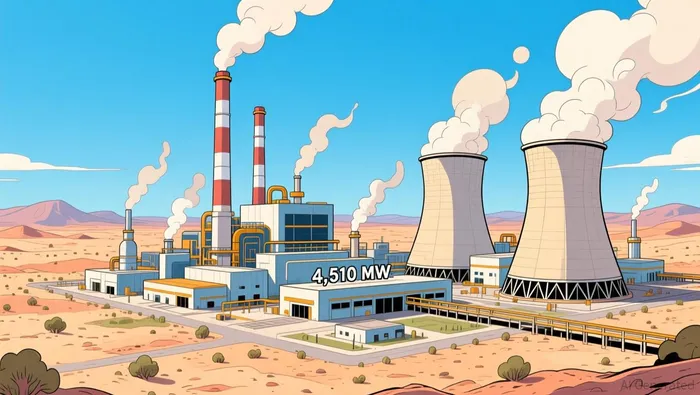
The deal creates a formidable new platform. The combination of Grupo México's power assets with GIP's acquisition of Saavi Energía will form a diversified power generation entity with a combined output of 4,510 MW. More importantly, it brings together a project pipeline of approximately 5,000 MW. This scale is the foundation of the growth thesis, creating a larger, more diversified platform with enhanced operational synergies and a significant project pipeline to capture a greater share of Mexico's evolving power market.
Ownership is split 70% to Grupo México and 30% to GIP. The transaction is expected to close in the second half of 2026, pending regulatory approvals. This structure leverages Grupo México's deep local roots and operational expertise with GIP's global infrastructure focus and capital, aiming to accelerate the development of the substantial pipeline.
Geographic diversity is a key strength. Saavi's portfolio is already geographically diverse across high-demand areas in Mexico, serving both the domestic market and providing reserve capacity for specified markets in California. This dual focus strengthens the combined entity's position in Mexico's regulated market while also providing a direct route for cross-border exports. The platform's reach into California's energy market, a high-value and growing region, adds a crucial export dimension that enhances revenue stability and growth potential.
Market Context and Regulatory Tailwinds
The external environment for power investment in Mexico has fundamentally shifted, creating a more predictable and potentially faster path for long-term projects. The cornerstone of this change is the new Electric Sector Law and its implementing regulations, which took effect in October 2025. This framework introduces a concept of "binding planning", where the government will publish an annual development plan to guide the country's electricity expansion. This move aims to provide the clarity long absent from the sector, which is critical for attracting the patient capital needed for large-scale infrastructure.
The practical implication for developers is a potential fast-track for projects that align with national priorities. The regulations explicitly state that projects designated as "strategic" by the Ministry of Energy (SENER) will benefit from streamlined procedures and priority access to permits. The first development plan was issued last month, and the government has already opened a public invitation for generation permits, with a tight timeline for submissions. This creates a near-term window for projects to get on the official map and gain preferential treatment.
For the combined GIP-Grupo México platform, this regulatory tailwind is a direct catalyst for its growth trajectory. The entity's 5,000 MW project pipeline positions it to actively participate in these government-led planning cycles. By aligning its development projects with the national plan's geographic zones and technology preferences, the platform can seek strategic designation. This could accelerate its permitting and construction timelines, turning a multi-year development process into a more compressed ramp-up.
The bottom line is that the new framework reduces a major uncertainty for investors: the risk of projects being blocked or delayed by shifting policy. By tying project approval to a transparent, annual plan, it offers a clearer path to market. For a growth-focused investor, this predictability is as valuable as the pipeline itself, as it de-risks the capital expenditure required to scale the platform and capture Mexico's expanding energy needs.
Financial Impact and Growth Metrics
The deal's financial mechanics are designed to create a clean slate for growth. A key step was the repayment of GIP's prior $325 million secured term loan to Saavi as part of the acquisition. This clears a layer of debt from the platform, resulting in a simpler capital structure for the new entity. For a growth investor, this is a positive signal-it reduces financial complexity and interest burden, freeing up capital and focus for the primary mission: developing the massive project pipeline.
That pipeline is the core growth engine. The combined platform starts with a 4,510 MW base of operations, but its true expansion potential lies in the approximately 5,000 MW project pipeline. This represents a significant leap in scale, effectively doubling the entity's future generation capacity. The financial impact will be measured by the speed and efficiency with which this pipeline is converted from plans into operational assets. Each project that moves from development to commercial operation adds new revenue streams and earnings power, directly fueling the growth trajectory.
Operational synergies are expected to enhance the platform's financial strength. By merging Grupo México's operational expertise with GIP's global infrastructure focus, the entity aims to improve efficiency across the combined fleet. This could translate into lower operating costs, higher plant availability, and better execution on new projects. The synergy potential is not just about cost savings; it's about creating a more agile and effective organization capable of scaling rapidly. With the regulatory tailwind from Mexico's new planning framework, the platform is positioned to move projects through the development pipeline faster, turning a multi-year process into a more compressed growth ramp.
The bottom line for a growth investor is the path to monetizing that pipeline. The clean capital structure and operational synergies provide the foundation, but success hinges on execution. The entity must leverage its scale and the government's strategic designation process to secure permits and financing for its projects. If it can do so efficiently, the financial metrics will show accelerating revenue and earnings growth, validating the thesis of a scalable, market-dominant power platform.
Catalysts, Risks, and What to Watch
The growth thesis for the combined GIP-Grupo México platform now hinges on a clear sequence of near-term milestones. The primary catalyst is the closing of the transaction itself, which is expected to close in the second half of 2026. Until that deal finalizes, the entity remains a plan on paper. The real work begins post-close, with the integration of assets and the formal initiation of development for projects within the approximately 5,000 MW project pipeline. Investors should watch for the first official announcements of specific projects being fast-tracked, which will signal the platform's ability to move from planning to execution.
The key risk to this timeline is the pace and execution of Mexico's new regulatory framework. The promise of a "binding planning" process is a double-edged sword. While it offers a clear path for strategic designation, the process itself is new and untested. The first development plan was issued last month, and the government has already opened a public invitation for generation permits with a tight timeline for submissions. Delays in issuing subsequent plans, ambiguity in the criteria for "strategic" designation, or bottlenecks in the streamlined permitting procedures could slow the entire pipeline development cycle. For a growth investor, the predictability of the regulatory tailwind is only as good as its consistent implementation.
Therefore, what to watch is a three-pronged process. First, monitor the status of regulatory approvals for the transaction; any significant delays here would push back the entire growth ramp. Second, track the pace of project announcements and the number of projects from the pipeline that begin formal development. Early wins here would validate the platform's operational synergy and regulatory navigation. Third, and most critical, is the combined entity's ability to secure financing for new developments. The cleared debt from the GIP-Saavi deal is a start, but funding the next wave of projects will require demonstrating the bankability of the pipeline under the new rules. Success in this area will determine whether the platform can truly scale and capture its full market potential.