

Peace talks lifted gold by easing rate expectations
Gold's rebound looks more like a policy trade than a pure safe-haven move. The key reversal was not just the peace headline; it was what that headline did to expectations around Fed policy. After the peace signal, traders cut the odds of a December rate hike to 52.5%–58% from nearly 70% a week earlier. That shift likely mattered as much as, if not more than, the geopolitical headline itself, because gold is still being driven heavily by interest-rate expectations.
Why the move reversed so quickly
Earlier this week, gold fell to a more than six-month low as renewed conflict pushed oil higher and revived inflation anxiety. Within days, prices snapped back, with spot gold climbing to about US$4,357 and gaining more than 3% in the session. That sharp recovery suggests markets are willing to let peace-talks-driven policy relief outweigh war-driven support-at least for now.
The next obvious checkpoint is the Fed's June 16–17 policy meeting. If fading rate-hike expectations hold, the rebound has room to continue. If not, investors may decide that peace sentiment alone is not enough to sustain higher gold prices.
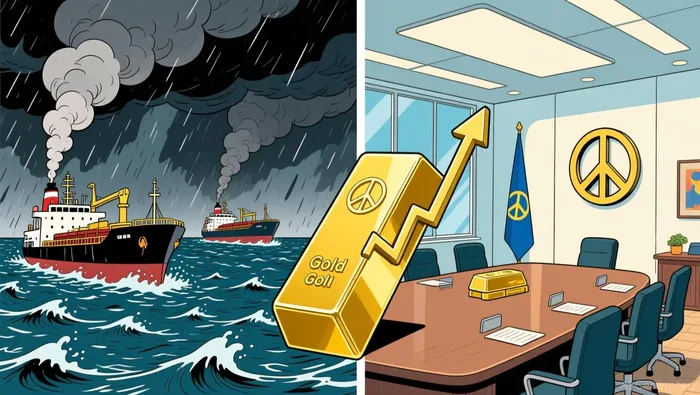
Oil and inflation are the real link between the war and gold
That policy flip only makes sense if you follow the transmission channel. Shipping through the Strait of Hormuz remains effectively blocked, and that disruption has driven oil prices higher. Higher energy costs then feed into inflation concerns, which can make central banks more cautious about cutting and, in some scenarios, more inclined to keep rates steady or raise them. That is the main pressure point for gold, a non-yielding metal.
When war fear and rate fear collide, policy has dominated
The market already showed which force can overwhelm the other. In the earlier flare-up, spot gold was last down 4.5% to $4,070.56 even as hostilities revived safe-haven demand. The reason matters more than the headline: rising inflation risk and higher-rate fears can overpower the geopolitical bid.
That pattern helps explain why the recent rebound is still conditional. If peace talks keep lowering oil pressure and rate-hike odds, gold can hold its gains. If those pressures build again, the metal remains vulnerable despite ongoing conflict.
The rally still depends on oil easing and softer rate expectations
The bear case is not trivial. The World Bank has warned that if energy supply disruptions prove more severe than assumed and are accompanied by substantial financial stress, global growth could fall to just 1.3% in 2026. If talks stall and the disruption persists, investors could end up trading a stagflation scare rather than a cleaner policy-relief trade.
In that setup, gold could still get volatility support, but not the more durable rerating that depends on lower rate pressure. For now, the best way to frame gold's move is simple: peace talks helped because they eased the policy trade, not because they removed risk altogether.