

Why gold and Bitcoin are falling together
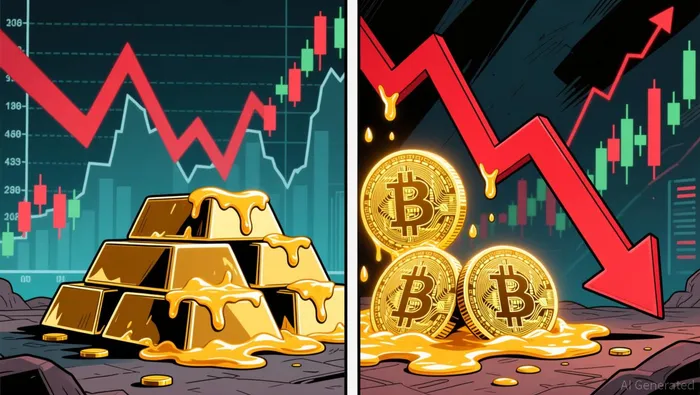
Gold below $4,200 and Bitcoin around $61K point to the same immediate driver: rising rate-hike expectations are pressuring both assets. Gold is also down 11.81% over the past month, while crypto sentiment has fallen to 15 compared to last week at 41. These are very different markets, but both are sensitive to a tighter funding environment.
The mechanism is rates. A strong jobs report and hotter-than-expected inflation data helped push Treasury yields higher. Earlier in the year, markets were expecting multiple cuts; now traders are pricing a meaningful chance of a Fed increase by December. As cash and short-duration yield become more attractive, both gold and Bitcoin come under pressure.
This week matters because the data can change that trade quickly. If inflation stays hot, the yield bid is more likely to hold. If it cools, the hawkish repricing could ease.
Why gold is sliding even with geopolitical stress
Gold is being pulled lower because the rate trade is overpowering safe-haven demand. When the market starts pricing a Federal Reserve rate hike before year-end, money tends to move toward yield-bearing assets and away from non-yielding bullion, even if the geopolitical backdrop worsens.
Higher yields are the dominant variable
Renewed Middle East conflict pushed oil higher, which fed inflation concerns and, in turn, hawkish Fed pricing. That creates an awkward setup for gold: the same shock that supports safe-haven demand can also reinforce tightening fears. Analysts directly linked higher Treasury yields to pressure on gold, which is why the metal is weakening even as conflict and oil prices rise.
Gold bulls still have the longer bullish record: the metal posted a 41% increase over the last year and had previously traded near an all time high of 5608.35. But after such a strong run, gains can become vulnerable when yields move the wrong way. For now, the market is treating gold more like an interest-rate asset than a pure crisis hedge.
The practical takeaway is simple: until Treasury yields cool, dips are more likely to be sold than aggressively chased.
Why Bitcoin is moving with the same macro pressure
Bitcoin's drop is not just a crypto-specific story. Spot BTC fell into $61K over the weekend before rebounding to $63K by Monday Asia time. That bounce matters, but it does not by itself signal a trend reset.
The broader pattern is clearer: when Treasury yields rise, crypto often moves with the same risk-off pressure seen in other macro-sensitive assets. As one recent market review put it, rising Treasury yields are pressuring non-yielding assets such as bitcoin.
Bitcoin still has to reclaim lost structure
The more useful near-term reference is technical. Earlier this year, Bitcoin struggled around the $80K area, with overhead resistance tied to the 200-day exponential moving average. It was still trading below that level as yields climbed.
Bulls can argue the broader recovery remains intact after Bitcoin rebounded from roughly $74,604 a month earlier. Bears, though, have the cleaner near-term case: unless BTC retakes that lost resistance zone, rallies are more likely to look like relief moves than a full trend reversal.
What would change the setup
This is no longer just a story about narratives. The key question is whether the rate trade tightens further or starts to crack.
Signals to watch
- A fresh rise in Fed hike odds by December would keep pressure on both gold and Bitcoin. Gold already tagged $4,176.33, its lowest since late March.
- A more constructive signal for Bitcoin would be a reclaim of lost structure, not just a bounce inside the $61K-$63K zone.
- For gold, the bigger tell is whether markets stop treating inflation shocks as fuel for Fed tightening. As recent coverage noted, higher Treasury yields were further pressuring gold.
- For Bitcoin, watch whether it can hold recent support and then push through the earlier rejection zone near the 200-day exponential moving average.
What would invalidate the bearish macro read
If incoming data softens rate expectations quickly enough to break the yield bid, the bearish macro read weakens. In that scenario, gold and Bitcoin would no longer be responding to the same hawkish pressure.
Bears do have a near-term edge here: markets were already assigning a meaningful chance of a December increase. If that trade strengthens, shallow dips can turn into faster losses.