

The recent easing of Middle East tensions has delivered a jarring market signal. As President Trump announced a pause in operations near the Strait of Hormuz, oil prices fell sharply, with Brent crude dropping 2% to $107 a barrel. Yet, in a clear break from the norm, gold prices slipped, losing about 0.5% to $4,720.28 per ounce and breaking below the $4,700 level. This divergence sets up a core analytical question: is gold's value driven by short-term shocks or longer-term macro cycles?
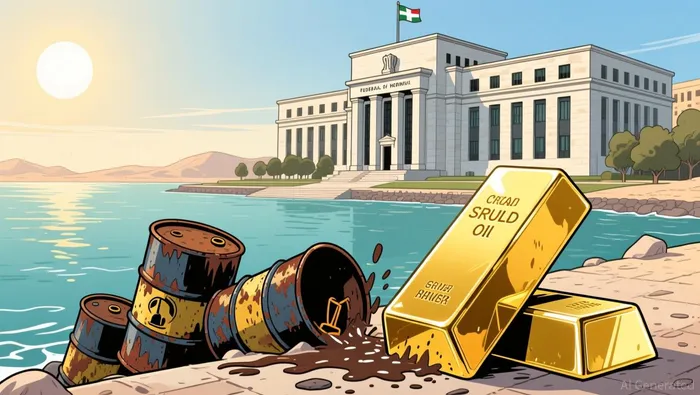
The traditional inflation-hedge narrative for gold is being tested. Historically, geopolitical strife like the recent "Epic Fury" conflict has pressured gold as rising oil prices stoked fears of inflation and tighter monetary policy. This created a temporary negative correlation with oil, where one climbed while the other fell. But that relationship has now weakened significantly, with high-frequency data showing the 20-day rolling correlation shifted from positive to negative and then weakened to 0.2. The market's muted reaction to earlier U.S. blockade threats suggests investors are increasingly viewing these moves as temporary negotiation tactics, not a long-term catalyst for sustained inflation.
This shift forces a re-evaluation. The immediate price action shows gold is not simply a passive beneficiary of oil-driven inflation fears. Instead, its recent weakness amid a geopolitical calm highlights how other forces-like a firmer dollar and shifting expectations for interest rates-are now competing for dominance. The setup is one of conflicting signals. While the geopolitical noise has quieted, the underlying macro drivers of gold, particularly real interest rates and the dollar, remain firmly in play. The disconnect between oil and gold in this new phase of negotiations underscores that the metal's long-term trajectory will be defined more by these persistent cycles than by the temporary volatility of a single conflict.
The Inflation and Monetary Policy Backdrop
The recent geopolitical calm has shifted the focus back to the fundamental drivers that have powered gold's rally. The metal's 39.8% surge over the past year is a story of persistent inflation and a 14-month bull market, not a reaction to any single oil spike. That long-term momentum is now facing a new headwind: expectations for a more hawkish Federal Reserve.
The primary pressure on gold is no longer from inflation fears, but from the prospect of fewer rate cuts. When oil prices spiked earlier this month, the market's reaction was telling. Gold prices fell more than 4%, bucking the traditional safe-haven narrative. Analysts pointed directly to the policy signal: rising oil prices stoke fears of inflation, which in turn fuels expectations that the Fed will keep rates higher for longer. This dynamic is the inverse of what typically supports gold, which thrives on falling real interest rates.
Real interest rates, the key determinant of gold's opportunity cost, remain elevated. The metal's value is essentially the price of holding a non-yielding asset versus bonds or cash that pay interest. When real yields are high, gold becomes less attractive. The hawkish pivot in policy signals, including the appointment of a more hawkish Fed chair, has pushed these rates higher and capped gold's upside. This explains why gold has struggled to reclaim its recent highs, even as geopolitical tensions simmered.
Viewed through the macro lens, the current price action is a classic test of cycles versus noise. The 4% drop on a spike in oil prices is not a sign of weakness in the gold story, but a confirmation of its sensitivity to monetary policy. The metal's long-term trajectory is defined by the interplay between inflation and real rates. For now, the hawkish policy backdrop is the dominant force, creating a ceiling on gold's rally. The setup suggests that until there is a clear shift in the Fed's stance, gold's path will be constrained by these elevated real yields, regardless of short-term geopolitical developments.
Scenarios and Catalysts for the Gold Cycle
The path for gold now hinges on a tension between immediate geopolitical risks and the enduring macro forces that define its long-term cycle. The recent volatility offers a clear playbook: a collapse of the fragile Iran ceasefire would reignite the supply shock and inflation fears that have historically supported the metal. When fighting flared last week, Brent crude futures rose 1.2% to settle near $101 per barrel, a move that would likely trigger the same dynamic seen earlier this year. As oil spikes, the market's first reaction is often a flight to safety, but in this cycle, that bid has been captured by the energy market itself. The evidence shows gold prices have tumbled more than 4% on similar oil-driven escalations, as the fear of inflation fuels expectations for a hawkish Fed and higher real yields.
Yet, this scenario is a catalyst for short-term volatility, not a sustainable trend. The longer-term trajectory depends on whether inflation proves durable enough to force a policy pivot. If the conflict drags on, it could prolong the supply shock and keep energy prices elevated, reinforcing inflationary pressures. That, in turn, would create the conditions for the Fed to eventually cut rates to cool the economy-a move that would support gold. The key is the sequence: conflict must first prove persistent enough to cement inflation, then the Fed must respond by lowering rates. This is the structural support that underpins the metal's bull market, even as it struggles with near-term headwinds.
For now, the dominant forces remain the U.S. dollar and real yields. These macro variables consistently override the noise of any single geopolitical event. The dollar has risen throughout the conflict, adding direct pressure on dollar-priced gold. Real yields, which are the primary cost of holding the metal, are the ultimate ceiling. Until there is a clear shift in the Fed's stance toward more accommodative policy, these forces will cap gold's upside. The setup is one of conflicting signals: a renewed conflict could provide a volatile catalyst, but the metal's sustainable rally will be defined by the interplay between inflation, currency dynamics, and the central bank's response. Investors should watch for shifts in the dollar and real yields, as they remain the true drivers of the gold cycle.