

Do you know what scares me more than the daily price action of gold? The story the market tells itself about what that price action means.
Headlines are saying gold jumped 2% because a U.S.-Iran peace deal eased inflation fears. That causal chain is wrong on both legs. And it matters, because if you take the headlines at face value, you'll start thinking the inflation problem is going away - and start making allocation decisions that could quietly erode your purchasing power for years.
The move itself was a relief rally, not an inflation repricing
On Thursday, June 11, gold spiked after President Trump canceled planned military strikes on Iran. Oil crashed more than 4% in the same session. The connection is mechanical: when the oil price shock recedes, the immediate inflation scare fades, and gold bounces off the bid. But the market reversed almost immediately. The next day, gold settled 0.4% lower at $4,090 an ounce. Over the full move, gold was down more than 2.5% on deal hopes.
That's not the behavior of an asset being repriced because the underlying thesis changed. That's a short squeeze unwinding. Gold had fallen 3% the day before the spike, as escalation fears drove rate-hike concerns. The 2% pop was a whipsaw. The reversal confirmed it.
Gold fell 25% during a war. Pretend that's normal and you're deluded.
Here's the data point that should make everyone uncomfortable: gold has dropped roughly 25% from its record highs, and this happened while a major war was unfolding in the Middle East. By every historical playbook, gold should have rallied. Safe-haven demand should have surged. Instead, it collapsed.
The reason is the same one that keeps making headlines about gold look backward: when the inflation and interest rate trade overwhelms the safe-haven trade, gold gets sold. Central banks were hiking rates to combat oil-driven inflation. Liquidity tightened. And an asset that produces no cash flow got crushed by real yields. The safe-haven label is useful until the moment when you actually need it - and the Fed is printing rate hikes instead of buying bonds.
I believe this tells us something important about the current regime. The world is no longer pricing risk the way it did when the Fed put was reliable and rates could fall forever. In the current environment, cash-flow-producing assets with pricing power beat metal sitting in a vault.
The inflation data hasn't changed, even if the headlines suggest it has
The 5-year breakeven inflation rate - the market's measure of expected inflation over the next five years - sits at 2.40%. The 10-year breakeven is at 2.31%. Both are structurally above the Fed's 2% target. These numbers haven't collapsed. They haven't even moved meaningfully on the Iran story.
Breakeven rates are the difference between nominal Treasury yields and inflation-protected Treasury yields. They represent what investors are willing to pay for inflation protection. At 2.4%, the market is pricing inflation that averages above target for the next five years. That's not a "return to normal" world. That's a world where the old regime is gone and hasn't been replaced.
I believe the structural forces pushing inflation above 2% - deglobalization, energy transition costs, supply-chain constraints, fiscal dominance, and demographic labor shortages - are not geopolitical. A pause in U.S.-Iran tensions doesn't reverse any of them. The 2.4% breakeven tells me the bond market agrees. What changed on Thursday was oil supply fear, not the inflation structure.
So what actually matters for your portfolio?
The question isn't whether gold will bounce tomorrow. The question is how to position for a world where inflation averages above the traditional target, where geopolitical shocks create episodic spikes, and where the old safe havens aren't behaving the way the textbooks promised.
This is where the real answer lives: dividend growth stocks with pricing power in the real economy.
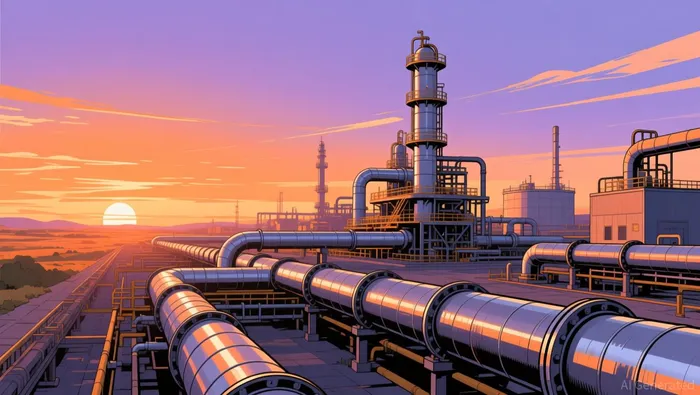
Energy companies that control midstream infrastructure - pipelines, terminals, storage - earn volume-based fees that reset with inflation. When oil spikes, their throughputs don't necessarily change, but their contract rates adjust. The dividend keeps growing because the underlying economics are tied to physical throughput, not commodity speculation.
Industrials and defense contractors with oligopolistic market positions can raise prices without losing customers because there are fewer suppliers and the end-users - governments, utilities, large enterprises - can absorb the cost. These are TOLL stocks, not FANG: companies that operate like toll roads on essential economic activity.
The math is the same whether inflation runs at 2.4% or 4%. If a company can raise prices by 3% every year while growing earnings by 10%, and it increases its dividend by 12%, you compound your way through inflation regardless of which geopolitical headline is leading the news cycle. A 2% yield growing at 12% becomes a 60% yield on cost over 30 years. That's the equity yield curve in action - buying quality businesses with durable payouts when they're out of favor.
The risk nobody is discussing
I don't think the market is prepared for what happens when the next geopolitical shock arrives and gold doesn't save you because rates are rising again. The Iran situation is not resolved - the pending deal ends active hostilities but leaves nuclear negotiations open. The Strait of Hormuz, which carries roughly a fifth of the world's oil, remains a pressure point. Oil can spike again. It almost certainly will at some point this decade.
When that happens, the Fed may have to respond. And in a world where central banks prioritize employment and growth over inflation targeting - where "running it hot" becomes the de facto policy - you need assets that generate cash, raise prices, and grow dividends through the cycle.
Gold is a barbell position. A small allocation as insurance is fine. But building your income strategy around it - or using its one-day price moves to conclude that inflation fears are gone - is a mistake that compounds in the wrong direction.
The compounding case for dividend growth with pricing power doesn't require you to be right about the next geopolitical event. It only requires you to be right about the regime: inflation is more persistent than the consensus wants to admit, and the companies that survive and thrive in that world are the ones that can't be disrupted because the economy literally cannot function without them.
That's the signal. The rest is noise.