

Investors often look for the perfect entry point to buy precious metals, but how can you tell if silver is undervalued compared to gold? The answer lies in a simple yet powerful metric known as the Gold-to-Silver Ratio. This concept helps traders gauge the relative value of these two metals, offering clues about when to swap one for the other or enter the market at a discount.
At its core, the Gold-to-Silver Ratio is a simple mathematical calculation that tells you how many ounces of silver it takes to buy one ounce of gold. For example, if gold trades at $2,000 per ounce and silver at $25 per ounce, the ratio is 80. This means you need 80 ounces of silver to purchase one ounce of gold. While the ratio fluctuates daily, it has a long-term historical average that serves as a benchmark. Understanding this number allows investors to see whether silver is historically cheap or expensive relative to gold.
Why does this matter for your portfolio? The ratio is more than just a number; it reflects market sentiment and industrial demand.
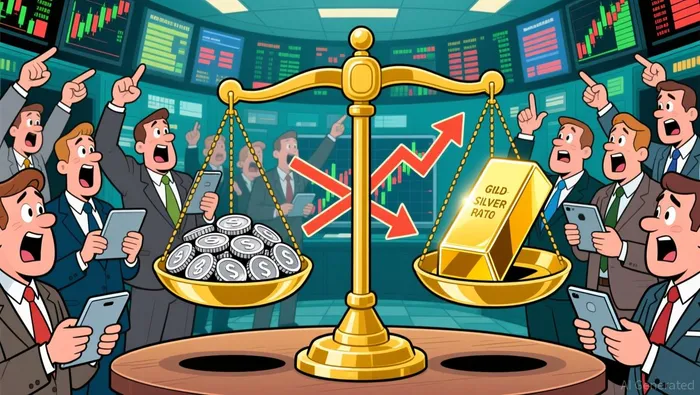
Silver is unique because it is both a monetary metal, like gold, and a critical industrial commodity used in electronics, solar panels, and medical devices. When the economy is strong, industrial demand often pushes silver prices up faster than gold, causing the ratio to fall. Conversely, during times of economic uncertainty or recession, investors flock to the safety of gold, causing the ratio to rise as silver prices lag behind.
Smart investors use this ratio to formulate specific strategies. A common approach is the "mean reversion" strategy. Historically, the ratio tends to oscillate around an average. When the ratio spikes significantly above its historical norm, it suggests silver is undervalued relative to gold. In this scenario, a savvy investor might sell some gold holdings to buy silver, anticipating that silver will eventually catch up in price. Conversely, if the ratio drops to historically low levels, it may signal that silver is overvalued, prompting an investor to swap silver for gold to lock in profits.
Consider the market behavior during the 2008 financial crisis. As the crisis deepened, panic selling hit industrial commodities hard, while gold remained a safe haven. The Gold-to-Silver Ratio skyrocketed, reaching over 80 in late 2008, a level far above its long-term average of around 50 to 60. Investors who recognized this extreme divergence and bought silver while the ratio was high saw substantial gains in the years that followed as the ratio normalized. This case study illustrates how the ratio can highlight moments of significant opportunity when market emotions drive prices to extremes.
However, relying solely on this ratio carries risks. The ratio can remain at extreme levels for extended periods. Buying silver because the ratio is high does not guarantee an immediate price jump; it could take years for the relationship to normalize. Additionally, shifts in industrial demand can permanently alter the historical average, making past data less predictive of future results.
To mitigate these risks, investors should never bet their entire portfolio on a single ratio reading. Always combine the Gold-to-Silver Ratio with fundamental research on economic indicators and industrial trends. Diversification remains key. Use this metric as a compass to guide your asset allocation rather than a crystal ball for timing the exact market bottom or top.
In conclusion, the Gold-to-Silver Ratio is a valuable tool for identifying potential valuation opportunities in the precious metals market. By understanding the balance between these two metals, investors can make more informed decisions, timing their entries and exits to maximize returns while managing risk effectively.