

The headline story says gold and silver are tumbling amid US-Iran escalation. The actual story has nothing to do with Tehran.
Gold dropped 3.27% on June 5 to $4,339 an ounce. Silver fell 7.17% to $68.57. Both moves were triggered by a US jobs report that came in far stronger than expected - which killed the remaining expectation the Federal Reserve would cut rates this year and sent rate-hike pricing back into focus. A rising dollar is the enemy of precious metals. The Iran conflict is theater. What moved prices was macro plumbing, not geopolitics.
The question isn't whether gold is a safe-haven asset. It's whether the trade that built gold's 2026 rally was ever grounded in something durable or just borrowed conviction from a rate-cut narrative that didn't survive contact with data.
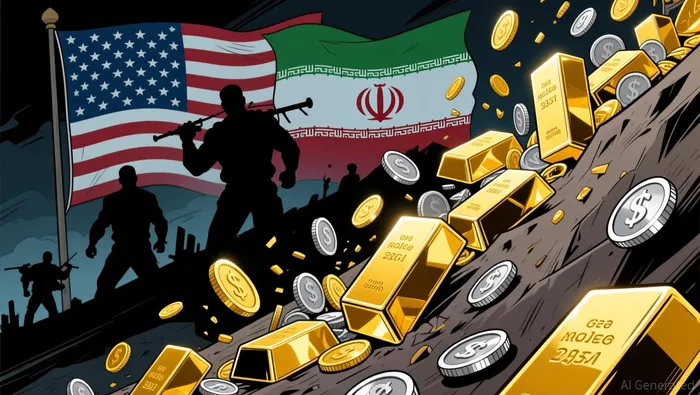
Gold climbed roughly 41% from May 2025 to May 2026, moving from $3,335 to $4,732 per ounce. The war with Iran - which began with 900 strikes on February 28 and has festered in a fraying ceasefire since April 8 - provided the emotional cover story. But the mechanical driver was rate expectations. Gold does not rally because leaders are angry. It rallies when real yields fall and the dollar weakens. That's the actual mechanism. The geopolitical premium is the garnish.
Then the May jobs report arrived. Markets now expect a Fed rate hike this year instead of a cut. Spot gold hit a two-month low. As of June 10, gold was at roughly $4,200 - down 11.3% over the past month. It's still up 25.2% year-to-date. The rally didn't reverse; it corrected to the level where the rate-trade foundation started cracking.
Silver is the same story, louder. The metal began 2026 around $71 an ounce, then surged past $110 and hit an all-time high near $121.67 in January - a 68% climb in four weeks, fueled in part by Citi's bullish call that it could reach $150 within three months, citing China demand. It then collapsed 30% in January alone. A second crash in February dropped it another 10%, one of its three-worst single-day declines since 2020. Now it's at $68–69 per ounce. Back where it started. Every ounce of that rally was speculative positioning, and every ounce unwound when the macro backdrop shifted.
Here's the part that matters most: Citi was not the one calling for further downside this week. The bank was actually bullish as recently as January 2026 - it raised its near-term targets for both gold and silver. The bearish Citi note most articles cite goes back to June 2025, when the bank predicted gold could fall to $2,500–$2,700 by the second half of 2026 on weak demand. That call was spectacularly wrong. Gold more than doubled from that point. By November 2025 Citi had flipped its view and set a $3,650 target. The competitor framing of "why Citi sees further downside" is cherry-picking a nine-month-old bearish note that already proved wrong and ignoring the more recent bullish revisions. A static target from last year is a worse signal than today's price action.
So what do we have? JPMorgan still forecasts gold averaging $6,000 by the final quarter of 2026. Thomas Winmill at Midas Funds predicted a 0–5% decline in June. Both are plausible. The point is that nobody is sure what happens next - because the factor stack has shifted and no one has re-priced the trade around the new baseline.
The gold-to-silver ratio sat at 60.45 on June 5. That tells you something. Silver's volatility is still the leading indicator of how much speculative positioning lives in this complex. When the ratio is compressed like that, it means silver hasn't fallen as far as gold relative to where both started. When the speculative froth clears, that ratio tends to widen back out. Silver still has more unwinding to do if the macro trade continues against it.
What would change the thesis? Two things. A weaker jobs print in July that brings rate-cut expectations back. Or a genuine escalation in the Iran conflict - not the current ceasefire-flickering, but actual renewed hostilities - that forces a fresh wave of physical buying and central bank accumulation. Without one of those, precious metals are drifting on weaker gravity.
The portfolio implication is straightforward. If you hold gold or silver as a hedge, the hedge is still there. The 25% YTD gain in gold hasn't disappeared. But the rally's center of gravity has shifted from rate expectations to something less predictable - geopolitical anxiety that may or may not spike again. That's a different trade. It doesn't have the same structural support. If your position is sized for a rate-cut trade, it's now sized for something you can't predict. That's worth knowing before the next headline arrives.