

Goldman's forecast reset puts the timing risk front and center
Goldman first cut oil forecasts, then reversed sharply higher, lifting its 2026 Brent view from $77 to $85 and WTI from $72 to $79. Its fourth-quarter call is now $90 for Brent and $83 for WTI.
The bigger shift is timing. Goldman now expects Hormuz exports to normalise by the end of June, later than its prior mid-May call, while HSBC still assumes only a mid-June restart. That moves the key question from "Will it ease soon?" to "How long does the market carry the deficit?"
Equity markets have been rallying on peace talk hopes, but the crude market is still reflecting a tighter physical setup. If those June restart timelines slip again, the next repricing risk may prove larger than the first spike.
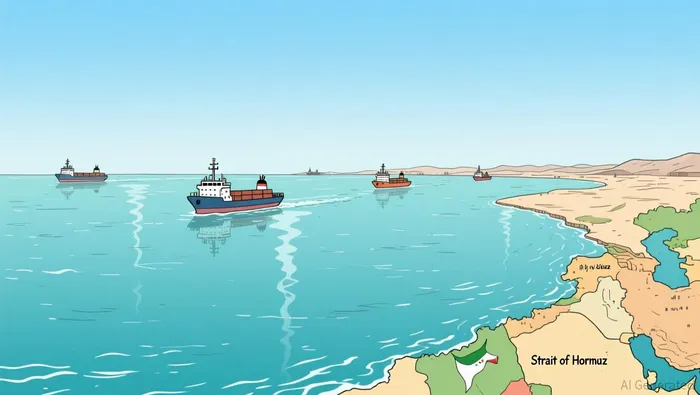
Why Hormuz disruption can shift from headline fear to a tighter market
The first move was driven largely by shock and uncertainty. With shipping traffic through Hormuz remains muted, that initial premium reflected fear as much as fundamentals.
The next phase matters more. If low flows persist, the market has to price more than the latest headline. As one recent market summary put it, the inflection point is shut-ins. When lost production endures, a temporary disruption can start to look more structural, forcing inventories to absorb more of the strain.
That is where the balance-of-market argument gets tighter. HSBC warned that a longer effective Hormuz closure would mean larger inventory drawdowns, a tougher post-disruption refill, and a higher residual risk premium. Goldman's demand estimate adds another side of the same equation: 4 million to 5 million barrels per day of global oil demand destruction in April. In other words, demand destruction can help rebalance the market, but only if supply recovers on schedule.
The debate is no longer whether the squeeze is real
The core issue now is timing. If exports and production recover as expected, some of the risk premium may fade. If not, the market may have to keep paying for constrained flows, slower refill, and weaker buffers.
What would validate or break the higher-oil view
The next decision point is not whether the market was scared, but whether the scare is actually unwinding.
Treat peace-talk headlines as a test, not proof
A peace deal can lift equities quickly, but crude may still be trading hope before the physical system loosens. Recent commentary argued that the market is trading resolution, not reality. That makes peace talk hopes useful context, but not a full verdict on the oil market.
The late-June window matters more than the narrative
Goldman now expects Hormuz exports to normalise by the end of June, while HSBC is still built around a mid-June restart. That narrows the next catalyst window considerably.
Watch these signposts in order: - Whether shipping traffic through Hormuz actually improves - Whether Gulf exports begin to normalise on schedule - Whether inventory pressures ease or remain tight - Whether demand destruction fades as prices stabilise
What would prove the bullish oil view too aggressive
For this setup to loosen, the physical recovery needs to arrive on time: flows need to normalize, shut-ins need to restart, and inventories need to stop being the main balancing variable. If that happens, oil can cool. If the timeline slips again, the market may still be underestimating the duration of the squeeze.