

I searched for evidence of this partnership and could not find it.
Goldman Sachs, Apex Group, and Archax - three names that appear together at enough tokenization conferences and working groups that it is easy to imagine they have signed something jointly. They have not, at least not anything public that looks like a Goldman-Apex-Archax tokenized real estate fund.
What I did find is a constellation of real but separate moves that, stacked close enough together, blur into the headline above. That blurring is itself the story worth paying attention to.
The actual pieces
Goldman Sachs launched its Digital Asset Platform - GS DAP - with an initial blockchain bond issuance with the European Investment Bank, and then partnered with BNY Mellon in July 2025 to offer tokenized money-market funds. In November 2024, Goldman announced it was exploring a strategic spin-out of GS DAP, suggesting the infrastructure it built was meant to serve clients beyond itself.
Apex Group, which describes itself as a family-office and tokenization platform, acquired a majority stake in Tokeny - the firm behind ERC-3643, the dominant technical standard for permissioned tokenized securities - in May 2025. It then bought Globacap's US broker-dealer and alternative trading system in late 2025, specifically to build out regulated distribution for tokenized funds in the US. By August 2025, Apex and Tokeny had helped SkyBridge tokenize $300 million of hedge fund shares.
Archax is the UK's first FCA-registered digital assets exchange. It has offered tokenized UCITS money-market funds - including from BNY Investments and Federated Hermes - and in August 2025 partnered with Verseprop and others on a tokenized commercial real estate financing deal. The Stellar Development Foundation invested in Archax around the same period, backing its push into institutional real-world assets.
None of these are Goldman-Apex-Archax joint real estate funds. They are three firms operating in the same expanding ecosystem.
Why the confusion is the point
Here is the thing I find more revealing than any supposed partnership announcement: these three firms appear together on the same committee rosters. The Global Digital Finance Institute's tokenized money-market fund working group - co-chaired by the Bank of England - includes Goldman Sachs, Archax, Apex Group, BlackRock, State Street, and others. The DTCC's Industry Working Group on tokenization, announced in May 2026 with over 50 participating firms, lists all three alongside JPMorgan, HSBC, and Alpaca.
That is the actual architecture: not a bilateral partnership between three names, but a slowly cohering institutional plumbing layer that happens to include them all.
If you've been watching this space, you may have noticed the pattern before. Every time a new tokenization headline drops, it tends to bundle firms that are actually working in parallel. The narrative wants a deal. The structure is closer to a shared standard.
The real shift: from pilot to plumbing
The broader numbers tell a clearer story than any single partnership would. Tokenized real-world assets - which include bonds, money-market funds, real estate, and other traditional assets converted into digital tokens on a blockchain - grew from roughly $6 billion to about $31 billion in the past year, according to data tracked by Yellow and RWA.xyz. Citi Institute published a report last week projecting that number could reach $5.5 trillion by 2030 in its base case.
That kind of growth trajectory is not about whether Goldman Sachs specifically partners with Apex and Archax. It is about whether the settlement, custody, and distribution rails can actually scale past the pilot phase.
This is where the distinction between tokenized money-market funds and tokenized real estate matters. Money-market funds are relatively clean: they are liquid, daily-valued, and fit neatly into the collateral that wholesale markets already trade. Goldman and BNY's tokenized MMF product is effective collateral mobility. Real estate, by contrast, is illiquid, hard to value, and legally messy across jurisdictions. Archax's Verseprop deal was a single commercial real estate financing transaction. That is proof of concept, not scale.
The market seems to conflate the two categories because they share the word "tokenized." They do not share the same transmission mechanism. Money-market fund tokenization is about faster settlement and better collateral reuse. Real estate tokenization is about fractional ownership, liquidity creation, and regulatory category confusion. One is a settlement upgrade; the other is a structural bet.
What this means for how money moves
The constituency map here is worth laying out. Banks like Goldman Sachs want tokenization because it opens a new revenue stream and keeps them in the middle of asset distribution - the same role they have always occupied. Firms like Apex want tokenization because it gives them a shot at the distribution layer without having to build a bank. Archax wants it because it is a regulated exchange that needs institutional products to fill its order book.
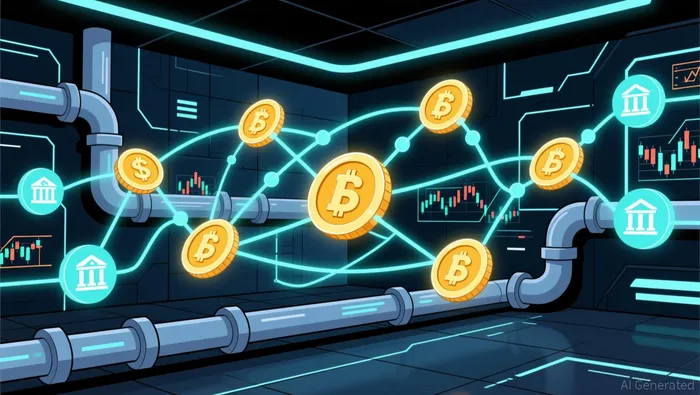
They are aligned on the headline - tokenization is the future - but their incentives diverge on who captures the margin. Goldman wants to keep intermediation. Apex wants to become the intermediary. Archax wants to be the venue.
In the EU, the MiCA framework has given tokenized products a regulatory home but left gaps around security tokens versus asset-referenced tokens, which is why Archax's UCITS fund offerings are still relatively narrow. In the US, the regulatory picture is murkier, which is precisely why Apex went and bought a broker-dealer rather than waiting for clarity. The US is still figuring out whether tokenized funds are securities, commodities, or something in between.
What to watch instead
I am less interested in whether Goldman Sachs eventually signs a partnership with Apex and Archax than in whether any of these rails actually clear the scale test. The question is not whether institutional tokenization will happen. The question is which architecture wins: the closed-bank model that Goldman is building with GS DAP, the independent-platform model that Apex is pursuing through Tokeny and Globacap, or the regulated-exchange model that Archax represents in the UK.
One concrete thing to watch: the DTCC's tokenization service, which now has 50+ firms in its working group including all three of these names. If the DTCC actually ships a functioning DTC tokenization layer, it would create a US-custody rail that every model above would need to interoperate with. That would make the question "which architecture wins" less relevant, because they'd all have to plug into the same backbone.
Until then, the three-name partnership headline is a useful reminder that the market still reads tokenization as a series of bilateral deals rather than the slow, unglamorous work of building shared settlement rails. The story is not in the press release. It is in the committee roster.
I couldn't find the partnership. I did find something more interesting - the ecosystem is cohering faster than any single headline suggests, and it is doing so quietly, through working groups and standards rather than press releases. That is usually how the real plumbing gets built.